
Chapter 5 — Life Processes covers nutrition, respiration, transportation and excretion in the current 2026-27 CBSE Class 10 Science syllabus (this chapter shifted from Chapter 6 to Chapter 5 after the 2023 rationalisation, when Periodic Classification of Elements (previously Chapter 5) was removed from the syllabus and every later chapter moved down by one — some older sites still label it Chapter 5). Below are complete, original answers to all 13 end-of-chapter exercise questions, verified against the official NCERT textbook text.
Last Updated: October 24, 2026
NCERT Solutions for Class 10 Science Chapter 5: Life Processes
How to Approach This Chapter
Work through the labelled diagrams (digestive system, heart, nephron) before the written answers — once you can redraw and label them from memory, most of the short-answer questions in this chapter follow directly. Group your revision by process (nutrition, respiration, transportation, excretion) rather than by exercise-question order, since NCERT’s own question order jumps between processes and revising process-by-process makes the connections between them clearer.
Q1. The kidneys in human beings are a part of the system for (a) nutrition (b) respiration (c) excretion (d) transportation.
Answer: (c) excretion.
Q2. The xylem in plants are responsible for (a) transport of water (b) transport of food (c) transport of amino acids (d) transport of oxygen.
Answer: (a) transport of water (and dissolved minerals).
Q3. The autotrophic mode of nutrition requires (a) carbon dioxide and water (b) chlorophyll (c) sunlight (d) all of the above.
Answer: (d) all of the above — carbon dioxide, water, chlorophyll and sunlight are all necessary for photosynthesis.
Q4. The breakdown of pyruvate to give carbon dioxide, water and energy takes place in (a) cytoplasm (b) mitochondria (c) chloroplast (d) nucleus.
Answer: (b) mitochondria.
Q5. How are fats digested in our bodies? Where does this process take place?
Fat digestion mainly happens in the small intestine. Bile salts (from the liver, stored in the gallbladder) emulsify large fat globules into tiny droplets, greatly increasing their surface area. Pancreatic lipase, secreted by the pancreas, then acts on these emulsified fat droplets, breaking them down into fatty acids and glycerol.
Q6. What is the role of saliva in the digestion of food?
Saliva, secreted by the salivary glands, moistens food for easier chewing and swallowing. It also contains the enzyme salivary amylase, which begins breaking down starch into simpler sugars (maltose) right in the mouth.
Q7. What are the necessary conditions for autotrophic nutrition, and what are its by-products?
Necessary conditions: sunlight, chlorophyll, carbon dioxide (from air, via stomata) and water (from soil, via roots). The main product is glucose (food, later stored as starch); oxygen is released as a by-product of this process (photosynthesis).
Q8. What are the differences between aerobic and anaerobic respiration? Name some organisms that use the anaerobic mode of respiration.
Aerobic respiration: occurs in the presence of oxygen, takes place in the mitochondria, completely breaks down glucose into carbon dioxide and water, and releases a large amount of energy.
Anaerobic respiration: occurs in the absence of oxygen, takes place in the cytoplasm, only partially breaks down glucose (into ethanol and CO₂ in yeast, or into lactic acid in muscle cells), and releases much less energy.
Organisms using anaerobic respiration: yeast (alcoholic fermentation) and several bacteria; human muscle cells also switch to anaerobic respiration temporarily during vigorous exercise.
Q9. How are the alveoli designed to maximise the exchange of gases?
The lungs contain millions of tiny balloon-like alveoli, giving an enormously large total surface area. Their walls are only one cell thick, and they are surrounded by an extensive network of blood capillaries — this combination of large surface area, thin walls and rich blood supply minimises the diffusion distance and maximises the rate of gas exchange between air and blood.
Q10. What would be the consequences of a deficiency of haemoglobin in our bodies?
Haemoglobin carries oxygen from the lungs to body tissues. A deficiency (anaemia) reduces the blood’s oxygen-carrying capacity, so tissues and cells receive less oxygen than they need — leading to weakness, fatigue, breathlessness on exertion, and reduced energy (ATP) production in cells.
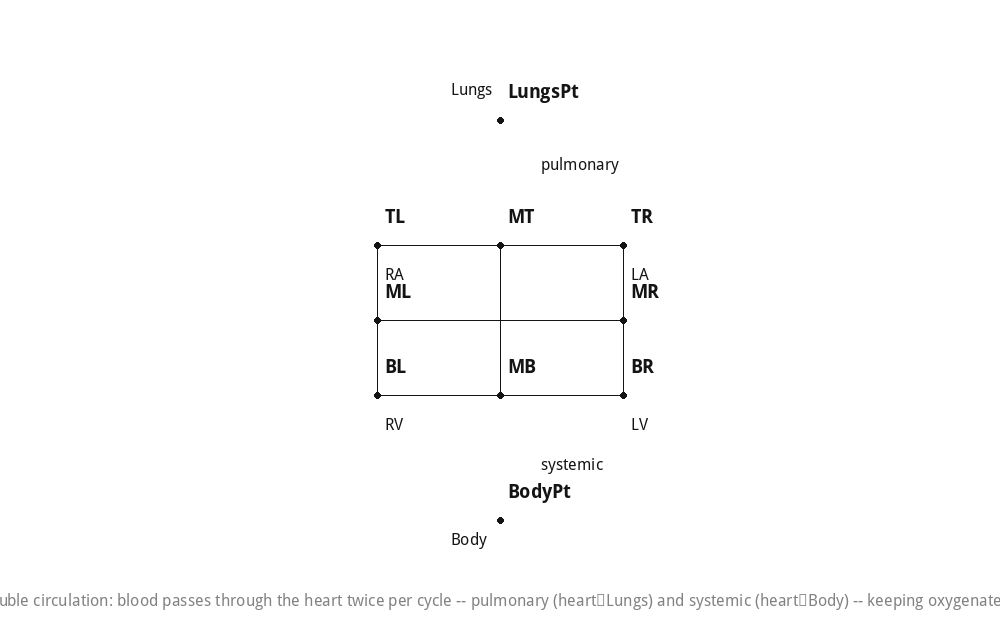
Q11. Describe double circulation of blood in human beings. Why is it necessary?
In double circulation, blood passes through the heart twice in one complete cycle: in pulmonary circulation, deoxygenated blood travels from the body to the right side of the heart, then to the lungs to pick up oxygen; in systemic circulation, this oxygenated blood returns to the left side of the heart and is then pumped out to the rest of the body. It is necessary because it keeps oxygenated and deoxygenated blood almost completely separate (via a four-chambered heart), allowing highly efficient oxygen delivery — essential for warm-blooded organisms with high, constant energy demands.
Q12. What are the differences between the transport of materials in xylem and phloem?
Xylem: transports water and minerals; movement is one-directional (upward, from roots to leaves); made of dead, non-living conducting cells (tracheids and vessels); driven mainly by the passive process of transpiration pull, needing very little energy from the plant.
Phloem: transports food (mainly sucrose); movement can be in either direction (source to sink, wherever needed); made of living cells (sieve tubes with companion cells); requires the plant to spend energy (ATP) to actively load sucrose into the sieve tubes, after which water follows by osmosis to generate the pressure that pushes the sap along.
Q13. Compare the functioning of alveoli in the lungs and nephrons in the kidneys with respect to their structure and functioning.
Both are the basic functional units of their organs, present in millions, and both are structurally optimised to maximise surface area for their job — thin walls and a rich surrounding blood supply. Alveoli carry out gas exchange (oxygen in, carbon dioxide out) by simple diffusion between air and blood. Nephrons carry out the more complex job of filtering blood (at the glomerulus) and then selectively reabsorbing useful substances and secreting wastes along the tubule, ultimately producing urine. So while both maximise surface area and blood supply in a similar way, alveoli perform simple gas diffusion while nephrons perform active filtration plus selective reabsorption/secretion.
Why This Chapter Matters for Boards
Life Processes is one of the most consistently tested biology chapters in the CBSE Class 10 board paper — diagram-based questions (human digestive/respiratory/circulatory/excretory systems) and short-answer comparisons (aerobic vs anaerobic, xylem vs phloem) appear almost every year. A solid grasp of this chapter also underpins Chapter 6 (Control and Coordination) and Chapter 8 (Heredity), which build on the same organ-system reasoning.
Extra Questions (HOTS) | Revision Notes | Formulas Handbook | Class 10 Science Book
CBSE Exam Weightage
This chapter falls under Unit II: World of Living in the CBSE Class 10 Science board exam syllabus. This unit typically carries around 25 marks (31.25%) of the 80-mark theory paper, based on CBSE’s published unit-wise weightage (Question Paper Design). CBSE sets weightage at the unit level rather than chapter-by-chapter, so the exact share from this specific chapter can vary a little between years and sample papers.
Chapter Quiz — Test Your Understanding
Class 10 Science Chapter 5 – Notes and Extra Questions
Along with these NCERT Solutions, students can also use the Class 10 Science Chapter 5 Extra Questions and Class 10 Science Chapter 5 Revision Notes for quick revision and extra practice.
- Chapter 1: Chemical Reactions and Equations – Free PDF Download
- Chapter 2: Acids, Bases and Salts – Free PDF Download
- Chapter 3: Metals and Non-metals – Free PDF Download
- Chapter 4: Carbon and its Compounds – Free PDF Download
- Chapter 6: Control and Coordination – Free PDF Download
- Chapter 7: How do Organisms Reproduce? (2026-27) – Free PDF Download
- Chapter 8: Heredity – Free PDF Download
- Chapter 9: Light - Reflection and Refraction – Free PDF Download
- Chapter 10: The Human Eye and the Colourful World (2026-27) – Free PDF Download
- Chapter 11: Electricity (2026-27) – Free PDF Download
- Chapter 12: Magnetic Effects of Electric Current (2026-27)
- Chapter 13: Our Environment – Free PDF Download
Frequently Asked Questions
Is this still Chapter 5 in the current NCERT edition?
No — it is Chapter 5. The official NCERT textbook file jesc105.pdf confirms Life Processes is Chapter 5 in the current 2026-27 rationalised edition (jesc1 = Class 10 Science, 05 = chapter number). It was Chapter 6 in the pre-2023 book, before Periodic Classification of Elements (previously Chapter 5) was removed from the syllabus and everything after it shifted down by one. Several older “solutions” sites online still label it Chapter 5.
How many exercise questions does this chapter have?
13 end-of-chapter exercise questions (plus intext questions spread through the chapter), matching the current 2026-27 rationalised NCERT textbook.
Recommended: Buy the Printed NCERT Class 10 Science Book
Contains Amazon affiliate links.
If you’d like a printed copy alongside the PDF, here’s a verified option:
Check the latest price on Amazon
Price and availability may change on Amazon. As an Amazon Associate, ncertbooks.org earns from qualifying purchases.
