
Q1 (Compare/contrast). Distinguish between fragmentation (as in Spirogyra) and regeneration (as in Hydra/Planaria) — are they the same process?
Answer: No. Fragmentation is a mode of reproduction: a simple organism’s body breaks into pieces that each grow into a whole new individual, and this is how the organism normally multiplies. Regeneration is a repair capability: a piece cut off an organism like Hydra or Planaria can regrow into a complete new organism, but this happens only when the body is damaged/cut — it is not the organism’s routine reproductive strategy. All organisms capable of fragmentation-based reproduction show regeneration ability, but regeneration ability alone (e.g. in higher animals that can regrow small parts) does not mean the organism reproduces by fragmentation. These Class 10 Science Chapter 7 important questions are handy for last-minute exam practice.
Last Updated: October 24, 2026
How to Approach the HOTS Questions in This Chapter
HOTS questions here often ask you to compare the reproductive strategies of two different organisms, rather than testing definitions directly — practice explaining the evolutionary or adaptive reasoning behind a reproduction strategy, not just naming it.
Q2 (HOTS — underlying mechanism). DNA copying during reproduction is never perfectly identical. Why is this actually essential rather than a flaw?
Answer: Small variations created during DNA copying are the raw material of evolution. A population that produced perfectly identical copies every generation would have no diversity to draw on if the environment changed — a single new disease or climate shift could wipe out the entire population at once. Because copying introduces small, heritable variations, some individuals in each generation are better suited to new conditions, and natural selection can act on that variation, letting the species adapt over time. So variation-through-imperfect-copying is what makes long-term survival of a species (not just of individuals) possible.
Q3 (Applied). Hibiscus flowers are bisexual while papaya flowers are unisexual. What does this mean for how each plant is pollinated?
Answer: A bisexual (hibiscus) flower carries both stamen and pistil in the same flower, so self-pollination within the same flower is structurally possible (though cross-pollination can still occur via pollinators). A unisexual (papaya) plant/flower carries only male or only female parts on a given flower, so pollen must physically travel from a male flower to a separate female flower — self-pollination within one flower is impossible, making the plant dependent on an external pollen-transfer agent (wind, insects) between separate flowers or even separate plants.
Q4 (Assertion-Reason). Assertion (A): Vegetative propagation produces offspring that are genetically identical to the parent.
Reason (R): Vegetative propagation is a form of asexual reproduction involving only one parent, with no fusion of gametes.
Answer: Both A and R are true, and R correctly explains A — since only one parent’s cells are copied (mitotic division) with no mixing of DNA from a second parent, the offspring’s DNA is a direct copy, hence genetically identical (barring rare mutation).
Part of the Class 10 Science Chapter 7 cluster: Solutions | Extra Questions (HOTS) | Revision Notes | Formulas Handbook | Class 10 Science book page.
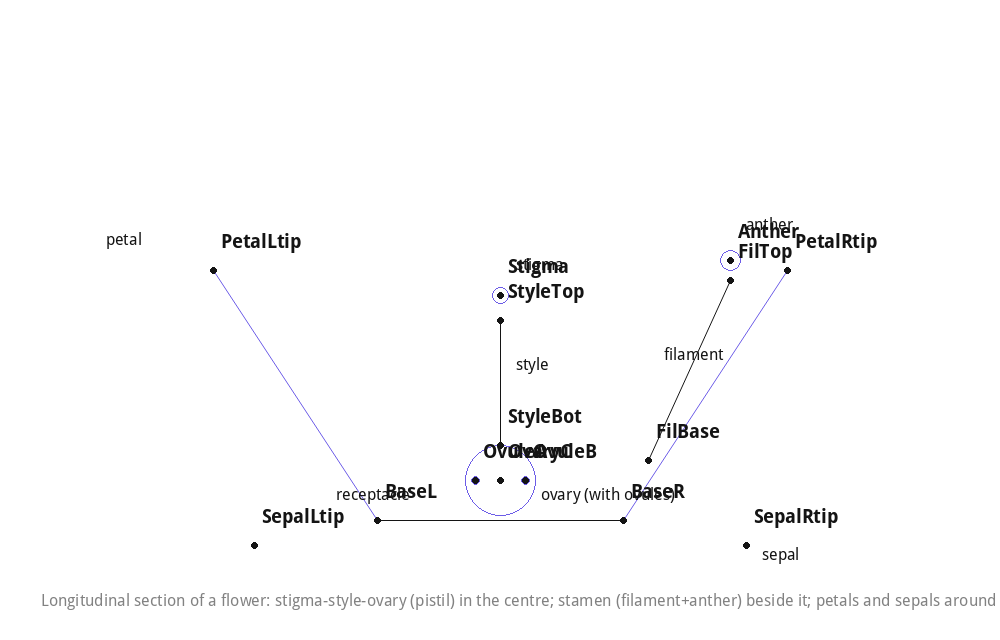
Quick visual: a worked diagram from the full Solutions page, for reference.
- Chapter 1: Chemical Reactions and Equations
- Chapter 2: Acids, Bases and Salts
- Chapter 3: Metals and Non-metals
- Chapter 4: Carbon and its Compounds
- Chapter 5: Life Processes
- Chapter 6: Control and Coordination
- Chapter 8: Extra Questions - Heredity (HOTS)
- Chapter 9: Extra Questions - Light: Reflection and Refraction (HOTS)
- Chapter 10: Human Eye and Colourful World Extra Questions (HOTS)
- Chapter 11: Electricity Extra Questions (HOTS)
- Chapter 12: Magnetic Effects of Electric Current Extra Questions (HOTS)
- Chapter 13: Our Environment Extra Questions (HOTS)
Frequently Asked Questions
Why is variation important in a population, and how does sexual reproduction contribute to it?
Variation allows some individuals in a population to survive better under changing environmental conditions, and sexual reproduction contributes to it by combining genetic material from two parents, producing offspring with new trait combinations.
What is the key structural difference between how reproduction occurs in unicellular and multicellular organisms?
Unicellular organisms often reproduce through simple cell division, while multicellular organisms typically require specialised reproductive cells and organs to produce and combine gametes.
Chapter Quiz — Test Your Understanding
Class 10 Science Chapter 7 – Solutions and Notes
For complete step-by-step answers and a quick summary, check the Class 10 Science Chapter 7 Solutions and Class 10 Science Chapter 7 Revision Notes.
Recommended: Buy the Printed NCERT Class 10 Science Book
Contains Amazon affiliate links.
If you’d like a printed copy alongside the PDF, here’s a verified option:
Check the latest price on Amazon
Price and availability may change on Amazon. As an Amazon Associate, ncertbooks.org earns from qualifying purchases.


