
Class 10 Science Chapter 9 Extra Questions (HOTS Level) – Light: Reflection and Refraction
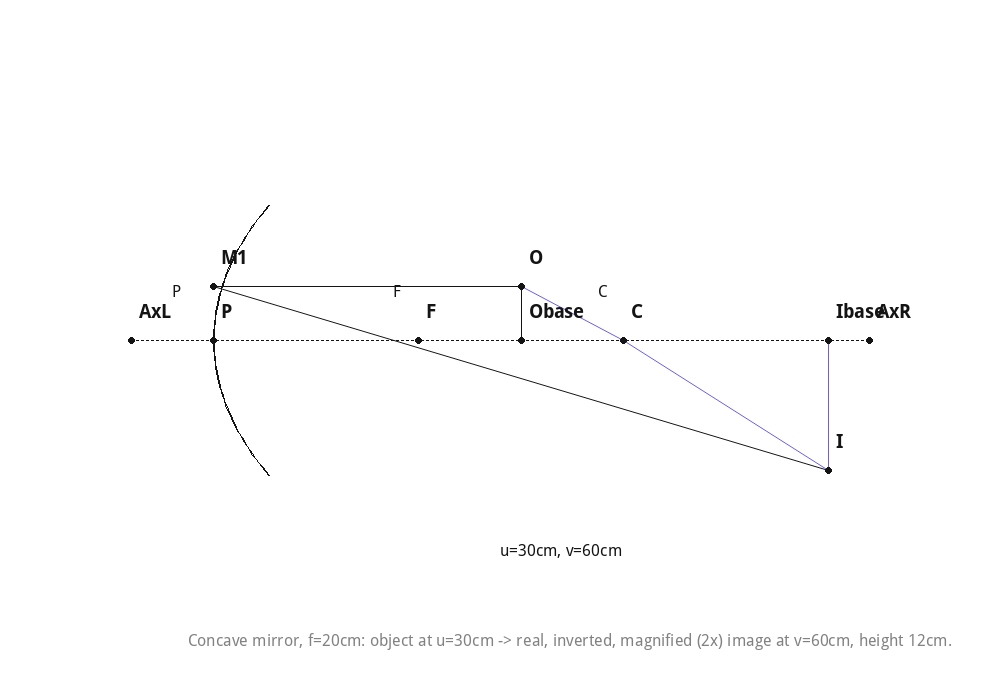
- Q1 (Fresh-number mirror-formula problem). An object 6 cm tall is placed 30 cm in front of a concave mirror of focal length 20 cm. Find the image position, size, and nature.
Answer: 1/v = 1/f – 1/u = -1/20 – (-1/30) = -3/60+2/60 = -1/60, so v = -60 cm. m = -v/u = -(-60)/(-30) = -2, image height = -12 cm. Image is 60 cm in front of the mirror, 12 cm tall, real, inverted, magnified.
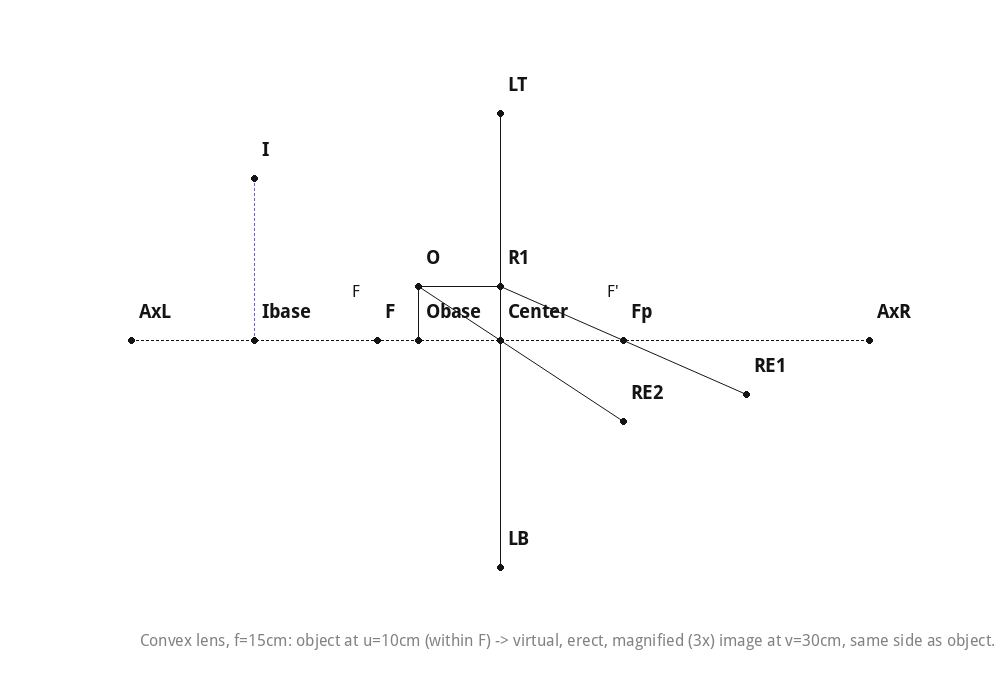
- Q2 (Reverse-engineering). A convex lens produces a virtual, erect image 3 times the size of the object placed 10 cm from the lens. Find the focal length.
Answer: For a virtual, erect, magnified image from a convex lens, the object is between the lens and the focus, and m = v/u is positive. m=3, u=-10 cm, so v = m × u = 3 × (-10) = -30 cm (virtual image, same side as object). Using 1/v – 1/u = 1/f: 1/(-30) – 1/(-10) = -1/30+1/10 = (-1+3)/30 = 2/30 = 1/15, so f = 15 cm. - Q3 (Assertion-Reason). Assertion (A): A concave mirror can form both real and virtual images depending on the object’s position.
Reason (R): A convex mirror can also form both real and virtual images depending on the object’s position.
Options: (a) Both true, R explains A. (b) Both true, R does not explain A. (c) A true, R false. (d) A false, R true.
Answer: (c). A is true (concave mirrors form virtual images when the object is within the focal length, and real images otherwise). R is false — a convex mirror always forms only virtual, erect, diminished images regardless of object position. - Q4 (General/abstract proof-style reasoning). Show, using the mirror formula, that a concave mirror forms a virtual image whenever the object distance |u| is less than the focal length |f|.
Answer: With sign convention u=-x (0<x<f) and f=-f (concave, f>0): 1/v = 1/f – 1/u = -1/f + 1/x = (f-x)/(fx). Since x<f, (f-x)>0, so 1/v>0, meaning v is positive — a positive image distance means the image forms behind the mirror, i.e. it is virtual, for any object distance less than the focal length. This generalises the concave-mirror-magnifier case. - Q5 (Multi-number word problem). Light travels from a medium of refractive index 1.2 into a medium of refractive index 1.8. If the speed of light in the first medium is 2.5 × 10⁸ m/s, find its speed in the second medium.
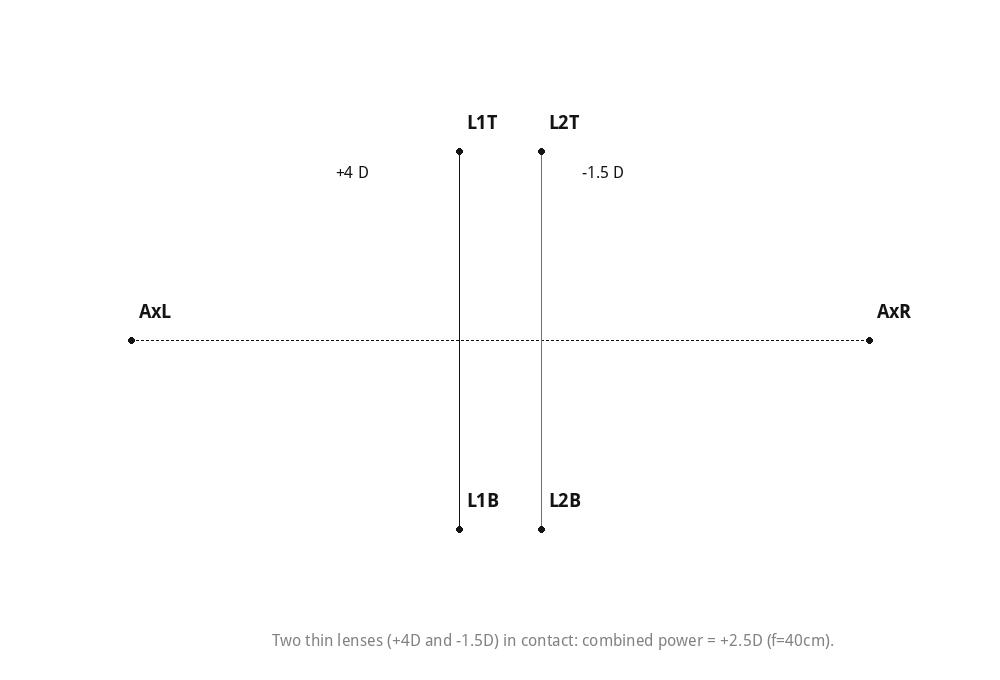
Answer: Using n1v1 = n2v2 (since n = c/v, so nv = c = constant): v2 = n1v1/n2 = (1.2 × 2.5×108)/1.8 = 1.67 × 10⁸ m/s (approx). - Q6 (Reciprocal power combination, fresh numbers). Two thin lenses of power +4 D and -1.5 D are placed in contact. Find the power and focal length of the combination.
Answer: Combined power P = P1+P2 = 4 + (-1.5) = +2.5 D. Focal length f = 1/P = 1/2.5 = 0.4 m (40 cm), and since P is positive, the combination behaves as a converging (convex) lens system.
Related
- Chapter 1: Chemical Reactions and Equations
- Chapter 2: Acids, Bases and Salts
- Chapter 3: Metals and Non-metals
- Chapter 4: Carbon and its Compounds
- Chapter 5: Life Processes
- Chapter 6: Control and Coordination
- Chapter 7: – How do Organisms Reproduce?
- Chapter 8: Extra Questions - Heredity (HOTS)
- Chapter 10: Human Eye and Colourful World Extra Questions (HOTS)
- Chapter 11: Electricity Extra Questions (HOTS)
- Chapter 12: Magnetic Effects of Electric Current Extra Questions (HOTS)
- Chapter 13: Our Environment Extra Questions (HOTS)
Frequently Asked Questions
What is the main difference between reflection and refraction of light?
Reflection occurs when light bounces back after striking a surface without changing the medium it travels through, while refraction occurs when light bends as it passes from one transparent medium into another due to a change in speed.
Last Updated: October 24, 2026
Why does a pencil appear bent when partially dipped in a glass of water?
The pencil appears bent because light rays from the submerged part refract as they pass from water into air due to the change in speed of light between the two media, creating an optical illusion of a break.
Chapter Quiz — Test Your Understanding
Class 10 Science Chapter 9 – Solutions and Notes
For complete step-by-step answers and a quick summary, check the Class 10 Science Chapter 9 Solutions and Class 10 Science Chapter 9 Revision Notes. These Class 10 Science Chapter 9 important questions are handy for last-minute exam practice.
How to Approach the HOTS Questions in This Chapter
HOTS questions here often ask you to determine an image’s nature or position only from a given magnification value, or combine a mirror and a lens in one setup — practice working backward from magnification to object/image distance, not just forward from distance to magnification.
Recommended: Buy the Printed NCERT Class 10 Science Book
Contains Amazon affiliate links.
If you’d like a printed copy alongside the PDF, here’s a verified option:
Check the latest price on Amazon
Price and availability may change on Amazon. As an Amazon Associate, ncertbooks.org earns from qualifying purchases.


