
A fast, one-glance recap of Class 10 Science Chapter 6 (Control and Coordination) — for full explanations, see the Solutions. These Class 10 Science Chapter 6 notes are ideal for quick revision just before exams.
Last Updated: October 24, 2026
Common Mistakes Students Make in Control and Coordination
n
- n
- Mixing up the reflex arc pathway: students often write the sequence as receptor → brain → effector. The correct reflex arc is receptor → sensory neuron → relay neuron in the spinal cord → motor neuron → effector — the brain is NOT part of a simple reflex arc, which is exactly why reflexes are faster than voluntary actions.
- Confusing CNS and PNS components: the brain and spinal cord form the Central Nervous System; all the nerves connecting them to the rest of the body form the Peripheral Nervous System. A common exam slip is calling cranial/spinal nerves part of the CNS.
- Mixing up plant hormone functions: auxin promotes cell elongation and causes phototropism (bending towards light); gibberellin promotes stem growth; cytokinin promotes cell division; abscisic acid inhibits growth and causes wilting/dormancy. Students frequently swap auxin and gibberellin’s roles, or forget abscisic acid is the inhibitory one.
- Getting tropism direction wrong: phototropism in shoots is positive (towards light) but in roots is negative; geotropism in roots is positive (towards gravity) but in shoots is negative. Writing “roots grow away from gravity” is a very common reversal error.
- Endocrine gland–hormone mismatches: pancreas–insulin, thyroid–thyroxine, pituitary–growth hormone, adrenal–adrenaline are frequently swapped, especially pituitary and thyroid roles in growth regulation.
n
n
n
n
n
n
Why This Chapter Matters
Control and Coordination is one of the standard chapters in the CBSE/NCERT Class 10 Science syllabus and questions from it appear regularly in board exams, in formats ranging from 1-mark objective questions to longer 3-5 mark descriptive or numerical questions. Because the concepts here often build on earlier chapters (and feed into later ones), a solid grip on this chapter also makes the rest of the Science syllabus easier to follow.
Revision Notes: Control and Coordination
- Control & coordination systems in animals: nervous system (fast, electrical) + endocrine/hormonal system (slower, chemical, via blood)
- Receptors: detect stimuli — eye (light), ear (sound), nose (smell), tongue (taste), skin (touch/heat/pain)
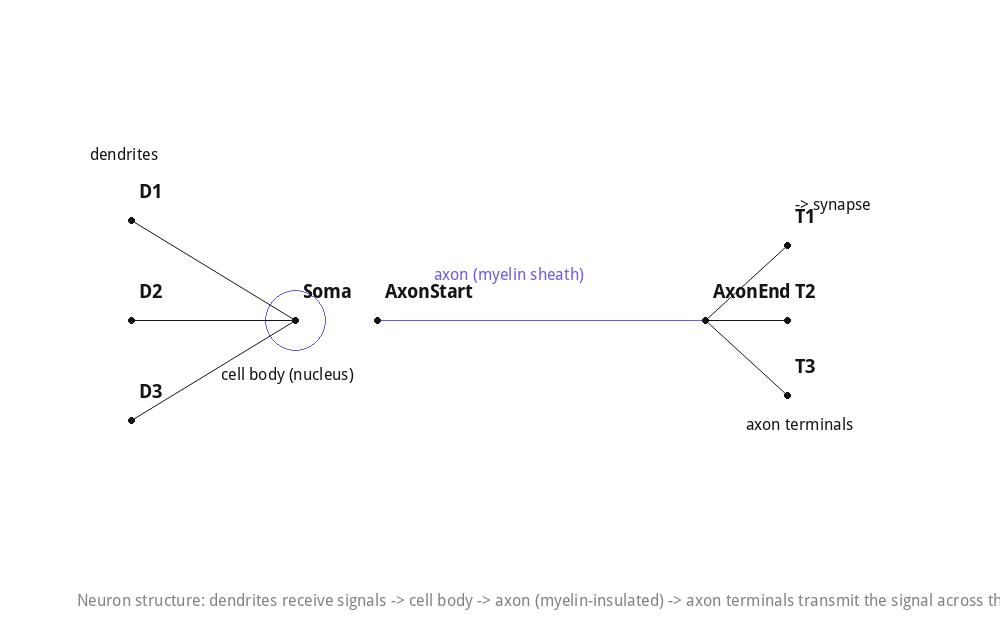
- Neuron structure: dendrite (receives) → cell body → axon (transmits) → synapse (chemical gap to next neuron/effector)
- Reflex arc: receptor → sensory neuron → relay neuron (spinal cord) → motor neuron → effector — bypasses the brain for speed
- Brain parts: cerebrum (forebrain — thinking, memory, voluntary actions), cerebellum (hindbrain — balance & precision), medulla (hindbrain — involuntary actions: heartbeat, breathing, blood pressure)
- CNS = brain + spinal cord; PNS = nerves connecting CNS to the rest of the body
- Voluntary vs involuntary vs reflex: voluntary = conscious control; involuntary = automatic/continuous (medulla); reflex = rapid, involuntary, one-off stimulus-response via spinal cord
- Plant movements — tropisms (directional, growth-based, hormone-driven): phototropism (light), geotropism (gravity), hydrotropism (water), chemotropism (chemicals)
- Plant movements — nastic movements (non-directional, not growth-based): e.g. touch-me-not leaf-folding, driven by rapid turgor-pressure change
- Plant hormones: auxin (growth/phototropism), gibberellin (stem growth), cytokinin (cell division), abscisic acid (growth inhibitor/stress), ethylene (fruit ripening)
- Key animal hormones: growth hormone (pituitary), thyroxin (thyroid, metabolism), insulin (pancreas, blood sugar), adrenaline (adrenal, fight-or-flight), testosterone/oestrogen (testis/ovary)
- Feedback mechanism: hormone levels are self-regulated by feedback (e.g. rising blood sugar triggers more insulin release)
- This chapter was Chapter 7 in the pre-rationalisation edition (before Periodic Classification of Elements was removed); it is Chapter 6 in the current 2026-27 NCERT textbook
See also: Extra Questions (HOTS) | Formulas Handbook
How to Use These Notes
These revision notes are meant for quick recall in the last few days before an exam or unit test — they are not a substitute for first reading the full chapter and working through examples in the NCERT textbook. A good routine is: read the chapter once, solve the in-text and end-of-chapter questions using the linked Solutions, then come back to this page a day or two before the exam to refresh the key definitions and formulas without re-reading the whole chapter.
Quick visual: a worked diagram from the full Solutions page, for reference.
- Chapter 1: Chemical Reactions and Equations
- Chapter 2: Acids, Bases and Salts
- Chapter 3: Metals and Non-metals
- Chapter 4: Carbon and its Compounds
- Chapter 5: Life Processes
- Chapter 7: – How do Organisms Reproduce?
- Chapter 8: Revision Notes - Heredity
- Chapter 9: Revision Notes - Light: Reflection and Refraction
- Chapter 10: Human Eye and Colourful World Revision Notes
- Chapter 11: Electricity Revision Notes
- Chapter 12: Magnetic Effects of Electric Current Revision Notes
- Chapter 13: Our Environment Revision Notes
Frequently Asked Questions
What is a reflex arc, and why is it faster than a normal response?
A reflex arc is the pathway a nerve impulse follows during a reflex action — receptor to sensory neuron to relay neuron in the spinal cord to motor neuron to effector — it is faster than a voluntary response because it bypasses the brain entirely, involving only the spinal cord.
How do plant hormones differ from animal hormones in how they act?
Plant hormones typically act locally near their site of production and travel through plant tissues (not a dedicated bloodstream) to cause growth-related responses like tropisms; animal hormones are secreted by endocrine glands directly into the bloodstream and can act on distant target organs throughout the body.
Chapter Quiz — Test Your Understanding
Class 10 Science Chapter 6 – Solutions and Important Questions
Need full answers or more practice? See the Class 10 Science Chapter 6 Solutions and Class 10 Science Chapter 6 Extra Questions.
What to Revise First (and Last) in Control and Coordination
n
Revise the reflex arc diagram and the neuron structure (dendrite → cell body → axon → synapse) first — diagram-based questions from this chapter appear almost every year and depend on getting the sequence and labelling exactly right. Next, lock down the hormone-function table (which plant/animal hormone does what) since these are high-frequency one-mark and matching-type questions. Leave the detailed comparison of nervous vs hormonal control (speed, duration, mode of action) for your last revision pass — it is a short, self-contained table that is easy to forget under pressure but quick to re-memorise right before the exam.
n
Recommended: Buy the Printed NCERT Class 10 Science Book
Contains Amazon affiliate links.
If you’d like a printed copy alongside the PDF, here’s a verified option:
Check the latest price on Amazon
Price and availability may change on Amazon. As an Amazon Associate, ncertbooks.org earns from qualifying purchases.



Pingback: Extra Questions (HOTS) Class 10 Science Chapter 6 Control and Coordination