
- Current, I = Q/t (ampere, A); Potential difference, V = W/Q (volt, V)
- Ohm’s Law: V = IR, at constant temperature
- Resistance: R = ρL/A — directly proportional to length, inversely proportional to cross-sectional area, ρ = resistivity (material property, unit Ω m)
- Series combination: R_s = R₁+R₂+R₃+…; same current through each, voltages add
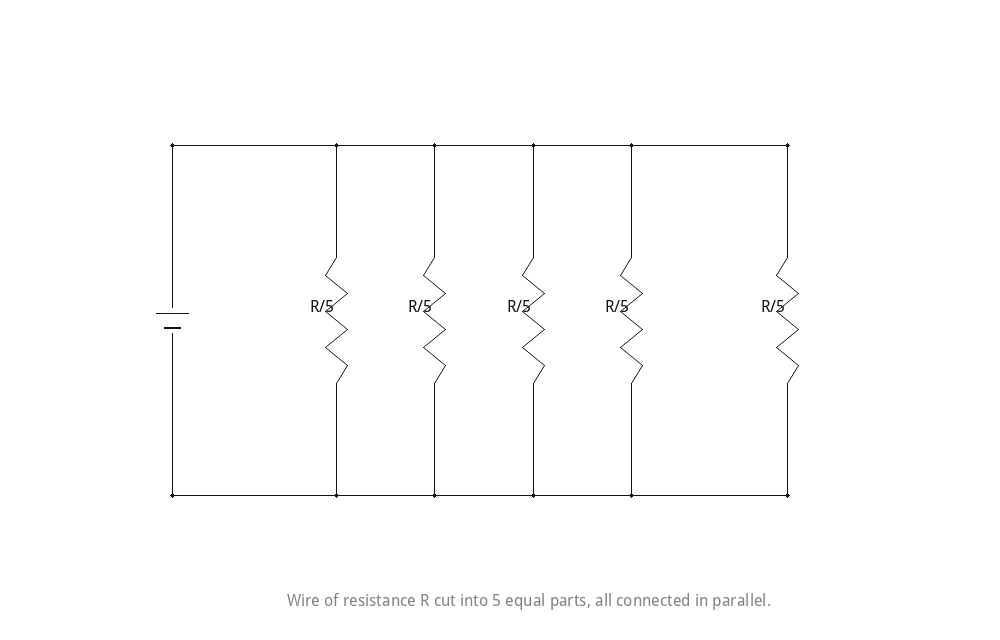
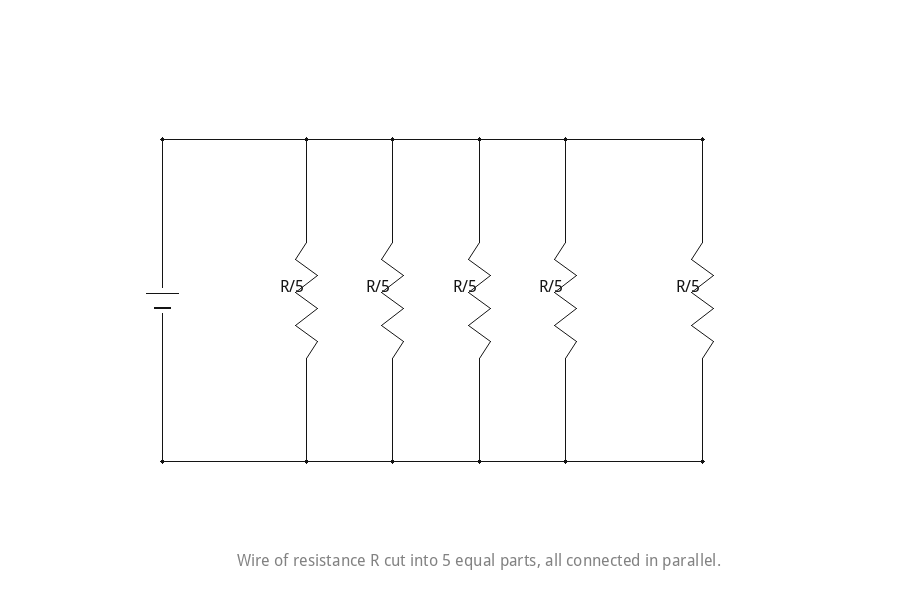
- Parallel combination: 1/R_p = 1/R₁+1/R₂+1/R₃+…; same voltage across each, currents add
- Electric power: P = VI = I²R = V²/R (watt, W)
- Electrical energy: E = Pt; commercial unit = 1 kWh = 3.6×10⁶ J
- Heating effect (Joule’s law): H = I²Rt
- Ammeter: connected in series, near-zero resistance. Voltmeter: connected in parallel, very high resistance.
- Tungsten (high melting point, doesn’t oxidise) → bulb filaments. Alloys like Nichrome (high resistivity, high melting point) → heating elements.
- Series wiring is not used domestically: one break stops everything, and all appliances would be forced to share one current value.
- This chapter is now Chapter 11 in the 2026-27 rationalised book (was Chapter 11 pre-2023).
See the full Solutions post · Extra Questions / HOTS · Class 10 Science Formulas Handbook These Class 10 Science Chapter 11 notes are ideal for quick revision just before exams.
Last Updated: October 24, 2026
Common Mistakes Students Make in Electricity
- Mixing up series and parallel formulas: using the parallel resistance formula (1/R = 1/R1 + 1/R2 …) for a series circuit, or the simple addition rule for a parallel one.
- Unit errors in Ohm’s law: forgetting to convert mA to A, or kΩ to Ω, before substituting into V = IR.
- Wrong ammeter/voltmeter placement in diagrams: forgetting an ammeter must be connected in series and a voltmeter in parallel with the component being measured.
- Errors in the heating-effect formula: squaring the wrong quantity in H = I²Rt, or forgetting to convert time into seconds.
Quick visual: a worked diagram from the full Solutions page, for reference.
- Chapter 1: Chemical Reactions and Equations
- Chapter 2: Acids, Bases and Salts
- Chapter 3: Metals and Non-metals
- Chapter 4: Carbon and its Compounds
- Chapter 5: Life Processes
- Chapter 6: Control and Coordination
- Chapter 7: – How do Organisms Reproduce?
- Chapter 8: Revision Notes - Heredity
- Chapter 9: Revision Notes - Light: Reflection and Refraction
- Chapter 10: Human Eye and Colourful World Revision Notes
- Chapter 12: Magnetic Effects of Electric Current Revision Notes
- Chapter 13: Our Environment Revision Notes
Frequently Asked Questions
What is Ohm’s Law and what does it state?
Ohm’s Law states that the current through a conductor is directly proportional to the potential difference across it, at constant temperature: V = IR — this single relationship underlies nearly every numerical in this chapter.
What is the SI unit of electric power, and how is it calculated?
The SI unit is the watt (W); electric power P = VI = I^2R = V^2/R — these three equivalent forms let you calculate power depending on which two quantities (among V, I, R) are given in a problem.
Chapter Quiz — Test Your Understanding
Class 10 Science Chapter 11 – Solutions and Important Questions
Need full answers or more practice? See the Class 10 Science Chapter 11 Solutions and Class 10 Science Chapter 11 Extra Questions.
What to Revise First (and Last) in This Chapter
Prioritise Ohm’s law and the series/parallel resistance formulas first, since numerical questions from this chapter appear most frequently and draw directly on them. Revise circuit-diagram rules (ammeter in series, voltmeter in parallel) next. Leave the detailed derivations (like the heating-effect derivation) for an earlier, slower revision pass rather than a last-minute read.
Recommended: Buy the Printed NCERT Class 10 Science Book
Contains Amazon affiliate links.
If you’d like a printed copy alongside the PDF, here’s a verified option:
Check the latest price on Amazon
Price and availability may change on Amazon. As an Amazon Associate, ncertbooks.org earns from qualifying purchases.


