
Class 10 Science Chapter 12 – Magnetic Effects of Electric Current: Quick Revision Notes
- Magnetic field lines: emerge from N, merge at S (outside magnet); form closed loops; never intersect; denser lines = stronger field
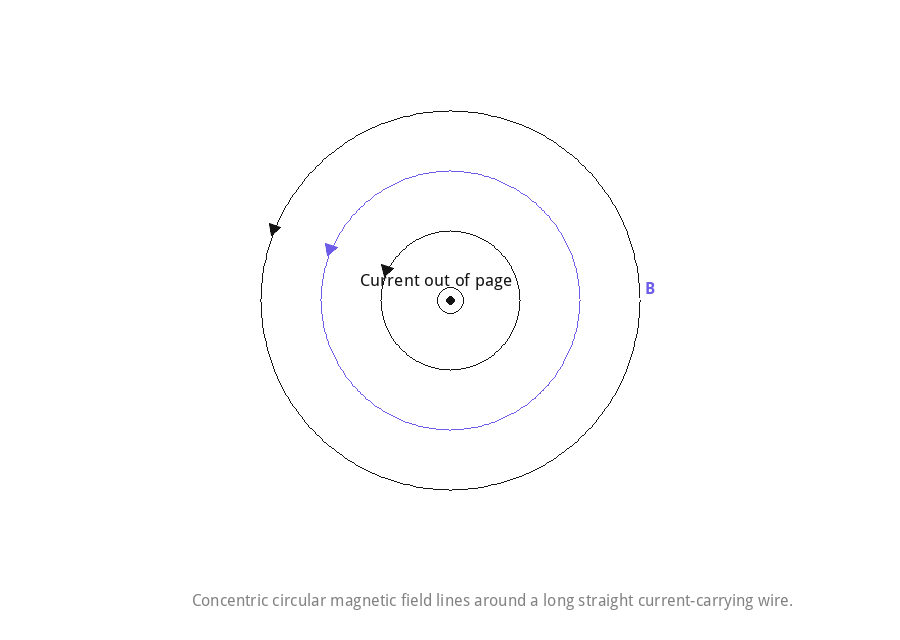
- Right-hand thumb rule: thumb along current, curled fingers give field direction around a straight conductor (concentric circles)
- Field at centre of a current loop: perpendicular to the plane of the loop; strengthens with more turns/current
- Solenoid: long coil of turns; field inside is strong, uniform, parallel to axis — behaves like a bar magnet
- Electromagnet = solenoid + soft iron core (low retentivity, magnetism only while current flows)
- Force on current-carrying conductor: F = BIL sinθ; maximum at θ=90°, zero at θ=0°
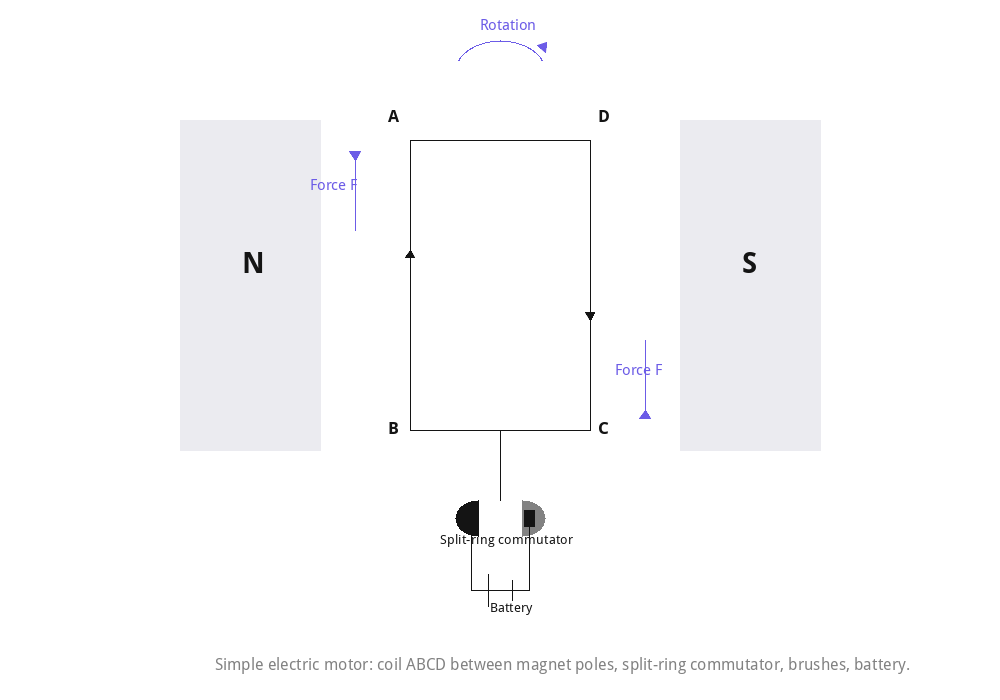
- Fleming’s Left-Hand Rule (force/motor): forefinger=Field, middle finger=Current, thumb=Motion/Force
- Electric motor: converts electrical to mechanical energy; opposite forces on coil arms create torque; split-ring commutator reverses current every half turn for continuous rotation
- Electromagnetic induction: induced current from changing magnetic flux (relative motion of coil/magnet)
- Fleming’s Right-Hand Rule (induced current/generator): thumb=Motion, forefinger=Field, middle finger=Current
- Electric generator: converts mechanical to electrical energy; slip rings → AC output; split-ring commutator → DC (pulsating) output
- Domestic circuits: live (red), neutral (black), earth (green); India mains = 220V, 50Hz AC
- Short circuit: live-neutral direct contact → sudden current surge; earthing protects users from shock via metal-casing faults
- Fuses/MCBs: break the circuit automatically when current exceeds a safe limit
- NCERT Solutions – Chapter 12
- Extra Questions (HOTS) – Chapter 12
- Revision Notes – Chapter 12
- Class 10 Science Book (Catalog Page)
Quick visual: a worked diagram from the full Solutions page, for reference.
Last Updated: October 24, 2026
Common Mistakes Students Make in Magnetic Effects of Electric Current
- Right-hand rule mix-ups: confusing the right-hand thumb rule for a straight conductor with the rule for a solenoid.
- Missing the angle term: forgetting F = BIL sinθ includes an angle, and that force is maximum only when the conductor is perpendicular to the field.
- Confusing Fleming’s left- and right-hand rules: left-hand for the motor effect (force on a conductor), right-hand for the generator effect (induced current) — frequently swapped.
- Electromagnet mix-ups: not clearly explaining why a solenoid with a soft iron core behaves like a magnet only while current flows.
- Chapter 1: Chemical Reactions and Equations
- Chapter 2: Acids, Bases and Salts
- Chapter 3: Metals and Non-metals
- Chapter 4: Carbon and its Compounds
- Chapter 5: Life Processes
- Chapter 6: Control and Coordination
- Chapter 7: – How do Organisms Reproduce?
- Chapter 8: Revision Notes - Heredity
- Chapter 9: Revision Notes - Light: Reflection and Refraction
- Chapter 10: Human Eye and Colourful World Revision Notes
- Chapter 11: Electricity Revision Notes
- Chapter 13: Our Environment Revision Notes
Frequently Asked Questions
What is the difference between electric motor and electric generator, as covered in this chapter?
An electric motor converts electrical energy into mechanical energy using the magnetic force on a current-carrying coil (Fleming’s left-hand rule); a generator does the reverse, converting mechanical energy into electrical energy via electromagnetic induction (Fleming’s right-hand rule).
Why is a fuse used in household electrical circuits?
A fuse is a safety device with a low melting point that melts and breaks the circuit if the current exceeds a safe limit, preventing damage from overheating or short circuits — it is a required safety component in every household wiring covered in this chapter.
Chapter Quiz — Test Your Understanding
Class 10 Science Chapter 12 – Solutions and Important Questions
Need full answers or more practice? See the Class 10 Science Chapter 12 Solutions and Class 10 Science Chapter 12 Extra Questions. These Class 10 Science Chapter 12 notes are ideal for quick revision just before exams.
What to Revise First (and Last) in This Chapter
Prioritise the right-hand thumb rule and Fleming’s left-hand rule first, since they answer the widest range of direction-based questions in this chapter. Leave detailed numerical force calculations for an earlier, slower revision pass.
Recommended: Buy the Printed NCERT Class 10 Science Book
Contains Amazon affiliate links.
If you’d like a printed copy alongside the PDF, here’s a verified option:
Check the latest price on Amazon
Price and availability may change on Amazon. As an Amazon Associate, ncertbooks.org earns from qualifying purchases.



Pingback: Class 10 Science Chapter 12 Magnetic Effects Extra Questions (HOTS)