Class 10 Science Chapter 8 – Heredity and Evolution: Revision Notes
- Heredity and Evolution: transmission of traits from parents to offspring across generations.
- Gene / Allele: a gene is a unit of heredity; alleles are alternative forms of a gene (e.g. T for tall, t for short).
- Genotype vs Phenotype: genotype = genetic makeup (e.g. Tt); phenotype = observable trait (e.g. tall).
- Homozygous vs Heterozygous: homozygous = both alleles same (TT or tt); heterozygous = alleles differ (Tt).
- Dominant vs Recessive: dominant allele expresses even in heterozygous condition; recessive expresses only when homozygous.
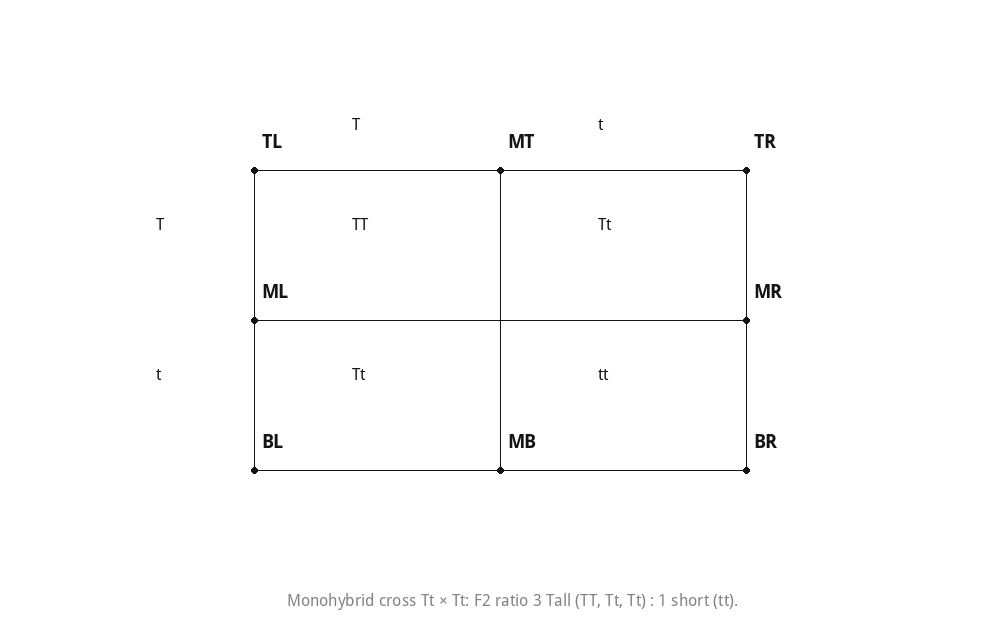
- Monohybrid cross F2 ratio: 3 (dominant) : 1 (recessive); genotypic 1:2:1.
- Dihybrid cross F2 ratio: 9:3:3:1.
- Sex determination in humans: XX = female, XY = male; father’s sperm (X or Y, 1:1 ratio) determines the child’s sex.
- Variation: differences arising during reproduction/DNA copying; provides the raw material for a species to survive environmental change.
- Acquired vs inherited traits: only germ-cell (egg/sperm) DNA changes are inherited; somatic changes from lifestyle are not passed on.
- Syllabus note (2023 rationalisation): the Evolution section of the earlier “Heredity and Evolution” chapter has been removed; this chapter is now titled simply “Heredity”.
Related
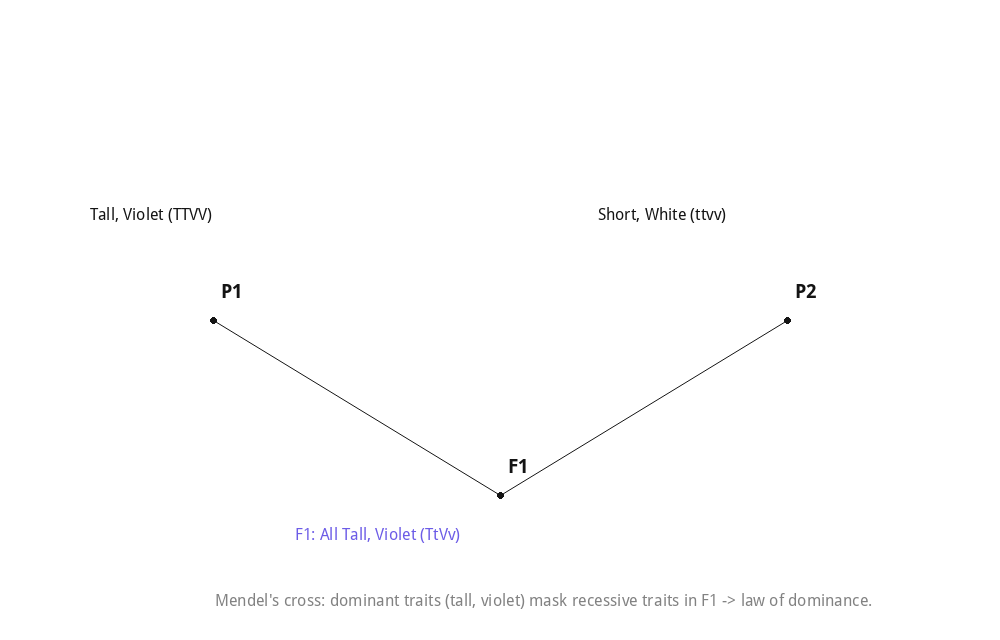
Quick visual: a worked diagram from the full Solutions page, for reference.
Last Updated: October 24, 2026
Common Mistakes Students Make in Heredity
- Dominant/recessive confusion: not correctly applying which allele masks the other in a heterozygous individual.
- Cross-ratio errors: miscalculating the expected phenotypic/genotypic ratio in a monohybrid or dihybrid cross.
- Genotype/phenotype mix-up: using the two terms interchangeably when they mean different things.
- Sex-determination errors: mixing up which parent’s chromosome (X or Y) determines the offspring’s sex.
- Chapter 1: Chemical Reactions and Equations
- Chapter 2: Acids, Bases and Salts
- Chapter 3: Metals and Non-metals
- Chapter 4: Carbon and its Compounds
- Chapter 5: Life Processes
- Chapter 6: Control and Coordination
- Chapter 7: – How do Organisms Reproduce?
- Chapter 9: Revision Notes - Light: Reflection and Refraction
- Chapter 10: Human Eye and Colourful World Revision Notes
- Chapter 11: Electricity Revision Notes
- Chapter 12: Magnetic Effects of Electric Current Revision Notes
- Chapter 13: Our Environment Revision Notes
Frequently Asked Questions
What did Mendel’s experiments with pea plants demonstrate?
That traits are inherited as discrete units (later called genes) in predictable ratios, following his laws of dominance, segregation, and independent assortment — this remains the foundational framework for understanding inheritance in this chapter.
How does sex determination work in humans?
Human sex is determined by the sex chromosomes: females have two X chromosomes (XX), males have one X and one Y (XY) — the father’s sperm determines the child’s sex, since the mother can only contribute an X chromosome while the father can contribute either X or Y.
Chapter Quiz — Test Your Understanding
Class 10 Science Chapter 8 – Solutions and Important Questions
Need full answers or more practice? See the Class 10 Science Chapter 8 Solutions and Class 10 Science Chapter 8 Extra Questions. These Class 10 Science Chapter 8 notes are ideal for quick revision just before exams.
What to Revise First (and Last) in This Chapter
Prioritise Mendel’s laws and the standard monohybrid/dihybrid cross ratios (3:1, 9:3:3:1) first, since ratio-based questions are the most frequent type. Leave detailed evolutionary-evidence discussions for an earlier, slower revision pass.
Recommended: Buy the Printed NCERT Class 10 Science Book
Contains Amazon affiliate links.
If you’d like a printed copy alongside the PDF, here’s a verified option:
Check the latest price on Amazon
Price and availability may change on Amazon. As an Amazon Associate, ncertbooks.org earns from qualifying purchases.