
Chapter 7 of Class 12 Maths is Integrals, the reverse process of differentiation. It covers indefinite and definite integrals, integration techniques, and the Fundamental Theorem of Calculus.
Last Updated: September 23, 2026
Integration as the Inverse of Differentiation
If d/dx[F(x)]=f(x), then ∫f(x)dx=F(x)+C, where C is the constant of integration. This is the indefinite integral.
Methods of Integration
Substitution method: change variables to simplify the integrand. Integration by partial fractions: used for rational functions, splitting into simpler fractions. Integration by parts: ∫u dv=uv−∫v du, useful for products of functions (using the ILATE rule to choose u).
Standard Integrals
Key results: ∫xndx=xn+1/(n+1)+C (n≠−1); ∫1/x dx=log|x|+C; ∫exdx=ex+C; ∫sin x dx=−cos x+C; ∫cos x dx=sin x+C; ∫1/√(a²−x²) dx=sin⁻¹(x/a)+C.
Definite Integrals
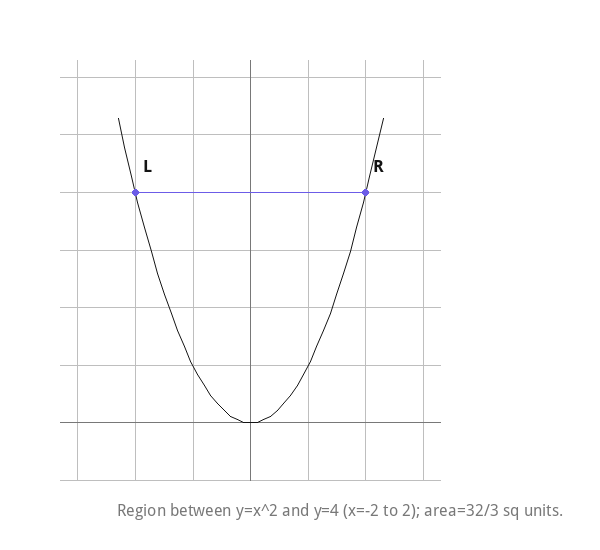
The definite integral ∫abf(x)dx=F(b)−F(a), representing the (signed) area under the curve between x=a and x=b, evaluated via the Fundamental Theorem of Calculus.
Properties of Definite Integrals
Key properties used to simplify evaluation: ∫abf(x)dx=−∫baf(x)dx; ∫abf(x)dx=∫abf(a+b−x)dx; ∫02af(x)dx=2∫0af(x)dx if f(2a−x)=f(x), else 0.
Exercise 7.1 Solutions (All 22 Questions)
1. Find an antiderivative (or integral) of sin 2x by the method of inspection.
Ans: Since d/dx(−cos 2x/2)=sin 2x, an antiderivative is −(cos 2x)/2.
2. Find an antiderivative (or integral) of cos 3x by the method of inspection.
Ans: Since d/dx(sin 3x/3)=cos 3x, an antiderivative is (sin 3x)/3.
3. Find an antiderivative (or integral) of e²ˣ by the method of inspection.
Ans: Since d/dx(e²ˣ/2)=e²ˣ, an antiderivative is e²ˣ/2.
4. Find an antiderivative (or integral) of (ax+b)² by the method of inspection.
Ans: Since d/dx[(ax+b)³/(3a)]=(ax+b)², an antiderivative is (ax+b)³/(3a).
5. Find an antiderivative (or integral) of sin 2x−4e³ˣ by the method of inspection.
Ans: Combining the antiderivatives of each term, an antiderivative is −(cos 2x)/2−(4/3)e³ˣ.
6. Find the integral: ∫(4e³ˣ+1)dx.
Ans: ∫(4e³ˣ+1)dx=(4/3)e³ˣ+x+C.
7. Find the integral: ∫x²(1−1/x²)dx.
Ans: Simplifying the integrand: x²(1−1/x²)=x²−1. So ∫(x²−1)dx=x³/3−x+C.
8. Find the integral: ∫(ax²+bx+c)dx.
Ans: ∫(ax²+bx+c)dx=ax³/3+bx²/2+cx+C.
9. Find the integral: ∫(2x²+eˣ)dx.
Ans: ∫(2x²+eˣ)dx=2x³/3+eˣ+C.
10. Find the integral: ∫(√x−1/√x)²dx.
Ans: Expanding: (√x−1/√x)²=x−2+1/x. So ∫(x−2+1/x)dx=x²/2−2x+log|x|+C.
11. Find the integral: ∫(x³+5x²−4)/x² dx.
Ans: Dividing term by term: (x³+5x²−4)/x²=x+5−4/x². So ∫(x+5−4/x²)dx=x²/2+5x+4/x+C.
12. Find the integral: ∫(x³+3x+4)/√x dx.
Ans: Dividing term by term: (x³+3x+4)/√x=x5/2+3x1/2+4x−1/2. So the integral is (2/7)x7/2+2x3/2+8x1/2+C.
13. Find the integral: ∫(x³−x²+x−1)/(x−1) dx.
Ans: Factoring the numerator by grouping: x³−x²+x−1=x²(x−1)+(x−1)=(x−1)(x²+1). So the integrand simplifies to x²+1, and ∫(x²+1)dx=x³/3+x+C.
14. Find the integral: ∫(1−x)√x dx.
Ans: Expanding: (1−x)√x=x1/2−x3/2. So the integral is (2/3)x3/2−(2/5)x5/2+C.
15. Find the integral: ∫√x(3x²+2x+3)dx.
Ans: Expanding: √x(3x²+2x+3)=3x5/2+2x3/2+3x1/2. So the integral is (6/7)x7/2+(4/5)x5/2+2x3/2+C.
16. Find the integral: ∫(2x−3cos x+eˣ)dx.
Ans: ∫(2x−3cos x+eˣ)dx=x²−3sin x+eˣ+C.
17. Find the integral: ∫(2x²−3sin x+5√x)dx.
Ans: ∫(2x²−3sin x+5√x)dx=2x³/3+3cos x+(10/3)x3/2+C.
18. Find the integral: ∫sec x(sec x+tan x)dx.
Ans: Expanding: sec x(sec x+tan x)=sec²x+sec x tan x. Since d/dx(tan x)=sec²x and d/dx(sec x)=sec x tan x, the integral is tan x+sec x+C.
19. Find the integral: ∫sec²x/cosec²x dx.
Ans: sec²x/cosec²x=sec²x·sin²x=(sin²x/cos²x)=tan²x=sec²x−1. So ∫(sec²x−1)dx=tan x−x+C.
20. Find the integral: ∫(2−3sin x)/cos²x dx.
Ans: Splitting the integrand: (2−3sin x)/cos²x=2sec²x−3sec x tan x. So the integral is 2tan x−3sec x+C.
21. The antiderivative of (√x+1/√x) equals (A) (1/3)√x+2√x+C (B) (2/3)x3/2+2x1/2+C (C) (2/3)x3/2+(1/2)x1/2+C (D) (3/2)x3/2+(1/2)x1/2+C.
Ans: Writing √x+1/√x=x1/2+x−1/2 and integrating term by term gives (2/3)x3/2+2x1/2+C. The answer is (B).
22. If d/dx f(x)=4x³−3/x⁴, such that f(2)=0, then f(x) is (A) x⁴+1/x³−129/8 (B) x³+1/x⁴+129/8 (C) x⁴+1/x³+129/8 (D) x³+1/x⁴−129/8.
Ans: Integrating: f(x)=x⁴+1/x³+C (since ∫(−3/x⁴)dx=1/x³). Using f(2)=0: 16+1/8+C=0, so C=−129/8. Hence f(x)=x⁴+1/x³−129/8. The answer is (A).
Exercise 7.2 Solutions (All 39 Questions)
1. Integrate the function: 2x/(1+x²).
Ans: Let t=1+x², so dt=2x dx. The integral becomes ∫dt/t=log|t|+C=log(1+x²)+C.
2. Integrate the function: (log x)²/x.
Ans: Let t=log x, so dt=dx/x. The integral becomes ∫t²dt=t³/3+C=(log x)³/3+C.
3. Integrate the function: 1/(x+x log x).
Ans: Writing the denominator as x(1+log x), let t=1+log x, so dt=dx/x. The integral becomes ∫dt/t=log|t|+C=log|1+log x|+C.
4. Integrate the function: sin x·sin(cos x).
Ans: Let t=cos x, so dt=−sin x dx. The integral becomes ∫sin(t)(−dt)=−(−cos t)+C=cos t+C=cos(cos x)+C.
5. Integrate the function: sin(ax+b)cos(ax+b).
Ans: Let t=sin(ax+b), so dt=a cos(ax+b)dx. The integral becomes ∫t dt/a=t²/(2a)+C=sin²(ax+b)/(2a)+C.
6. Integrate the function: √(ax+b).
Ans: Let t=ax+b, so dt=a dx. The integral becomes ∫√t dt/a=(1/a)(2/3)t3/2+C=(2/(3a))(ax+b)3/2+C.
7. Integrate the function: x√(x+2).
Ans: Let t=x+2, so x=t−2 and dt=dx. The integral becomes ∫(t−2)√t dt=∫(t3/2−2t1/2)dt=(2/5)t5/2−(4/3)t3/2+C=(2/5)(x+2)5/2−(4/3)(x+2)3/2+C.
8. Integrate the function: x√(1+2x²).
Ans: Let t=1+2x², so dt=4x dx. The integral becomes ∫√t dt/4=(1/4)(2/3)t3/2+C=(1/6)(1+2x²)3/2+C.
9. Integrate the function: (4x+2)√(x²+x+1).
Ans: Let t=x²+x+1, so dt=(2x+1)dx, i.e. (4x+2)dx=2dt. The integral becomes ∫√t·2dt=2(2/3)t3/2+C=(4/3)(x²+x+1)3/2+C.
10. Integrate the function: 1/(x−√x).
Ans: Let √x=t, so x=t² and dx=2t dt. The integral becomes ∫2t dt/(t²−t)=∫2dt/(t−1)=2log|t−1|+C=2log|√x−1|+C.
11. Integrate the function: x/√(x+4), x>0.
Ans: Let t=x+4, so x=t−4 and dt=dx. The integral becomes ∫(t−4)/√t dt=∫(t1/2−4t−1/2)dt=(2/3)t3/2−8t1/2+C=(2/3)(x+4)3/2−8(x+4)1/2+C.
12. Integrate the function: (x³−1)1/3x⁵.
Ans: Let t=x³−1, so dt=3x²dx and x³=t+1. Then x⁵dx=x³·x²dx=(t+1)dt/3. The integral becomes ∫t1/3(t+1)dt/3=(1/3)[(3/7)t7/3+(3/4)t4/3]+C=(1/7)(x³−1)7/3+(1/4)(x³−1)4/3+C.
13. Integrate the function: x²/(2+3x³)³.
Ans: Let t=2+3x³, so dt=9x²dx. The integral becomes ∫dt/(9t³)=(1/9)·t−2/(−2)+C=−1/(18t²)+C=−1/(18(2+3x³)²)+C.
14. Integrate the function: 1/[x(log x)m], x>0.
Ans: Let t=log x, so dt=dx/x. The integral becomes ∫t−mdt=t1−m/(1−m)+C=(log x)1−m/(1−m)+C.
15. Integrate the function: x/(9−4x²).
Ans: Let t=9−4x², so dt=−8x dx. The integral becomes ∫−dt/(8t)=−(1/8)log|t|+C=−(1/8)log|9−4x²|+C.
16. Integrate the function: e2x+3.
Ans: Let t=2x+3, so dt=2dx. The integral becomes ∫eᵗdt/2=(1/2)eᵗ+C=(1/2)e2x+3+C.
17. Integrate the function: x/ex².
Ans: Let t=−x², so dt=−2x dx. The integral becomes ∫eᵗ(−dt/2)=−(1/2)eᵗ+C=−(1/2)e−x²+C.
18. Integrate the function: etan⁻¹x/(1+x²).
Ans: Let t=tan⁻¹x, so dt=dx/(1+x²). The integral becomes ∫eᵗdt=eᵗ+C=etan⁻¹x+C.
19. Integrate the function: (e²ˣ−1)/(e²ˣ+1).
Ans: Dividing numerator and denominator by eˣ, the integrand becomes (eˣ−e⁻ˣ)/(eˣ+e⁻ˣ). Let t=eˣ+e⁻ˣ, so dt=(eˣ−e⁻ˣ)dx. The integral becomes ∫dt/t=log|t|+C=log(eˣ+e⁻ˣ)+C, which is the same as log(e²ˣ+1)−x+C.
20. Integrate the function: (e²ˣ−e⁻²ˣ)/(e²ˣ+e⁻²ˣ).
Ans: Let t=e²ˣ+e⁻²ˣ, so dt=2(e²ˣ−e⁻²ˣ)dx. The integral becomes ∫dt/(2t)=(1/2)log|t|+C=(1/2)log(e²ˣ+e⁻²ˣ)+C.
21. Integrate the function: tan²(2x−3).
Ans: Using tan²θ=sec²θ−1 with θ=2x−3: the integral becomes ∫[sec²(2x−3)−1]dx=(1/2)tan(2x−3)−x+C.
22. Integrate the function: sec²(7−4x).
Ans: Let t=7−4x, so dt=−4dx. The integral becomes ∫sec²t(−dt/4)=−(1/4)tan t+C=−(1/4)tan(7−4x)+C.
23. Integrate the function: sin⁻¹x/√(1−x²).
Ans: Let t=sin⁻¹x, so dt=dx/√(1−x²). The integral becomes ∫t dt=t²/2+C=(sin⁻¹x)²/2+C.
24. Integrate the function: (2cos x−3sin x)/(6cos x+4sin x).
Ans: Let t=6cos x+4sin x, so dt=(−6sin x+4cos x)dx=2(2cos x−3sin x)dx. The integral becomes ∫(dt/2)/t=(1/2)log|t|+C=(1/2)log|6cos x+4sin x|+C.
25. Integrate the function: 1/[cos²x(1−tan x)²].
Ans: Let t=1−tan x, so dt=−sec²x dx=−dx/cos²x. The integral becomes ∫−dt/t²=1/t+C=1/(1−tan x)+C.
26. Integrate the function: cos√x/√x.
Ans: Let t=√x, so dt=dx/(2√x), i.e. dx/√x=2dt. The integral becomes ∫cos t·2dt=2sin t+C=2sin√x+C.
27. Integrate the function: √(sin 2x)cos 2x.
Ans: Let t=sin 2x, so dt=2cos 2x dx. The integral becomes ∫√t dt/2=(1/2)(2/3)t3/2+C=(1/3)(sin 2x)3/2+C.
28. Integrate the function: cos x/√(1+sin x).
Ans: Let t=1+sin x, so dt=cos x dx. The integral becomes ∫dt/√t=2√t+C=2√(1+sin x)+C.
29. Integrate the function: cot x·log(sin x).
Ans: Let t=log(sin x), so dt=cot x dx. The integral becomes ∫t dt=t²/2+C=(log sin x)²/2+C.
30. Integrate the function: sin x/(1+cos x).
Ans: Let t=1+cos x, so dt=−sin x dx. The integral becomes ∫−dt/t=−log|t|+C=−log|1+cos x|+C.
31. Integrate the function: sin x/(1+cos x)².
Ans: Let t=1+cos x, so dt=−sin x dx. The integral becomes ∫−dt/t²=1/t+C=1/(1+cos x)+C.
32. Integrate the function: 1/(1+cot x).
Ans: Writing 1/(1+cot x)=sin x/(sin x+cos x), and splitting sin x=(1/2)(sin x+cos x)+(1/2)(sin x−cos x), the integral splits as (1/2)∫dx+(1/2)∫(sin x−cos x)/(sin x+cos x)dx. Let t=sin x+cos x, so dt=(cos x−sin x)dx=−(sin x−cos x)dx. The second part becomes (1/2)∫−dt/t=−(1/2)log|t|+C. So the integral is x/2−(1/2)log|sin x+cos x|+C.
33. Integrate the function: 1/(1−tan x).
Ans: Writing 1/(1−tan x)=cos x/(cos x−sin x), and splitting cos x=(1/2)(cos x−sin x)+(1/2)(sin x+cos x), the integral splits as (1/2)∫dx+(1/2)∫(sin x+cos x)/(cos x−sin x)dx. Let t=cos x−sin x, so dt=(−sin x−cos x)dx=−(sin x+cos x)dx. The second part becomes (1/2)∫−dt/t=−(1/2)log|t|+C. So the integral is x/2−(1/2)log|cos x−sin x|+C.
34. Integrate the function: √(tan x)/(sin x cos x).
Ans: Dividing numerator and denominator by cos²x, the integrand becomes √(tan x)·sec²x/tan x=sec²x/√(tan x). Let t=tan x, so dt=sec²x dx. The integral becomes ∫dt/√t=2√t+C=2√(tan x)+C.
35. Integrate the function: (1+log x)²/x.
Ans: Let t=1+log x, so dt=dx/x. The integral becomes ∫t²dt=t³/3+C=(1+log x)³/3+C.
36. Integrate the function: (x+1)(x+log x)²/x.
Ans: Writing (x+1)/x=1+1/x, let t=x+log x, so dt=(1+1/x)dx. The integral becomes ∫t²dt=t³/3+C=(x+log x)³/3+C.
37. Integrate the function: x³sin(tan⁻¹x⁴)/(1+x⁸).
Ans: Let t=tan⁻¹(x⁴), so dt=4x³/(1+x⁸)dx, i.e. x³dx/(1+x⁸)=dt/4. The integral becomes ∫sin t·dt/4=−(1/4)cos t+C=−(1/4)cos(tan⁻¹x⁴)+C.
38. The antiderivative of (10x⁹+10ˣloge10)/(x¹⁰+10ˣ) equals (A) 10ˣ−x¹⁰+C (B) 10ˣ+x¹⁰+C (C) (10ˣ−x¹⁰)⁻¹+C (D) log(10ˣ+x¹⁰)+C.
Ans: Let t=x¹⁰+10ˣ, so dt=(10x⁹+10ˣloge10)dx (using d/dx(10ˣ)=10ˣloge10). The integral becomes ∫dt/t=log|t|+C=log(x¹⁰+10ˣ)+C. The answer is (D).
39. If ∫dx/(sin²x cos²x)=tan x+λcot x+C, then λ equals (A) 1 (B) −1 (C) 2 (D) −2.
Ans: Since 1/(sin²x cos²x)=sec²x+cosec²x, the integral is ∫(sec²x+cosec²x)dx=tan x−cot x+C. Comparing with tan x+λcot x+C gives λ=−1. The answer is (B).
Exercise 7.3 Solutions (All 24 Questions)
1. Find the integral of sin²(2x+5).
Ans: Using sin²θ=(1−cos2θ)/2 with θ=2x+5: sin²(2x+5)=(1−cos(4x+10))/2. The integral is x/2−sin(4x+10)/8+C.
2. Find the integral of sin 3x cos 4x.
Ans: Using sinA cosB=(1/2)[sin(A+B)+sin(A−B)]: sin3x cos4x=(1/2)[sin7x−sinx]. The integral is (1/2)[−cos7x/7+cosx]+C=−cos7x/14+cosx/2+C.
3. Find the integral of cos 2x cos 4x cos 6x.
Ans: Using the product-to-sum identity twice: cos2x cos4x=(1/2)(cos6x+cos2x), and multiplying by cos6x and simplifying using cos²6x=(1+cos12x)/2 and cos2x cos6x=(1/2)(cos8x+cos4x), the integrand becomes (1/4)[1+cos12x+cos8x+cos4x]. The integral is x/4+sin12x/48+sin8x/32+sin4x/16+C.
4. Find the integral of sin³(2x+1).
Ans: Using sin³θ=(3sinθ−sin3θ)/4 with θ=2x+1: the integral becomes (1/4)∫[3sin(2x+1)−sin(6x+3)]dx=(1/4)[−3cos(2x+1)/2+cos(6x+3)/6]+C=−3cos(2x+1)/8+cos(6x+3)/24+C.
5. Find the integral of sin³x cos³x.
Ans: Writing sinx cosx=sin2x/2, sin³x cos³x=(sin2x/2)³=sin³2x/8. Using sin³θ=(3sinθ−sin3θ)/4 with θ=2x: sin³2x=(3sin2x−sin6x)/4, so the integrand is (3sin2x−sin6x)/32. The integral is (1/32)[−3cos2x/2+cos6x/6]+C=−3cos2x/64+cos6x/192+C.
6. Find the integral of sin x sin 2x sin 3x.
Ans: Using sinx sin3x=(1/2)(cos2x−cos4x), then multiplying by sin2x and applying the product-to-sum identity again, the integrand simplifies to (1/4)[sin4x+sin2x−sin6x]. The integral is −cos4x/16−cos2x/8+cos6x/24+C.
7. Find the integral of sin 4x sin 8x.
Ans: Using sinA sinB=(1/2)[cos(A−B)−cos(A+B)]: sin4x sin8x=(1/2)[cos4x−cos12x]. The integral is (1/2)[sin4x/4−sin12x/12]+C=sin4x/8−sin12x/24+C.
8. Find the integral of (1−cos x)/(1+cos x).
Ans: Using the half-angle identity (1−cos x)/(1+cos x)=tan²(x/2), the integral becomes ∫[sec²(x/2)−1]dx=2tan(x/2)−x+C.
9. Find the integral of cos x/(1+cos x).
Ans: Writing cos x/(1+cos x)=1−1/(1+cos x), and using 1/(1+cos x)=(1/2)sec²(x/2), the integral becomes ∫[1−(1/2)sec²(x/2)]dx=x−tan(x/2)+C.
10. Find the integral of sin⁴x.
Ans: Using sin⁴x=(3−4cos2x+cos4x)/8, the integral is 3x/8−sin2x/4+sin4x/32+C.
11. Find the integral of cos⁴2x.
Ans: Using cos⁴θ=(3+4cos2θ+cos4θ)/8 with θ=2x: cos⁴2x=(3+4cos4x+cos8x)/8. The integral is 3x/8+sin4x/8+sin8x/64+C.
12. Find the integral of sin²x/(1+cos x).
Ans: Since sin²x=1−cos²x=(1−cos x)(1+cos x), the integrand simplifies to 1−cos x. The integral is x−sin x+C.
13. Find the integral of (cos 2x−cos 2α)/(cos x−cos α).
Ans: Using cos2θ=2cos²θ−1: cos2x−cos2α=2(cos²x−cos²α)=2(cos x−cos α)(cos x+cos α), so the integrand simplifies to 2(cos x+cos α). The integral is 2sin x+2x cos α+C.
14. Find the integral of (cos x−sin x)/(1+sin 2x).
Ans: Since 1+sin2x=(sin x+cos x)², let t=sin x+cos x, so dt=(cos x−sin x)dx. The integral becomes ∫dt/t²=−1/t+C=−1/(sin x+cos x)+C.
15. Find the integral of tan³2x sec 2x.
Ans: Let t=sec 2x, so dt=2sec 2x tan 2x dx. Writing tan³2x sec 2x=(sec²2x−1)(sec 2x tan 2x), the integral becomes ∫(t²−1)dt/2=(1/2)(t³/3−t)+C=sec³2x/6−sec 2x/2+C.
16. Find the integral of tan⁴x.
Ans: Writing tan⁴x=tan²x(sec²x−1)=tan²x sec²x−(sec²x−1), the integral becomes ∫tan²x sec²x dx−∫sec²x dx+∫dx=tan³x/3−tan x+x+C.
17. Find the integral of (sin³x+cos³x)/(sin²x cos²x).
Ans: Splitting the fraction: sin³x/(sin²x cos²x)=sin x/cos²x and cos³x/(sin²x cos²x)=cos x/sin²x. Since d/dx(sec x)=sin x/cos²x and d/dx(−cosec x)=cos x/sin²x, the integral is sec x−cosec x+C.
18. Find the integral of (cos 2x+2sin²x)/cos²x.
Ans: Since cos2x=1−2sin²x, the numerator cos2x+2sin²x=1, so the integrand simplifies to 1/cos²x=sec²x. The integral is tan x+C.
19. Find the integral of 1/(sin x cos³x).
Ans: Writing 1=sin²x+cos²x in the numerator: 1/(sin x cos³x)=sin x/cos³x+1/(sin x cos x)=tan x sec²x+cosec x sec x. Since ∫tan x sec²x dx=tan²x/2 (letting u=tan x) and ∫cosec x sec x dx=log|tan x| (as d/dx log|tan x|=1/(sin x cos x)), the integral is tan²x/2+log|tan x|+C.
20. Find the integral of cos 2x/(cos x+sin x)².
Ans: Since cos2x=cos²x−sin²x=(cos x−sin x)(cos x+sin x), the integrand simplifies to (cos x−sin x)/(cos x+sin x). Let t=cos x+sin x, so dt=(cos x−sin x)dx. The integral becomes ∫dt/t=log|t|+C=log|sin x+cos x|+C.
21. Find the integral of sin⁻¹(cos x).
Ans: Since cos x=sin(π/2−x), sin⁻¹(cos x)=π/2−x on the relevant domain. The integral is ∫(π/2−x)dx=πx/2−x²/2+C.
22. Find the integral of 1/[cos(x−a)cos(x−b)].
Ans: Using sin[(x−a)−(x−b)]=sin(b−a)=sin(x−a)cos(x−b)−cos(x−a)sin(x−b), dividing both sides by cos(x−a)cos(x−b) gives 1/[cos(x−a)cos(x−b)]=[tan(x−a)−tan(x−b)]/sin(b−a). The integral is (1/sin(b−a))[−log|cos(x−a)|+log|cos(x−b)|]+C=(1/sin(b−a))log|cos(x−b)/cos(x−a)|+C.
23. (sin²x−cos²x)/(sin²x cos²x) is equal to (A) tan x+cot x+C (B) tan x+cosec x+C (C) −tan x+cot x+C (D) tan x+sec x+C.
Ans: Writing (sin²x−cos²x)/(sin²x cos²x)=1/cos²x−1/sin²x=sec²x−cosec²x, whose antiderivative is tan x−(−cot x)=tan x+cot x. The answer is (A).
24. eˣ(1+x)/cos²(eˣx) is equal to (A) −cot(xeˣ)+C (B) tan(xeˣ)+C (C) tan(eˣ)+C (D) cot(eˣ)+C.
Ans: Let t=xeˣ, so dt=(eˣ+xeˣ)dx=eˣ(1+x)dx. The integral becomes ∫sec²t dt=tan t+C=tan(xeˣ)+C. The answer is (B).
Exercise 7.4 Solutions (All 25 Questions)
1. Integrate the function: 3x²/(x⁶+1).
Ans: Let t=x³, so dt=3x²dx. The integral becomes ∫dt/(t²+1)=tan⁻¹t+C=tan⁻¹(x³)+C.
2. Integrate the function: 1/√(1+4x²).
Ans: Using the standard form ∫dx/√(x²+a²)=log|x+√(x²+a²)|+C, the integral is (1/2)log|2x+√(1+4x²)|+C.
3. Integrate the function: 1/√[(2−x)²+1].
Ans: Let u=2−x, so du=−dx. The integral becomes −∫du/√(u²+1)=−log|u+√(u²+1)|+C=−log|(2−x)+√[(2−x)²+1]|+C.
4. Integrate the function: 1/√(9−25x²).
Ans: Writing 9−25x²=25(9/25−x²), and using ∫dx/√(a²−x²)=sin⁻¹(x/a)+C with a=3/5, the integral is (1/5)sin⁻¹(5x/3)+C.
5. Integrate the function: 3x/(1+2x⁴).
Ans: Let t=x², so dt=2x dx, i.e. 3x dx=(3/2)dt. The integral becomes (3/2)∫dt/(1+2t²)=(3/(2√2))tan⁻¹(√2 t)+C=(3√2/4)tan⁻¹(√2 x²)+C.
6. Integrate the function: x²/(1−x⁶).
Ans: Let t=x³, so dt=3x²dx. The integral becomes (1/3)∫dt/(1−t²)=(1/6)log|(1+t)/(1−t)|+C=(1/6)log|(1+x³)/(1−x³)|+C.
7. Integrate the function: (x−1)/√(x²−1).
Ans: Splitting the numerator: (x−1)/√(x²−1)=x/√(x²−1)−1/√(x²−1). Since ∫x/√(x²−1)dx=√(x²−1) and ∫1/√(x²−1)dx=log|x+√(x²−1)|, the integral is √(x²−1)−log|x+√(x²−1)|+C.
8. Integrate the function: x²/√(x⁶+a⁶).
Ans: Let t=x³, so dt=3x²dx. The integral becomes (1/3)∫dt/√(t²+a⁶)=(1/3)log|t+√(t²+a⁶)|+C=(1/3)log|x³+√(x⁶+a⁶)|+C.
9. Integrate the function: sec²x/√(tan²x+4).
Ans: Let t=tan x, so dt=sec²x dx. The integral becomes ∫dt/√(t²+4)=log|t+√(t²+4)|+C=log|tan x+√(tan²x+4)|+C.
10. Integrate the function: 1/√(x²+2x+2).
Ans: Completing the square, x²+2x+2=(x+1)²+1, so the integral is log|(x+1)+√(x²+2x+2)|+C.
11. Integrate the function: 1/(9x²+6x+5).
Ans: Completing the square, 9x²+6x+5=9(x+1/3)²+4. The integral is (1/6)tan⁻¹((3x+1)/2)+C.
12. Integrate the function: 1/√(7−6x−x²).
Ans: Completing the square, 7−6x−x²=16−(x+3)². The integral is sin⁻¹((x+3)/4)+C.
13. Integrate the function: 1/√[(x−1)(x−2)].
Ans: Writing (x−1)(x−2)=x²−3x+2=(x−3/2)²−1/4, the integral is log|(x−3/2)+√(x²−3x+2)|+C.
14. Integrate the function: 1/√(8+3x−x²).
Ans: Completing the square, 8+3x−x²=41/4−(x−3/2)². The integral is sin⁻¹((2x−3)/√41)+C.
15. Integrate the function: 1/√[(x−a)(x−b)].
Ans: Writing (x−a)(x−b)=[x−(a+b)/2]²−[(a−b)/2]², the integral is log|x−(a+b)/2+√[(x−a)(x−b)]|+C.
16. Integrate the function: (4x+1)/√(2x²+x−3).
Ans: Since d/dx(2x²+x−3)=4x+1 exactly matches the numerator, the integral is 2√(2x²+x−3)+C.
17. Integrate the function: (x+2)/√(x²−1).
Ans: Splitting the numerator: (x+2)/√(x²−1)=x/√(x²−1)+2/√(x²−1). Since ∫x/√(x²−1)dx=√(x²−1) and ∫1/√(x²−1)dx=log|x+√(x²−1)|, the integral is √(x²−1)+2log|x+√(x²−1)|+C.
18. Integrate the function: (5x−2)/(1+2x+3x²).
Ans: Writing 5x−2=(5/6)(6x+2)−11/3, where 6x+2 is the derivative of 3x²+2x+1, the integral splits as (5/6)∫(6x+2)/(3x²+2x+1)dx−(11/3)∫dx/(3x²+2x+1). The first part is (5/6)log|3x²+2x+1|. Completing the square in the second, 3x²+2x+1=3(x+1/3)²+2/3, giving (1/√2)tan⁻¹((3x+1)/√2). The integral is (5/6)log|3x²+2x+1|−(11√2/6)tan⁻¹((3x+1)/√2)+C.
19. Integrate the function: (6x+7)/√[(x−5)(x−4)].
Ans: Writing 6x+7=3(2x−9)+34, where 2x−9 is the derivative of x²−9x+20, the integral splits as 3∫(2x−9)/√(x²−9x+20)dx+34∫dx/√(x²−9x+20). The first part is 6√(x²−9x+20). Completing the square in the second, x²−9x+20=(x−9/2)²−1/4, giving log|(x−9/2)+√(x²−9x+20)|. The integral is 6√(x²−9x+20)+34log|x−9/2+√(x²−9x+20)|+C.
20. Integrate the function: (x+2)/√(4x−x²).
Ans: Let u=x−2, so 4x−x²=4−u² and the numerator x+2=u+4. The integral becomes ∫u/√(4−u²)du+4∫du/√(4−u²)=−√(4−u²)+4sin⁻¹(u/2)+C=−√(4x−x²)+4sin⁻¹((x−2)/2)+C.
21. Integrate the function: (x+2)/√(x²+2x+3).
Ans: Writing x+2=(1/2)(2x+2)+1, where 2x+2 is the derivative of x²+2x+3, the integral splits as (1/2)∫(2x+2)/√(x²+2x+3)dx+∫dx/√(x²+2x+3)=√(x²+2x+3)+log|(x+1)+√(x²+2x+3)|+C.
22. Integrate the function: (x+3)/(x²−2x−5).
Ans: Writing x+3=(1/2)(2x−2)+4, where 2x−2 is the derivative of x²−2x−5, the integral splits as (1/2)∫(2x−2)/(x²−2x−5)dx+4∫dx/(x²−2x−5). The first part is (1/2)log|x²−2x−5|. Completing the square in the second, x²−2x−5=(x−1)²−6, giving (1/(2√6))log|(x−1−√6)/(x−1+√6)|. The integral is (1/2)log|x²−2x−5|+(√6/3)log|(x−1−√6)/(x−1+√6)|+C.
23. Integrate the function: (5x+3)/√(x²+4x+10).
Ans: Writing 5x+3=(5/2)(2x+4)−7, where 2x+4 is the derivative of x²+4x+10, the integral splits as (5/2)∫(2x+4)/√(x²+4x+10)dx−7∫dx/√(x²+4x+10)=5√(x²+4x+10)−7log|(x+2)+√(x²+4x+10)|+C.
24. 1/(x²+2x+2) equals (A) x tan⁻¹(x+1)+C (B) tan⁻¹(x+1)+C (C) (x+1)tan⁻¹x+C (D) tan⁻¹x+C.
Ans: Since x²+2x+2=(x+1)²+1, the integral is tan⁻¹(x+1)+C. The answer is (B).
25. 1/√(9x−4x²) equals (A) (1/9)sin⁻¹((9x−8)/8)+C (B) (1/2)sin⁻¹((8x−9)/9)+C (C) (1/3)sin⁻¹((9x−8)/8)+C (D) (1/2)sin⁻¹((9x−8)/9)+C.
Ans: Writing 9x−4x²=81/16−4(x−9/8)², the integral becomes (1/2)∫du/√((9/8)²−u²) with u=x−9/8, giving (1/2)sin⁻¹(u/(9/8))+C=(1/2)sin⁻¹((8x−9)/9)+C. The answer is (B).
Exercise 7.5 Solutions (All 23 Questions)
1. Integrate the function: x/[(x+1)(x+2)].
Ans: By partial fractions, x/[(x+1)(x+2)]=−1/(x+1)+2/(x+2). The integral is −log|x+1|+2log|x+2|+C.
2. Integrate the function: 1/(x²−9).
Ans: By partial fractions, 1/(x²−9)=(1/6)[1/(x−3)−1/(x+3)]. The integral is (1/6)log|(x−3)/(x+3)|+C.
3. Integrate the function: (3x−1)/[(x−1)(x−2)(x−3)].
Ans: By partial fractions, the integrand equals 1/(x−1)−5/(x−2)+4/(x−3). The integral is log|x−1|−5log|x−2|+4log|x−3|+C.
4. Integrate the function: x/[(x−1)(x−2)(x−3)].
Ans: By partial fractions, the integrand equals (1/2)/(x−1)−2/(x−2)+(3/2)/(x−3). The integral is (1/2)log|x−1|−2log|x−2|+(3/2)log|x−3|+C.
5. Integrate the function: 2x/(x²+3x+2).
Ans: Since x²+3x+2=(x+1)(x+2), partial fractions give the integrand as −2/(x+1)+4/(x+2). The integral is −2log|x+1|+4log|x+2|+C.
6. Integrate the function: (1−x²)/[x(1−2x)].
Ans: Since the degrees of numerator and denominator are equal, dividing first and then applying partial fractions gives the integrand as 1/2+1/x−(3/2)/(2x−1). The integral is x/2+log|x|−(3/4)log|2x−1|+C.
7. Integrate the function: x/[(x²+1)(x−1)].
Ans: By partial fractions, the integrand equals (1/2)(1−x)/(x²+1)+(1/2)/(x−1). Using ∫1/(x²+1)dx=tan⁻¹x and ∫x/(x²+1)dx=(1/2)log(x²+1), the integral is (1/2)tan⁻¹x−(1/4)log(x²+1)+(1/2)log|x−1|+C.
8. Integrate the function: x/[(x−1)²(x+2)].
Ans: By partial fractions, the integrand equals (2/9)/(x−1)+(1/3)/(x−1)²−(2/9)/(x+2). The integral is (2/9)log|x−1|−1/[3(x−1)]−(2/9)log|x+2|+C.
9. Integrate the function: (3x+5)/(x³−x²−x+1).
Ans: Since x³−x²−x+1=(x−1)²(x+1), partial fractions give the integrand as −(1/2)/(x−1)+4/(x−1)²+(1/2)/(x+1). The integral is −(1/2)log|x−1|−4/(x−1)+(1/2)log|x+1|+C.
10. Integrate the function: (2x−3)/[(x²−1)(2x+3)].
Ans: By partial fractions, the integrand equals −(1/10)/(x−1)+(5/2)/(x+1)−(24/5)/(2x+3). The integral is −(1/10)log|x−1|+(5/2)log|x+1|−(12/5)log|2x+3|+C.
11. Integrate the function: 5x/[(x−1)(x²−4)].
Ans: By partial fractions, the integrand equals −(5/3)/(x−1)+(5/2)/(x−2)−(5/6)/(x+2). The integral is −(5/3)log|x−1|+(5/2)log|x−2|−(5/6)log|x+2|+C.
12. Integrate the function: (x³+x+1)/(x²−1).
Ans: Dividing first, the integrand equals x+(2x+1)/(x²−1), and partial fractions give (2x+1)/(x²−1)=(3/2)/(x−1)+(1/2)/(x+1). The integral is x²/2+(3/2)log|x−1|+(1/2)log|x+1|+C.
13. Integrate the function: 2/[(1−x)(1+x²)].
Ans: By partial fractions, the integrand equals 1/(1−x)+(x+1)/(1+x²). The integral is −log|1−x|+(1/2)log(1+x²)+tan⁻¹x+C.
14. Integrate the function: (3x−1)/(x+2)².
Ans: Let u=x+2. Since 3x−1=3u−7, the integrand equals 3/u−7/u². The integral is 3log|x+2|+7/(x+2)+C.
15. Integrate the function: 1/(x⁴−1).
Ans: Since x⁴−1=(x−1)(x+1)(x²+1), partial fractions give the integrand as (1/4)/(x−1)−(1/4)/(x+1)−(1/2)/(x²+1). The integral is (1/4)log|(x−1)/(x+1)|−(1/2)tan⁻¹x+C.
16. Integrate the function: 1/[x(xn+1)].
Ans: Multiplying numerator and denominator by xn−1, let t=xn, so dt=nxn−1dx. The integral becomes (1/n)∫dt/[t(t+1)]=(1/n)log|t/(t+1)|+C=(1/n)log|xn/(xn+1)|+C.
17. Integrate the function: cos x/[(1−sin x)(2−sin x)].
Ans: Let t=sin x, so dt=cos x dx. By partial fractions, 1/[(1−t)(2−t)]=1/(1−t)−1/(2−t), so the integral becomes ∫[1/(1−t)−1/(2−t)]dt=−log|1−t|+log|2−t|+C=log|(2−sin x)/(1−sin x)|+C.
18. Integrate the function: (x²+1)(x²+2)/[(x²+3)(x²+4)].
Ans: Writing y=x² and dividing (since numerator and denominator have equal degree in y), the integrand simplifies to 1+2/(x²+3)−6/(x²+4). The integral is x+(2√3/3)tan⁻¹(x/√3)−3tan⁻¹(x/2)+C.
19. Integrate the function: 2x/[(x²+1)(x²+3)].
Ans: Let t=x², so dt=2x dx. By partial fractions, 1/[(t+1)(t+3)]=(1/2)/(t+1)−(1/2)/(t+3), so the integral is (1/2)log[(x²+1)/(x²+3)]+C.
20. Integrate the function: 1/[x(x⁴−1)].
Ans: By partial fractions (using x⁴−1=(x−1)(x+1)(x²+1)), the integrand equals −1/x+(1/4)/(x−1)+(1/4)/(x+1)+(1/2)x/(x²+1). The integral is −log|x|+(1/4)log|x⁴−1|+C.
21. Integrate the function: 1/(eˣ−1).
Ans: Let t=eˣ, so dt=eˣdx, i.e. dx=dt/t. The integral becomes ∫dt/[t(t−1)]=log|t−1|−log|t|+C=log|eˣ−1|−x+C.
22. ∫x dx/[(x−1)(x−2)] equals (A) log|(x−1)²/(x−2)|+C (B) log|(x−2)²/(x−1)|+C (C) log|(x−1)²(x−2)|+C (D) log|(x−1)(x−2)|+C.
Ans: By partial fractions, x/[(x−1)(x−2)]=−1/(x−1)+2/(x−2). The integral is −log|x−1|+2log|x−2|+C=log|(x−2)²/(x−1)|+C. The answer is (B).
23. ∫dx/[x(x²+1)] equals (A) log|x|−(1/2)log(x²+1)+C (B) log|x|+(1/2)log(x²+1)+C (C) −log|x|+(1/2)log(x²+1)+C (D) (1/2)log|x|+log(x²+1)+C.
Ans: By partial fractions, 1/[x(x²+1)]=1/x−x/(x²+1). The integral is log|x|−(1/2)log(x²+1)+C. The answer is (A).
Exercise 7.6 Solutions (All 24 Questions)
Integrate the functions in Exercises 1 to 22.
1. x sin x
Ans: sin x – x cos x + C
2. x sin 3x
Ans: (sin 3x)/9 – (x cos 3x)/3 + C
3. x²eˣ
Ans: eˣ(x² – 2x + 2) + C
4. x log x
Ans: (x²/2) log x – x²/4 + C
5. x log 2x
Ans: (x²/2) log 2x – x²/4 + C
6. x² log x
Ans: (x³/3) log x – x³/9 + C
7. x sin⁻¹x
Ans: ((2x² – 1)/4) sin⁻¹x + (x√(1-x²))/4 + C
8. x tan⁻¹x
Ans: ((x² + 1)/2) tan⁻¹x – x/2 + C
9. x cos⁻¹x
Ans: ((2x² – 1)/4) cos⁻¹x – (x√(1-x²))/4 + C
10. (sin⁻¹x)²
Ans: x(sin⁻¹x)² – 2x + 2√(1-x²) sin⁻¹x + C
11. (x cos⁻¹x)/√(1-x²)
Ans: -√(1-x²) cos⁻¹x – x + C
12. x sec²x
Ans: x tan x + log|cos x| + C
13. tan⁻¹x
Ans: x tan⁻¹x – (1/2) log(1 + x²) + C
14. x(log x)²
Ans: (x²/2)(log x)² – (x²/2) log x + x²/4 + C
15. (x² + 1) log x
Ans: (x³/3) log x – x³/9 + x log x – x + C
16. eˣ(sin x + cos x)
Ans: eˣ sin x + C
17. (xeˣ)/(1 + x)²
Ans: eˣ/(1 + x) + C
18. eˣ((1 + sin x)/(1 + cos x))
Ans: eˣ tan(x/2) + C
19. eˣ(1/x – 1/x²)
Ans: eˣ/x + C
20. ((x – 3)eˣ)/(x – 1)³
Ans: eˣ/(x – 1)² + C
21. e2x sin x
Ans: (e2x(2 sin x – cos x))/5 + C
22. sin⁻¹(2x/(1 + x²))
Ans: 2x tan⁻¹x – log(1 + x²) + C
23. Choose the correct answer: ∫x²ex³dx equals
(A) (1/3)ex³ + C
(B) (1/3)ex² + C
(C) (1/2)ex³ + C
(D) (1/2)ex² + C
Ans: (A) (1/3)ex³ + C
24. Choose the correct answer: ∫eˣsec x(1 + tan x)dx equals
(A) eˣcos x + C
(B) eˣsec x + C
(C) eˣsin x + C
(D) eˣtan x + C
Ans: (B) eˣsec x + C
Exercise 7.7 Solutions (All 11 Questions)
Integrate the functions in Exercises 1 to 9.
1. √(4 – x²)
Ans: (x/2)√(4 – x²) + 2 sin⁻¹(x/2) + C
2. √(1 – 4x²)
Ans: (x/2)√(1 – 4x²) + (1/4) sin⁻¹(2x) + C
3. √(x² + 4x + 6)
Ans: ((x + 2)/2)√(x² + 4x + 6) + log|(x + 2) + √(x² + 4x + 6)| + C
4. √(x² + 4x + 1)
Ans: ((x + 2)/2)√(x² + 4x + 1) – (3/2) log|(x + 2) + √(x² + 4x + 1)| + C
5. √(1 – 4x – x²)
Ans: ((x + 2)/2)√(1 – 4x – x²) + (5/2) sin⁻¹((x + 2)/√5) + C
6. √(x² + 4x – 5)
Ans: ((x + 2)/2)√(x² + 4x – 5) – (9/2) log|(x + 2) + √(x² + 4x – 5)| + C
7. √(1 + 3x – x²)
Ans: ((2x – 3)/4)√(1 + 3x – x²) + (13/8) sin⁻¹((2x – 3)/√13) + C
8. √(x² + 3x)
Ans: ((2x + 3)/4)√(x² + 3x) – (9/8) log|(x + 3/2) + √(x² + 3x)| + C
9. √(1 + x²/9)
Ans: (x/6)√(9 + x²) + (3/2) log|x + √(9 + x²)| + C
10. Choose the correct answer: ∫√(1 + x²) dx is equal to
(A) (x/2)√(1 + x²) + (1/2) log|x + √(1 + x²)| + C
(B) (2/3)(1 + x²)3/2 + C
(C) (2/3)x(1 + x²)3/2 + C
(D) (x³/2)√(1 + x²) + (x²/2) log|x + √(1 + x²)| + C
Ans: (A) (x/2)√(1 + x²) + (1/2) log|x + √(1 + x²)| + C
11. Choose the correct answer: ∫√(x² – 8x + 7) dx is equal to
(A) (1/2)(x – 4)√(x² – 8x + 7) + 9 log|x – 4 + √(x² – 8x + 7)| + C
(B) (1/2)(x + 4)√(x² – 8x + 7) + 9 log|x + 4 + √(x² – 8x + 7)| + C
(C) (1/2)(x – 4)√(x² – 8x + 7) – 3√2 log|x – 4 + √(x² – 8x + 7)| + C
(D) (1/2)(x – 4)√(x² – 8x + 7) – (9/2) log|x – 4 + √(x² – 8x + 7)| + C
Ans: (D) (1/2)(x – 4)√(x² – 8x + 7) – (9/2) log|x – 4 + √(x² – 8x + 7)| + C
Exercise 7.8 Solutions (All 22 Questions)
Evaluate the following definite integrals in Exercises 1 to 20.
1. ∫-11 (x + 1) dx
Ans: [x²/2 + x]-11 = (1/2 + 1) – (1/2 – 1) = 2
2. ∫23 (1/x) dx
Ans: [log x]23 = log 3 – log 2 = log(3/2)
3. ∫12 (4x³ – 5x² + 6x + 9) dx
Ans: [x⁴ – (5/3)x³ + 3x² + 9x]12 = 64/3
4. ∫0π/4 sin 2x dx
Ans: [-(cos 2x)/2]0π/4 = 1/2
5. ∫0π/2 cos 2x dx
Ans: [(sin 2x)/2]0π/2 = 0
6. ∫45 eˣ dx
Ans: [eˣ]45 = e⁵ – e⁴
7. ∫0π/4 tan x dx
Ans: [-log|cos x|]0π/4 = (1/2) log 2
8. ∫π/6π/4 cosec x dx
Ans: [log|tan(x/2)|]π/6π/4 = log(tan(π/8)) – log(tan(π/12))
9. ∫01 dx/√(1 – x²)
Ans: [sin⁻¹x]01 = π/2
10. ∫01 dx/(1 + x²)
Ans: [tan⁻¹x]01 = π/4
11. ∫23 dx/(x² – 1)
Ans: [(1/2) log|(x – 1)/(x + 1)|]23 = (1/2) log(3/2)
12. ∫0π/2 cos²x dx
Ans: π/4
13. ∫23 x dx/(x² + 1)
Ans: [(1/2) log(x² + 1)]23 = (1/2) log 2
14. ∫01 (2x + 3)/(5x² + 1) dx
Ans: [(1/5) log(5x² + 1) + (3/√5) tan⁻¹(√5 x)]01 = (1/5) log 6 + (3/√5) tan⁻¹√5
15. ∫01 xex² dx
Ans: [(1/2)ex²]01 = (e – 1)/2
16. ∫12 5x²/(x² + 4x + 3) dx
Ans: [5x + (5/2) log|x + 1| – (45/2) log|x + 3|]12 = 5 + (5/2) log(3/2) – (45/2) log(5/4)
17. ∫0π/4 (2sec²x + x³ + 2) dx
Ans: [2tan x + x⁴/4 + 2x]0π/4 = 2 + π⁴/1024 + π/2
18. ∫0π (sin²(x/2) – cos²(x/2)) dx
Ans: Since sin²(x/2) – cos²(x/2) = -cos x, the integral is [-sin x]0π = 0
19. ∫02 (6x + 3)/(x² + 4) dx
Ans: [3 log(x² + 4) + (3/2) tan⁻¹(x/2)]02 = 3 log 2 + 3π/8
20. ∫01 (xeˣ + sin(πx/4)) dx
Ans: [eˣ(x – 1) – (4/π) cos(πx/4)]01 = 1 + (4 – 2√2)/π
21. Choose the correct answer: ∫1√3 dx/(1 + x²) is equal to
(A) π/3
(B) 2π/3
(C) π/6
(D) π/12
Ans: (D) π/12
22. Choose the correct answer: ∫02/3 dx/(4 + 9x²) is equal to
(A) π/6
(B) π/12
(C) π/24
(D) π/4
Ans: (C) π/24
Exercise 7.9 Solutions (All 10 Questions)
Evaluate the definite integrals in Exercises 1 to 8.
1. ∫01 x/(x² + 1) dx
Ans: Let t = x² + 1. [(1/2) log(x² + 1)]01 = (1/2) log 2
2. ∫0π/2 √(sin φ) cos⁵φ dφ
Ans: Put t = sin φ, so cos⁴φ = (1 – t²)². The integral becomes ∫01 √t (1 – t²)² dt = 64/231
3. ∫01 sin⁻¹(2x/(1 + x²)) dx
Ans: Since sin⁻¹(2x/(1 + x²)) = 2tan⁻¹x for 0 ≤ x ≤ 1, the integral is [2x tan⁻¹x – log(1 + x²)]01 = π/2 – log 2
4. ∫02 x√(x + 2) dx
Ans: Put t = x + 2, so x = t – 2. ∫24 (t – 2)√t dt = (32 + 16√2)/15
5. ∫0π/2 sin x/(1 + cos²x) dx
Ans: Put t = cos x, so dt = -sin x dx. ∫01 dt/(1 + t²) = π/4
6. ∫02 dx/(x + 4 – x²)
Ans: Since x + 4 – x² = 17/4 – (x – 1/2)², the integral evaluates to (1/√17) log[(5 + √17)/(5 – √17)]
7. ∫-11 dx/(x² + 2x + 5)
Ans: Since x² + 2x + 5 = (x + 1)² + 4, [(1/2) tan⁻¹((x + 1)/2)]-11 = π/8
8. ∫12 (1/x – 1/(2x²))e2x dx
Ans: Using the f + f′ pattern with f(x) = 1/(2x): [e2x/(2x)]12 = e⁴/4 – e²/2
9. Choose the correct answer: The value of ∫1/31 (x – x³)1/3/x⁴ dx is
(A) 6
(B) 0
(C) 3
(D) 4
Ans: (A) 6
10. Choose the correct answer: If f(x) = ∫0x t sin t dt, then f′(x) is
(A) cos x + x sin x
(B) x sin x
(C) x cos x
(D) sin x + x cos x
Ans: (B) x sin x
Miscellaneous Exercise on Chapter 7 (All 44 Questions)
Integrate the functions in Exercises 1 to 24.
1. ∫ dx/(x – x³)
Ans: Since 1/(x – x³) = 1/x + x/(1 – x²) by partial fractions, the integral is log|x| – (1/2) log|1 – x²| + C = (1/2) log|x²/(1 – x²)| + C
2. ∫ dx/(√(x+a) + √(x+b))
Ans: Rationalizing by multiplying by (√(x+a) – √(x+b)), the denominator becomes a – b. The integral is [2/(3(a-b))][(x+a)3/2 – (x+b)3/2] + C
3. ∫ dx/(x√(ax – x²)) [Hint: Put x = a/t]
Ans: The integral is -(2/a)√((a-x)/x) + C
4. ∫ dx/[x²(x⁴+1)3/4]
Ans: Let t = 1 + 1/x⁴, so dt = -4/x⁵ dx. The integral becomes -(1+1/x⁴)1/4 + C
5. ∫ dx/(√x + x1/3) [Hint: Put x = t⁶]
Ans: Put x = t⁶, so dx = 6t⁵dt, √x = t³, x1/3 = t². The integral becomes 6∫t³dt/(t+1) = 6∫(t² – t + 1 – 1/(t+1))dt = 2t³ – 3t² + 6t – 6log|t+1| + C = 2√x – 3x1/3 + 6x1/6 – 6log(1+x1/6) + C
6. ∫ 5x dx/[(x+1)(x²+9)]
Ans: By partial fractions, 5x/[(x+1)(x²+9)] = -1/[2(x+1)] + (x+9)/[2(x²+9)]. The integral is -(1/2)log|x+1| + (1/4)log(x²+9) + (3/2)tan⁻¹(x/3) + C
7. ∫ sin x/sin(x-a) dx
Ans: Writing sin x = sin[(x-a)+a] = sin(x-a)cos a + cos(x-a)sin a, the integrand becomes cos a + sin a · cos(x-a)/sin(x-a). The integral is x cos a + sin a · log|sin(x-a)| + C
8. ∫ [e5 log x – e4 log x]/[e3 log x – e2 log x] dx
Ans: Since ek log x = xk, the integrand simplifies to (x⁵ – x⁴)/(x³ – x²) = x². The integral is x³/3 + C
9. ∫ cos x/√(4 – sin²x) dx
Ans: This is of the form f′(x)/√(a²-f(x)²) with f(x) = sin x, a = 2. The integral is sin⁻¹(sin x/2) + C
10. ∫ (sin⁸x – cos⁸x)/(1 – 2sin²x cos²x) dx
Ans: Since sin⁸x – cos⁸x = (sin²x – cos²x)(sin⁴x + cos⁴x) = -cos 2x · (1 – 2sin²x cos²x), the integrand simplifies to -cos 2x. The integral is -(sin 2x)/2 + C
11. ∫ dx/[cos(x+a)cos(x+b)]
Ans: Using sin[(x+a)-(x+b)] = sin(a-b) = sin(x+a)cos(x+b) – cos(x+a)sin(x+b), dividing by cos(x+a)cos(x+b) gives 1/[cos(x+a)cos(x+b)] = [tan(x+a) – tan(x+b)]/sin(a-b). The integral is [1/sin(a-b)] log|cos(x+b)/cos(x+a)| + C
12. ∫ x³dx/√(1 – x⁸)
Ans: Let t = x⁴, so dt = 4x³dx. The integral becomes (1/4)∫dt/√(1-t²) = (1/4)sin⁻¹(x⁴) + C
13. ∫ eˣdx/[(1+eˣ)(2+eˣ)]
Ans: Let t = eˣ, so dt = eˣdx. By partial fractions, 1/[(1+t)(2+t)] = 1/(1+t) – 1/(2+t). The integral is log|(eˣ+1)/(eˣ+2)| + C
14. ∫ dx/[(x²+1)(x²+4)]
Ans: By partial fractions, 1/[(x²+1)(x²+4)] = (1/3)/(x²+1) – (1/3)/(x²+4). The integral is (1/3)tan⁻¹x – (1/6)tan⁻¹(x/2) + C
15. ∫ cos³x · elog sin x dx
Ans: Since elog sin x = sin x, let t = cos x, so dt = -sin x dx. The integral becomes -∫t³dt = -cos⁴x/4 + C
16. ∫ e3 log x(x⁴+1)⁻¹ dx
Ans: Since e3 log x = x³, let t = x⁴+1, so dt = 4x³dx. The integral is (1/4)log(x⁴+1) + C
17. ∫ f′(ax+b)[f(ax+b)]n dx
Ans: Let t = f(ax+b), so dt = a · f′(ax+b)dx. The integral becomes (1/a)∫tndt = [f(ax+b)]n+1/[a(n+1)] + C
18. ∫ dx/√(sin³x · sin(x+α))
Ans: The integral is -(2/sinα)√(cosα + sinα · cot x) + C
19. ∫ [sin⁻¹√x – cos⁻¹√x]/[sin⁻¹√x + cos⁻¹√x] dx, x∈[0,1]
Ans: Since sin⁻¹√x + cos⁻¹√x = π/2 (constant), the integrand simplifies to (4/π)sin⁻¹√x – 1. The integral is [2(2x-1)/π]sin⁻¹√x + (2/π)√(x-x²) – x + C
20. ∫ √[(1-√x)/(1+√x)] dx
Ans: Putting x = cos²θ and simplifying, the integral is -2√(1-x) + cos⁻¹√x + √(x-x²) + C
21. ∫ [(2+sin 2x)/(1+cos 2x)]eˣ dx
Ans: Since (2+sin2x)/(1+cos2x) = sec²x + tan x, which has the form f(x)+f′(x) with f(x) = tan x, the integral is eˣtan x + C
22. ∫ (x²+x+1)/[(x+1)²(x+2)] dx
Ans: By partial fractions, the integrand equals -2/(x+1) + 1/(x+1)² + 3/(x+2). The integral is -2log|x+1| – 1/(x+1) + 3log|x+2| + C
23. ∫ tan⁻¹√[(1-x)/(1+x)] dx
Ans: Putting x = cosθ, tan⁻¹√[(1-cosθ)/(1+cosθ)] = θ/2 = (1/2)cos⁻¹x. Integrating by parts, the integral is (1/2)[x cos⁻¹x – √(1-x²)] + C
24. ∫ √(x²+1)[log(x²+1) – 2log x]/x⁴ dx
Ans: Let t = 1 + 1/x². Simplifying via this substitution, the integral is -(1/3)(1+1/x²)3/2[log(1+1/x²) – 2/3] + C
Evaluate the definite integrals in Exercises 25 to 33.
25. ∫π/2π eˣ · (1-sin x)/(1-cos x) dx
Ans: Using 1-sin x = (sin(x/2)-cos(x/2))² and 1-cos x = 2sin²(x/2), the integral evaluates to eπ/2
26. ∫0π/4 sin x cos x/(cos⁴x+sin⁴x) dx
Ans: Dividing numerator and denominator by cos⁴x and substituting t = tan²x, the integral evaluates to π/8
27. ∫0π/2 cos²x/(cos²x+4sin²x) dx
Ans: Dividing by cos²x and substituting t = tan x, the integral evaluates to π/6
28. ∫π/6π/3 (sin x+cos x)/√(sin 2x) dx
Ans: Let t = sin x – cos x, so dt = (cos x+sin x)dx and sin2x = 1-t². The integral becomes ∫dt/√(1-t²) = sin⁻¹t, which evaluates to 2sin⁻¹((√3-1)/2)
29. ∫01 dx/(√(1+x)-√x)
Ans: Rationalizing, 1/(√(1+x)-√x) = √(1+x)+√x. The integral is [(2/3)(1+x)3/2+(2/3)x3/2]01 = 4√2/3
30. ∫0π/4 (sin x+cos x)/(9+16sin 2x) dx
Ans: Let t = sin x – cos x, so dt = (cos x+sin x)dx and sin2x = 1-t². The integral becomes ∫-10 dt/(25-16t²) = (1/40)log 9
31. ∫0π/2 sin 2x · tan⁻¹(sin x) dx
Ans: Integrating by parts with u = tan⁻¹(sin x), the integral evaluates to π/2 – 1
32. ∫0π x tan x/(sec x+tan x) dx
Ans: Using ∫0af(x)dx = ∫0af(a-x)dx with a = π, the integral evaluates to π²/2 – π
33. ∫14 [|x-1|+|x-2|+|x-3|] dx
Ans: Splitting the interval at x = 1, 2, 3 and integrating each piece, the integral evaluates to 19/2
Prove the following (Exercises 34 to 39).
34. ∫13 dx/[x²(x+1)] = 2/3 + log(2/3)
Ans: By partial fractions, 1/[x²(x+1)] = 1/x² – 1/x + 1/(x+1). Integrating and evaluating from 1 to 3 gives 2/3 + log(2/3)
35. ∫01 x eˣ dx = 1
Ans: By integration by parts, [xeˣ-eˣ]01 = 0-(-1) = 1
36. ∫-11 x17cos⁴x dx = 0
Ans: Since x17 is an odd function and cos⁴x is an even function, their product is odd; the integral of an odd function over the symmetric interval [-1,1] is 0
37. ∫0π/2 sin³x dx = 2/3
Ans: Writing sin³x = sin x(1-cos²x) and substituting t = cos x, the integral evaluates to 2/3
38. ∫0π/4 2tan³x dx = 1 – log 2
Ans: Writing tan³x = tan x(sec²x-1), the integral evaluates to 1 – log 2
39. ∫01 sin⁻¹x dx = π/2 – 1
Ans: By integration by parts, [x sin⁻¹x + √(1-x²)]01 = π/2 – 1
Evaluate the following integral as the limit of a sum (Exercise 40).
40. ∫01 e2-3x dx
Ans: Using the limit-of-a-sum definition, the integral evaluates to [-e2-3x/3]01 = (1/3)(e² – 1/e)
Choose the correct answer in Exercises 41 to 44.
41. ∫ dx/(eˣ+e⁻ˣ) is equal to
(A) tan⁻¹(eˣ)+C
(B) tan⁻¹(e⁻ˣ)+C
(C) log(eˣ-e⁻ˣ)+C
(D) log(eˣ+e⁻ˣ)+C
Ans: Let t = eˣ, so dt = eˣdx. The integral becomes ∫dt/(t²+1) = tan⁻¹t = tan⁻¹(eˣ). The answer is (A)
42. ∫ cos 2x/(sin x+cos x)² dx is equal to
(A) -1/(sin x+cos x)+C
(B) log|sin x+cos x|+C
(C) log|sin x-cos x|+C
(D) 1/(sin x+cos x)²+C
Ans: Since cos2x = cos²x-sin²x = (cos x-sin x)(cos x+sin x), the integrand simplifies to (cos x-sin x)/(sin x+cos x). The integral is log|sin x+cos x|+C. The answer is (B)
43. If f(a+b-x) = f(x), then ∫ab x · f(x)dx equals
(A) (a+b)/2 ∫f(b-x)dx
(B) (a+b)/2 ∫f(b+x)dx
(C) (b-a)/2 ∫abf(x)dx
(D) (a+b)/2 ∫abf(x)dx
Ans: Using ∫abx f(x)dx = ∫ab(a+b-x)f(a+b-x)dx = ∫ab(a+b-x)f(x)dx and adding both forms gives 2∫abx f(x)dx = (a+b)∫abf(x)dx. The answer is (D)
44. The value of ∫01 tan⁻¹[(2x-1)/(1+x-x²)] dx is
(A) 1
(B) 0
(C) -1
(D) π/4
Ans: Substituting x = 1/2+u makes the integrand an odd function of u over the symmetric interval [-1/2,1/2]. The answer is (B) 0
- Chapter 1: Relations and Functions – Free PDF Download
- Chapter 2: Inverse Trigonometric Functions – Free PDF Download
- Chapter 3: Matrices – Free PDF Download
- Chapter 4: Determinants – Free PDF Download
- Chapter 5: Continuity and Differentiability – Free PDF Download
- Chapter 6: Applications of Derivatives – Free PDF Download
- Chapter 8: Applications of Integrals – Free PDF Download
- Chapter 9: Differential Equations – Free PDF Download
- Chapter 10: Vectors – Free PDF Download
- Chapter 11: Three-Dimensional Geometry – Free PDF Download
- Chapter 12: Linear Programming – Free PDF Download
- Chapter 13: Probability – Free PDF Download
Frequently Asked Questions
Why do we add a constant C in indefinite integration?
Because differentiation of a constant is zero, so infinitely many antiderivatives differ only by a constant.
What is the ILATE rule?
A priority order (Inverse, Logarithmic, Algebraic, Trigonometric, Exponential) for choosing u in integration by parts.
What does a definite integral represent geometrically?
The signed area between the curve and the x-axis over the given interval.
Quick visual: a worked diagram from the full Extra Questions page, for reference.
Chapter Quiz — Test Your Understanding
Class 12 Mathematics Chapter 7 – Notes and Extra Questions
Along with these NCERT Solutions, students can also use the Class 12 Mathematics Chapter 7 Extra Questions and Class 12 Mathematics Chapter 7 Revision Notes for quick revision and extra practice.
See also: Chapter 1 | Chapter 2 | Chapter 3 | Chapter 4 | Chapter 5 | Chapter 6
Practice more: Chapter 1 | Chapter 2 | Chapter 3 | Chapter 4 | Chapter 5 | Chapter 6
Quick revision: Chapter 1 | Chapter 2 | Chapter 3 | Chapter 4 | Chapter 5 | Chapter 6
Recommended: Buy the Printed NCERT Class 12 Maths Book
Contains Amazon affiliate links.
If you’d like a printed copy alongside the PDF, here’s a verified option:
4.3 out of 5 stars (899 ratings) · Rs. 94
Price and availability may change on Amazon. As an Amazon Associate, ncertbooks.org earns from qualifying purchases.



Pingback: Class 12 Maths Chapter 8 Applications of Integrals Extra Questions (2026-27)
Pingback: Class 12 Maths Chapter 7 Integrals Extra Questions (2026-27)
Pingback: Class 12 Maths Chapter 10 Vectors Revision Notes (2026-27)