
Chapter 2 of the new NCERT “Exploration” textbook for Class 9 Science takes students from the microscopic world of a single cell to the processes that keep every living organism alive — cell theory, cell organelles, prokaryotic versus eukaryotic cells, osmosis, and cell division. The chapter’s formal end-of-chapter exercise is titled “Revise, Reflect, Refine” (NCERT Textbook, Page 24-25), and every question below has been cross-checked against the official 2026-27 chapter content.
Last Updated: September 23, 2026
How to Approach This Chapter
Learn each organelle’s function alongside its structure, not in isolation — many marks are lost describing a structure correctly but attributing the wrong function to it. For osmosis-related questions, always specify the direction of water movement (into or out of the cell) based on whether the surrounding solution is hypotonic or hypertonic.
NCERT Solutions for Class 9 Science Chapter 2: Cell: The Building Block of Life
Revise, Reflect, Refine (NCERT Textbook, Page 24-25)
1. Differentiate between the following pairs of terms based on the clues given in parentheses: (i) Cell membrane and cell wall (permeability) (ii) RER and SER (structure) (iii) Chloroplasts and chromoplasts (pigments)
(i) The cell membrane is selectively permeable — it allows only specific substances to pass through based on the cell’s needs. The cell wall, on the other hand, is freely permeable and lets almost all substances, including water and minerals, pass through without much restriction.
(ii) The Rough Endoplasmic Reticulum (RER) has ribosomes studded on its outer surface, which gives it a rough, granular appearance under the microscope. The Smooth Endoplasmic Reticulum (SER) lacks ribosomes on its surface, so it looks smooth and consists mainly of tubules.
(iii) Chloroplasts contain the green pigment chlorophyll, which traps sunlight for photosynthesis. Chromoplasts contain carotenoid pigments (yellow, orange or red) and no chlorophyll; they give the bright colours seen in flowers and fruits.
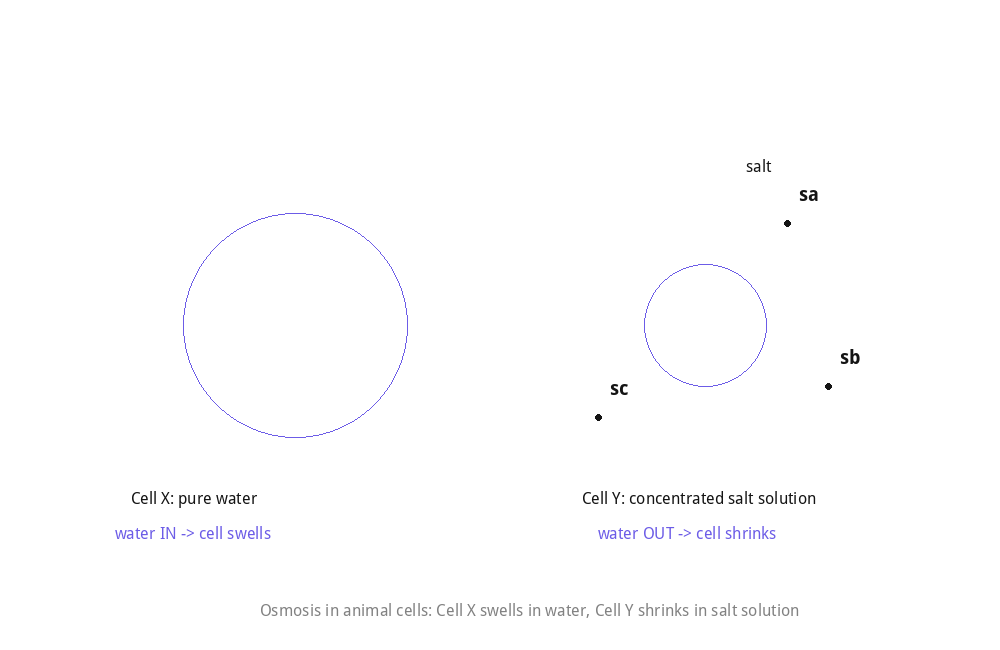
2. Two similar animal cells are placed in two different solutions: Cell X is placed in pure water, and Cell Y is placed in a concentrated salt solution. Cells are observed after some time. Cell X swells and Cell Y shrinks. Which statement provides the correct explanation for the above observation? (i) Salt molecules moved into Cell Y, causing it to shrink. (ii) Water moved into Cell X and more water moved out of Cell Y than the salt solution entered in it. (iii) Water moved into Cell X and moved out of Cell Y through the cell membrane. (iv) Solute movement caused osmosis in both cells.
(iii) Water moved into Cell X and moved out of Cell Y through the cell membrane. The cell membrane is selectively permeable and lets water pass through by osmosis, always from a region of higher water concentration to a region of lower water concentration. Pure water has a higher water concentration than the inside of Cell X, so water enters and the cell swells. The concentrated salt solution has a lower water concentration than the inside of Cell Y, so water leaves the cell and it shrinks.
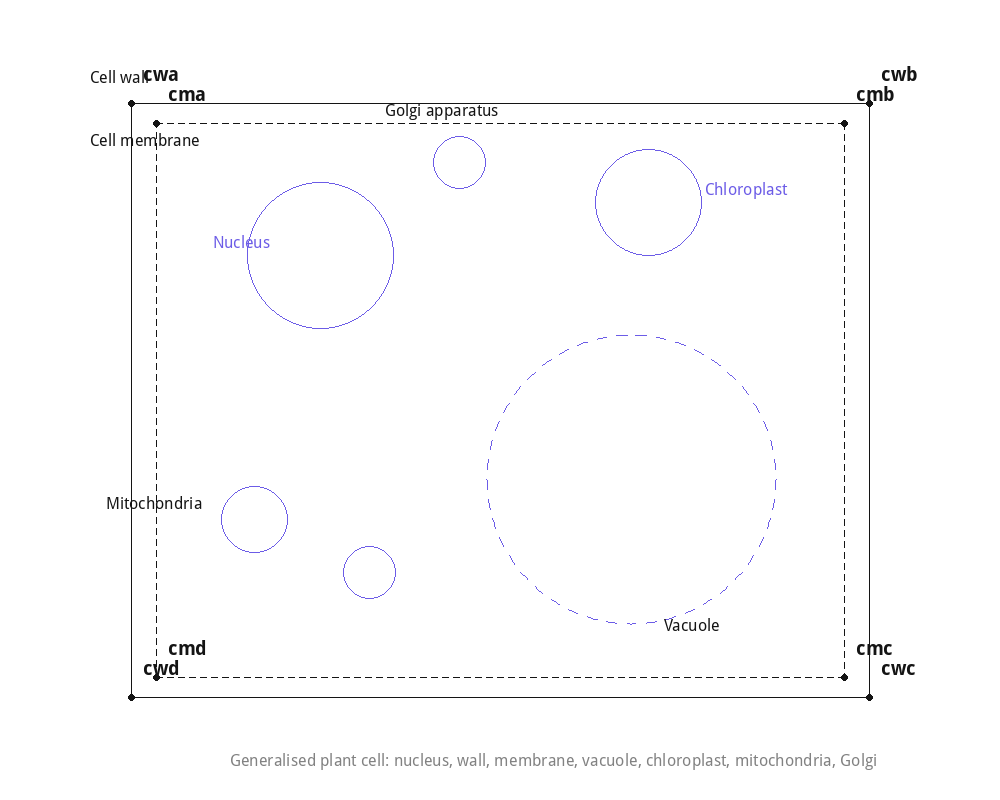
3. Look at the diagram of a cell in Fig. 2.20. Identify the parts labelled from (a) to (g) and correctly match them with their functions given below: (i) Controlling all the activities of a cell (ii) Site of cellular respiration (iii) Storage organelle that also provides rigidity to the cell (iv) Separates the cell contents from surroundings (v) Provides structural rigidity to the cell (vi) Packs and stores materials received from ER (vii) Helps in manufacturing food
(i) Controlling all activities of the cell — Nucleus.
(ii) Site of cellular respiration — Mitochondria.
(iii) Storage organelle that also provides rigidity — Vacuole.
(iv) Separates the cell contents from surroundings — Cell membrane.
(v) Provides structural rigidity to the cell — Cell wall.
(vi) Packs and stores materials received from ER — Golgi apparatus.
(vii) Helps in manufacturing food — Chloroplast.
4. Which of the following option(s) of the pairs of cell organelles are correctly placed under the given categories — “Present in the plant cells” and “Absent in the animal cells”? (i) Leucoplast, Cell wall (ii) Mitochondria, Ribosome (iii) Cell wall, Golgi apparatus (iv) Lysosome, Endoplasmic Reticulum
Option (i) — Leucoplast and Cell wall — is correctly placed. Both are present in plant cells, and both are genuinely absent in animal cells. Leucoplasts are plastids found only in plant cells (mainly for storage), and the cell wall made of cellulose is exclusive to plant (and bacterial) cells. Mitochondria, ribosomes, Golgi apparatus and Endoplasmic Reticulum are all present in both plant and animal cells, so options (ii), (iii) and (iv) are incorrect.
5. Two students, Renu and Rohit, were having a discussion on the plastids. Renu emphasised that all parts of the plants, even roots, contain plastids. However, Rohit did not agree with the statement and told her that plastids are absent in plant roots since the roots are underground and do not need to perform photosynthesis. Who is correct? Justify your answer.
Renu’s broader claim is correct — all living plant parts, including roots, do contain plastids. Rohit is right about one specific detail: roots lack chloroplasts (the green, photosynthetic plastids) because they are underground and have no access to sunlight. However, roots are not devoid of plastids altogether — they contain leucoplasts, colourless plastids that store food material such as starch, oils and proteins (for example, the starch-storing leucoplasts found in potato tubers and carrot roots). So Rohit’s conclusion that “plastids are absent in plant roots” is incorrect, even though his reasoning about chloroplasts specifically is valid.
6. Mitochondria and chloroplasts are two important organelles in a plant cell. Discuss how these two organelles are structurally and functionally similar to each other, and different from each other.
Similarities: Both are double membrane-bound organelles. Both contain their own circular DNA and ribosomes, allowing them to synthesise some of their own proteins independently of the nucleus — for this reason both are described as semi-autonomous organelles. Both are also centrally involved in a cell’s energy economy.
Differences: Mitochondria are found in almost all eukaryotic cells (plant and animal) and carry out cellular respiration, breaking down glucose to release energy stored as ATP. Their inner membrane is folded into finger-like cristae that increase surface area for respiration. Chloroplasts are found only in green plant cells and photosynthetic protists; they use sunlight, water and carbon dioxide to manufacture glucose during photosynthesis. Inside a chloroplast is a semi-fluid matrix called the stroma containing disc-shaped, chlorophyll-bearing structures. In short, mitochondria release energy from food, while chloroplasts capture light energy to make food.
7. Which of the following pairs of cell organelles contains DNA? (i) Chloroplasts, Ribosomes (ii) Mitochondria, Nucleus (iii) Golgi bodies, Ribosomes (iv) Nucleus, Lysosomes
(ii) Mitochondria and Nucleus. The nucleus contains chromosomes made of DNA and is the main store of genetic information in a eukaryotic cell. Mitochondria carry their own small circular DNA, similar to bacterial DNA, which lets them make some of their own proteins. (Chloroplasts also contain DNA, but that correct pairing is not offered as an option here.) Ribosomes, Golgi bodies and lysosomes do not contain DNA.
8. A researcher carried out an experiment in which she took two carrots of similar size. She placed one carrot in plain water and the other carrot in concentrated salt solution (Fig. 2.21). After 24 hours she recorded her observations. (i) What hypothesis does she want to test through this experiment? (ii) What would you suggest for the improvement of this experiment? (iii) Why does the carrot in plain water stay stiff and crunchy, but the carrot in concentrated salt solution become rubbery and limp?
(i) The researcher’s hypothesis is that osmosis across the selectively permeable cell membrane will make plant tissue firmer in a hypotonic (dilute) solution and softer in a hypertonic (concentrated) solution — that is, water moves into cells in plain water and out of cells in concentrated salt solution.
(ii) Improvements: use carrot pieces of exactly equal size and weight for a fair comparison; record the initial and final weight/length of each piece with a balance; include a third piece in an isotonic solution as a control (it should show no change); take readings at regular time intervals (say every 30 minutes) rather than only at 24 hours; and keep temperature constant throughout.
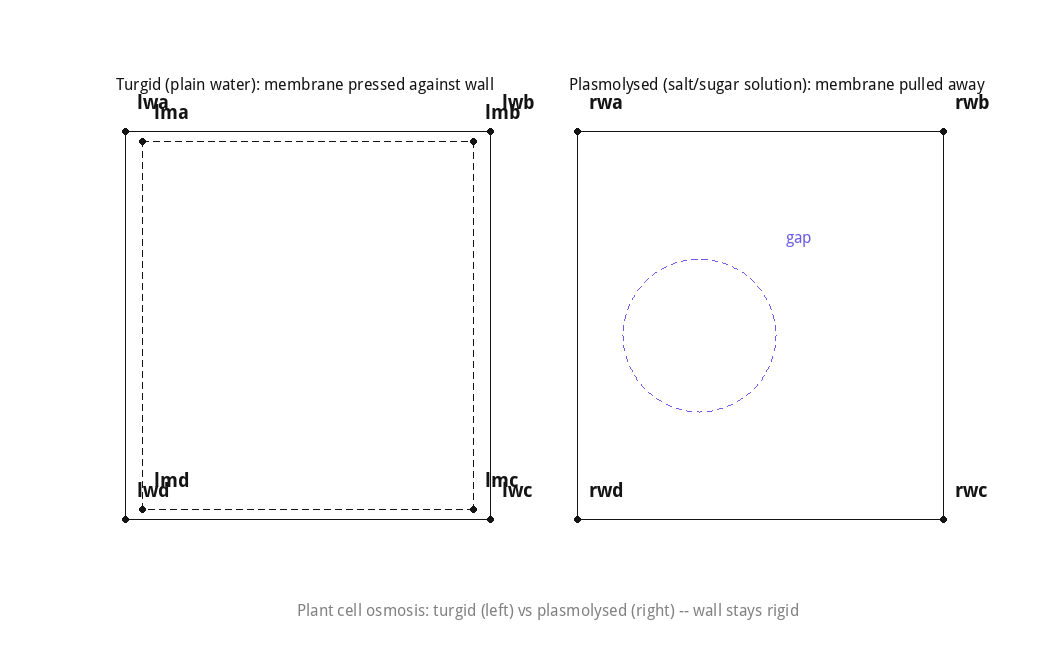
(iii) Plain water is hypotonic to the carrot cells, so water moves into the cells by osmosis, making them turgid (swollen with water pressing against the rigid cell wall) — this keeps the carrot stiff and crunchy. The salt solution is hypertonic to the carrot cells, so water moves out of the cells by osmosis; the cells become flaccid and the cell contents shrink away from the cell wall (plasmolysis), making the carrot soft, rubbery and limp.
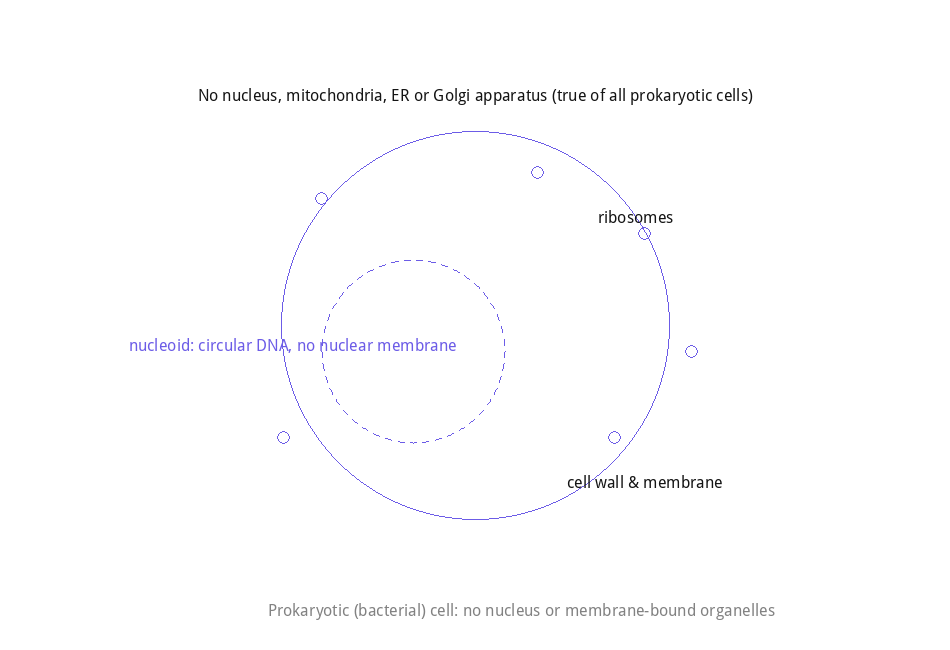
9. Indicate the presence or absence of the following structures in bacterial and animal cells: Chromosome, Nucleus, Mitochondria, Golgi complex, Chromoplasts.
Chromosome — present in both bacterial and animal cells (though the bacterial chromosome is a single circular DNA molecule, unlike the multiple linear chromosomes of animal cells). Nucleus — absent in bacterial cells, present in animal cells. Mitochondria — absent in bacterial cells, present in animal cells. Golgi complex — absent in bacterial cells, present in animal cells. Chromoplasts — absent in both bacterial and animal cells (chromoplasts occur only in plant cells).
10. Carry out the following experiment: Take four peeled potato halves and scoop each one out to make potato cups. One of these potato cups should be made from a boiled potato. Place each of the potato cups in a beaker containing water (Fig. 2.22). Set up the experiment as follows: (a) Keep Cup A empty. (b) Add one teaspoon sugar in Cup B. (c) Add one teaspoon salt in Cup C. (d) Add one teaspoon sugar in the boiled potato in Cup D. Observe the four potato cups for at least two hours and answer: (i) Explain why water gathers in the hollowed portion of Cup B and Cup C. (ii) Why is Cup A necessary for this experiment? (iii) Explain why water does not gather in the hollowed portions of Cups A and D.
(i) The sugar (Cup B) and salt (Cup C) create a hypertonic solution inside the hollowed-out potato cup compared with the plain water in the surrounding beaker. Since the living potato cells act as a selectively permeable membrane, water moves by osmosis from the region of higher water concentration (the beaker) into the region of lower water concentration (inside the cup), so water visibly collects inside Cups B and C.
(ii) Cup A is the experimental control. With no solute added, there is no concentration difference between the inside and outside of the potato cup, so it should show no water collection. This confirms that any water gathering seen in the other cups is caused specifically by the added solute (sugar or salt) creating osmosis, and not by some unrelated property of the potato.
(iii) In Cup A there is no concentration gradient between the inside and outside, so there is no net osmotic movement of water and no accumulation occurs. In Cup D the potato was boiled first, which kills the cells and destroys the selective permeability of their membranes; because osmosis needs a living, selectively permeable membrane, no net water movement happens even though sugar is present, so no water gathers.
11. Identify the pair that incorrectly matches the cell organelle with its function. (i) Ribosome – Protein synthesis (ii) SER – Lipid and cellulose synthesis (iii) Lysosome – Digestion of foreign agents
(ii) SER – Lipid and cellulose synthesis is the incorrect pairing. The Smooth Endoplasmic Reticulum (SER) genuinely synthesises and stores lipids and steroid-type hormones, but it does not synthesise cellulose. Cellulose, the main component of the plant cell wall, is assembled by cellulose-synthase enzyme complexes located in the plasma (cell) membrane, not by the SER. Ribosome – Protein synthesis and Lysosome – Digestion of foreign agents are both correctly matched.
12. What outcome do you expect if all the mitochondria are removed from a eukaryotic cell?
Mitochondria are the sites of cellular respiration, where glucose is broken down to produce ATP, the cell’s main energy currency. If all mitochondria were removed, the cell would lose its main source of usable energy, so energy-dependent activities such as active transport, muscle contraction, protein synthesis and cell division would stop. Without a mitochondrial source of ATP, the cell could rely only on inefficient anaerobic respiration in the cytoplasm for a short time, and would eventually be unable to maintain itself, repair damage or carry out metabolism, leading to cell death.
13. Which phenomenon inhibits the formation of tumors in the human body? Can plants also develop tumors? Explain.
The phenomenon is called contact inhibition — in normal animal cells, cell division stops once a cell comes into contact with its neighbours, which keeps growth orderly and prevents tumour formation. Cancer cells lose this control and divide uncontrollably, forming a tumour. Plants can develop abnormal growths too (for example, crown gall disease, caused by the bacterium Agrobacterium, produces tumour-like swellings), but because plant cells are held in place by a rigid cellulose cell wall and cannot migrate the way animal cells can, these growths generally stay localised and do not spread (metastasise) through the plant the way malignant animal tumours can.
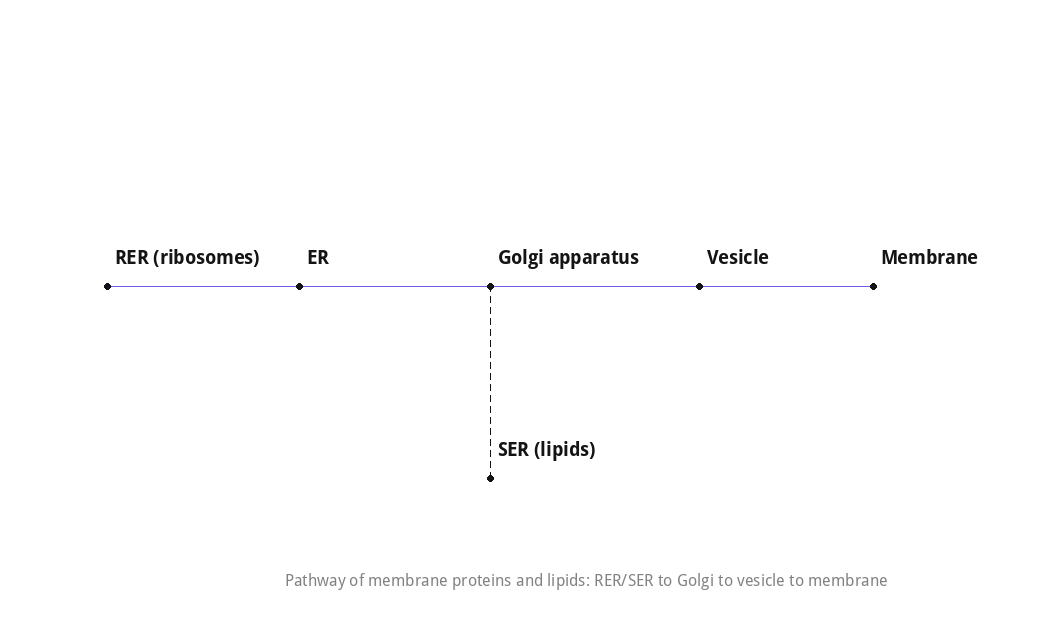
14. The cell membrane of a cell is made up of proteins and lipids. Which cell organelles help in the synthesis of cell membrane? Write the path of these compounds from their site of synthesis to the cell membrane and show this through a labelled diagram.
Two organelles are chiefly responsible: the Rough Endoplasmic Reticulum (RER), where ribosomes on its surface synthesise the membrane proteins, and the Smooth Endoplasmic Reticulum (SER), which synthesises the membrane lipids. The Golgi apparatus then receives these proteins and lipids, modifies and sorts them, and packages them into vesicles.
Pathway: Ribosomes on RER → proteins synthesised → transported through the ER → Golgi apparatus (proteins and lipids from SER arrive here too) → modified and packaged into secretory vesicles → vesicles move to and fuse with the cell membrane, delivering the new proteins and lipids into it.
15. What would happen if gametes are formed by mitotic divisions?
Gametes are normally produced by meiosis, which halves the chromosome number so that fertilisation restores the full (diploid) number in the offspring. If gametes were instead produced by mitosis, they would carry the full diploid chromosome number of the parent. When two such gametes fused at fertilisation, the resulting zygote would have double the normal chromosome number, and this doubling would continue every generation (for example 2n → 4n → 8n → 16n). Chromosome numbers would quickly become unmanageably large, cells would become genetically unstable and unable to function properly, and because mitosis produces genetically identical cells without the recombination that meiosis provides, genetic diversity would also be lost — ultimately threatening the survival of the species.
16. A farmer, Deepa, was very happy with the harvest of amla (Indian Gooseberry) and lemons on her farm. However, she could sell only one-fourth of the produce in the local market… She used the excess produce to prepare pickles, murabbas, and sharbat by adding appropriate amounts of salt, sugar, or jaggery. (i) Which scientific concept has the farmer applied in the preservation of the farm produce? (ii) How does the addition of high concentrations of salt and sugar create an environment that prevents the growth of spoilage-causing bacteria and fungi? (iii) Suggest a healthy recipe of this kind for food preservation. (iv) What are the scientific values addressed in this case?
(i) Deepa is applying the principle of osmosis to preserve food.
(ii) A high concentration of salt, sugar or jaggery creates a hypertonic environment around any bacteria or fungi present. Water moves out of the microbial cells by osmosis, causing them to dehydrate (plasmolyse); without enough water for their metabolism, the microorganisms cannot grow or reproduce, so the food is preserved.
(iii) Amla-ginger murabba: wash and prick fresh amla, boil briefly to soften and drain. Prepare a syrup using jaggery (a healthier option than refined sugar) with a pinch of cardamom and dry ginger powder, add the amla pieces to the syrup, and store in a clean, airtight glass jar. The high jaggery concentration preserves the fruit through osmosis while retaining much of its vitamin C.
(iv) The scientific values addressed include the practical application of science (using osmosis rather than artificial chemical preservatives), sustainability (cutting down post-harvest food waste), entrepreneurship (turning surplus perishable produce into saleable products), and food security (making nutritious food available beyond the harvest season).
Key In-Text Discovery Questions (Think it Over / What If / Pause and Ponder / Ready to Go Beyond)
Where does a cell come from? (Think it Over, Page 8)
A cell comes from a pre-existing cell through the process of cell division. New cells never appear on their own — they always arise from cells that already exist, which is one of the core principles of Cell Theory.
How have technological interventions facilitated the creation of new knowledge in understanding the world beyond the naked eye? (Think it Over, Page 8)
Inventions such as the light microscope and, later, the electron microscope allowed scientists to see structures far too small for the naked eye. Light microscopes first revealed the existence of cells; electron microscopes went further and revealed the finer details of organelles inside them, greatly expanding biological knowledge.
‘How’ is the cell the structural and functional unit of life? (Think it Over, Page 8)
The cell is the smallest unit capable of carrying out all essential life processes — taking in nutrients, releasing waste, responding to stimuli, growing and reproducing. In multicellular organisms, cells combine to form tissues, organs and organ systems, which is why the cell is called the structural and functional unit of life.
How does a cell multiply? (Think it Over, Page 8)
A cell multiplies through cell division, in which one parent cell divides to produce two or more new cells. This underlies growth, repair of damaged tissue and reproduction in living organisms.
How does the structure of the cell membrane in the cells of alveoli control the movement of substances across it? (Think it Over, Page 11)
The cell membrane of alveolar cells is extremely thin and selectively permeable, which lets gases like oxygen and carbon dioxide diffuse across it very quickly while restricting other substances. This thin structure, combined with the large surface area of the alveoli, makes gas exchange efficient — oxygen passes easily into the blood while carbon dioxide passes out.
Mung bean seeds are kept in a concentrated solution after soaking in water for 12 hours. What will happen to them? (What If, Page 12)
Since the concentrated solution has less water than the cells of the soaked seeds, water will move out of the seed cells by osmosis (exosmosis). The seeds will lose water, shrink, and stop swelling properly, which slows down or prevents their germination.
What argument would you give for the necessity of a cell wall in plants, usually fixed in one place, versus in animals usually moving from one place to the other? (Pause and Ponder, Page 14)
Plants stay rooted in one place, so their cells need a rigid cell wall for support, protection and structural strength. Animals move around, so their cells need to be more flexible rather than encased in a rigid wall — a cell wall would restrict the movement animals depend on.
What consequences would you predict for a plant cell if its cell wall were to become as flexible as a cell membrane? (Pause and Ponder, Page 14)
Without a rigid cell wall, the plant cell would lose its fixed shape and firmness. It would be far more likely to burst when water enters by osmosis and would no longer provide structural support, so the plant would wilt, lose rigidity and be poorly supported overall.
Why is it important to cut the two potato pieces in roughly equal size and measure their initial weight before placing them in different liquids? (Pause and Ponder, Page 14)
Cutting the pieces to equal size and recording their starting weight ensures a fair comparison. If the pieces differed in size or mass to begin with, any change observed afterwards could be due to that initial difference rather than to the effect of the liquid each piece was placed in.
Do white flowers contain any pigment? Give reasons. (Pause and Ponder, Page 19)
Yes, white flowers do contain pigments, but they lack coloured pigments such as anthocyanins or carotenoids. Their petals reflect all wavelengths of visible light rather than absorbing some and reflecting others, which is what makes them appear white; they may still contain colourless or very faint pigments that do not produce a visible colour.
Can you identify which stage comes first during cell division? (Pause and Ponder, Page 21)
Prophase is the first stage of mitotic cell division, in which the chromatin condenses into visible chromosomes and the nuclear membrane begins to break down.
Instead of many small ones, why does a cell not have a single giant mitochondrion? How does this relate to the concept of surface area? (Pause and Ponder, Page 22)
Having many small mitochondria instead of one giant one provides a much larger total surface area for the reactions of cellular respiration. A greater surface area allows more respiratory enzymes and membrane sites to be active at once, making ATP production far more efficient than a single large mitochondrion could achieve.
If the skin cells start dividing by meiosis instead of mitosis, what do you think will happen to a cut on the skin? (Pause and Ponder, Page 22)
Meiosis produces daughter cells with only half the chromosome number and genetic variation between them, which is not suitable for simply replacing damaged skin cells. If skin cells divided by meiosis instead of mitosis, the new cells would not be genetically identical or complete copies of the original skin cells, so the wound would not heal and repair properly.
Explore different ways by which cells maintain themselves. (Ready to Go Beyond, Page 23)
Cells maintain themselves by regulating what enters and leaves them, producing energy through respiration, repairing internal damage, removing metabolic waste, growing and dividing when needed, and responding appropriately to changes in their environment — all coordinated by instructions encoded in their genetic material.
Why This Chapter Matters
Chapter 1, “Entering the World of Secondary Science,” introduces students to scientific thinking and the tools of inquiry used across the Exploration series; Chapter 2 puts those tools to direct use by taking students inside the cell — the basic unit shared by every living thing. Understanding cell structure, cell theory and processes like osmosis and cell division here is essential groundwork for Chapter 3, “Tissues in Action,” where cells are shown organising into tissues, and for later chapters on reproduction and heredity that build directly on mitosis and meiosis.
Extra Questions | Revision Notes | Formulas Handbook
Chapter Quiz — Test Your Understanding
Class 9 Science Chapter 2 – Notes and Extra Questions
Along with these NCERT Solutions, students can also use the Class 9 Science Chapter 2 Extra Questions and Class 9 Science Chapter 2 Revision Notes for quick revision and extra practice.
- Chapter 1: Entering the World of Secondary Science – Free PDF Download
- Chapter 3: Tissues in Action – Free PDF Download
- Chapter 4: Describing Motion Around Us – Free PDF Download
- Chapter 5: Exploring Mixtures and their Separation – Free PDF Download
- Chapter 6: How Forces Affect Motion – Free PDF Download
- Chapter 7: Work, Energy and Simple Machines – Free PDF Download
- Chapter 8: Journey Inside the Atom – Free PDF Download
- Chapter 9: Atomic Foundations of Matter – Free PDF Download
- Chapter 10: Sound Waves: Characteristics and Applications – Free PDF Download
- Chapter 11: Reproduction: How Life Continues – Free PDF Download
- Chapter 12: Patterns in Life: Diversity and Classification – Free PDF Download
- Chapter 13: Earth as a System: Energy, Matter and Life – Free PDF Download
Frequently Asked Questions
Is Chapter 2 “Cell: The Building Block of Life” part of the CBSE Class 9 board exam syllabus for 2026-27?
Yes. It is a core chapter in the Life Sciences section of the new NCERT Exploration textbook and is fully examinable for the 2026-27 session. Students should be careful not to mix it up with the older, separate NCERT Class 9 Biology textbook, since the new Exploration book has revised content, new real-world examples, and new activities that were not part of the earlier edition.
How is this new “Cell” chapter different from the older NCERT Class 9 Biology chapter on cells?
The new integrated Exploration textbook combines Physics, Chemistry and Biology into one volume and adds inquiry-based activities (such as estimating cell size under a microscope), Indian real-world contexts (like the Puga Valley hot springs in Ladakh), the fluid-mosaic model of the cell membrane, and newer sections on Programmed Cell Death — content that did not appear in the older, separate Class 9 Biology textbook.
Why does osmosis come up so often in this chapter’s questions?
Osmosis — the movement of water across the selectively permeable cell membrane from a dilute to a concentrated solution — is demonstrated through several textbook activities in this chapter, including the potato and carrot experiments and the discussion of food preservation using salt, sugar and jaggery. Because it connects a core concept to everyday, testable observations, it is one of the most frequently examined ideas from this chapter.
Which diagrams from this chapter are most important to practise for the exam?
Students should be comfortable drawing and labelling a plant cell, an animal cell, a bacterial (prokaryotic) cell, a mitochondrion and a chloroplast. The structure of the nucleus and the fluid-mosaic model of the cell membrane are also frequently asked. Diagrams should be neat, correctly proportioned, and carry clear labels with non-crossing label lines.
Are all the ‘extra questions’ circulating online for this chapter genuine NCERT content?
Not always — some third-party sites publish self-authored practice questions not found in the actual textbook. Everything above (the exercise and the in-text questions) has been verified directly against the official NCERT PDF or cross-checked reputable sources.
Recommended: Buy the Printed NCERT Class 9 Science Book
Contains Amazon affiliate links.
If you’d like a printed copy alongside the PDF, here’s a verified option:
3.8 out of 5 stars (931 ratings) · Rs. 187
Price and availability may change on Amazon. As an Amazon Associate, ncertbooks.org earns from qualifying purchases.


