
Cell: The Building Block of Life draws out the differences between plant and animal cells and catalogues what each organelle does, and this page turns that comparison into a compact set of notes.
Last Updated: September 23, 2026
Common Mistakes Students Make in This Chapter
- Mixing up plant vs animal cell features: forgetting which structures (cell wall, chloroplast, a large central vacuole) are exclusive to plant cells.
- Confusing the cell wall and cell membrane: the cell wall gives structural support and shape, while the cell membrane specifically controls what enters and exits the cell.
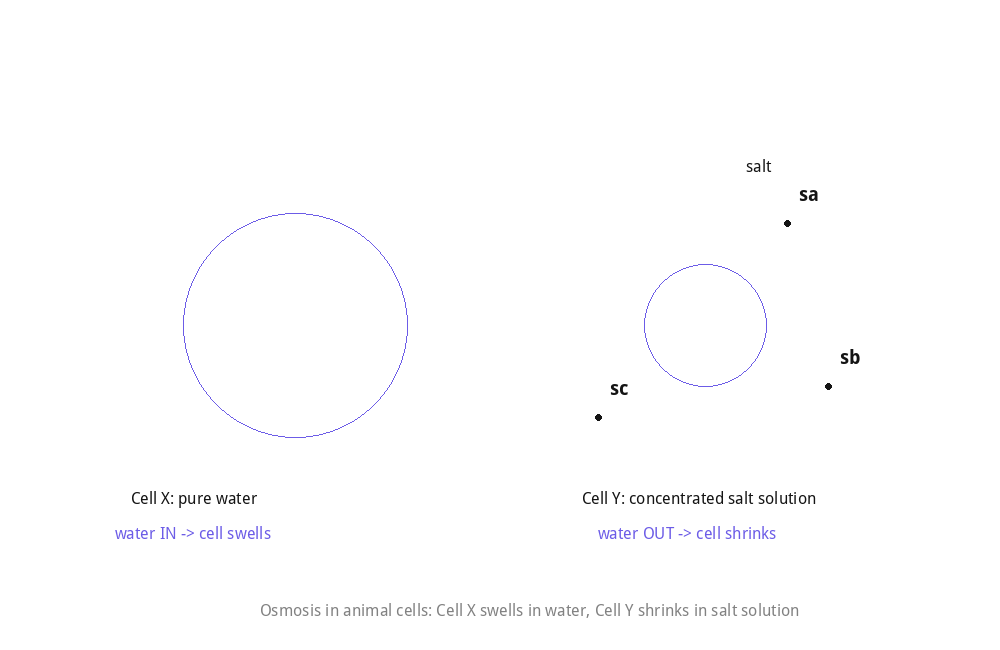
- Confusing diffusion and osmosis: osmosis is specifically water moving across a semi-permeable membrane, not the movement of any substance.
- Mislabeling organelles in diagrams: mixing up mitochondria (respiration/energy) with chloroplast (photosynthesis).
Types of Cells
- Prokaryotic: no membrane-bound nucleus (e.g. bacteria).
- Eukaryotic: true, membrane-bound nucleus (plants, animals, fungi).
Plant vs Animal Cell
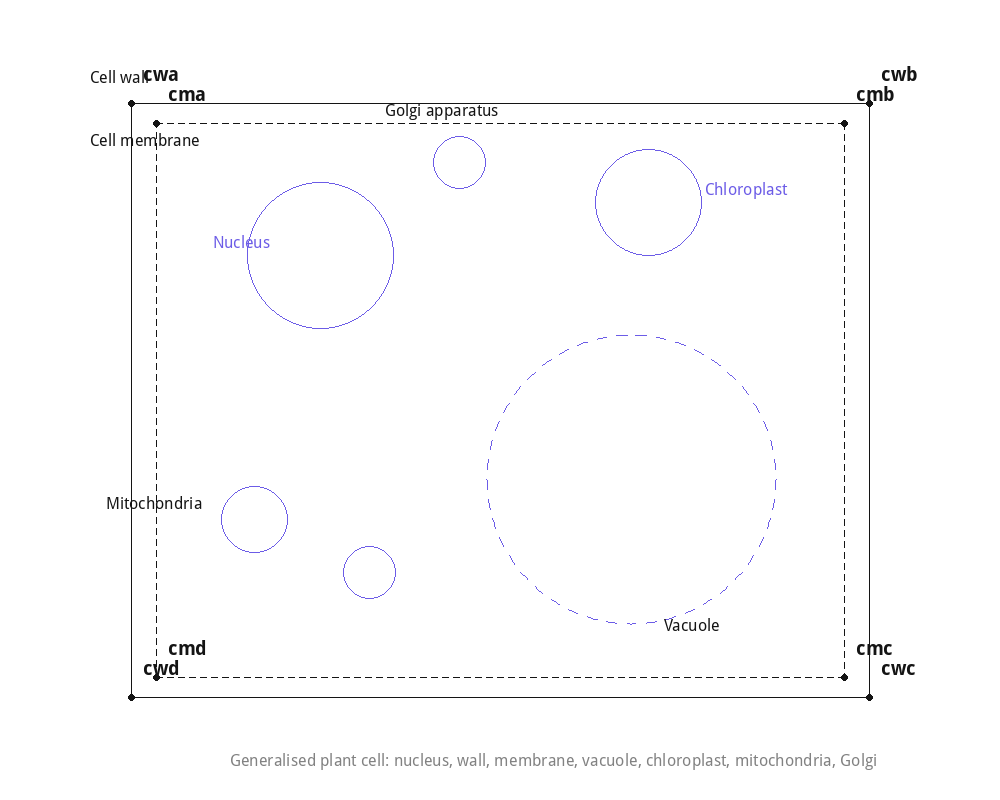
- Plant cell only: cell wall, large central vacuole, chloroplasts.
- Shared: plasma membrane, cytoplasm, nucleus, mitochondria, ER.
Organelles and Functions
- Nucleus — genetic material, control centre.
- Mitochondria — respiration, energy (ATP) production.
- Chloroplast — photosynthesis (plants).
- Rough ER — protein synthesis; Smooth ER — lipid synthesis.
- Vacuole — storage, turgor pressure (large in plants).
- Plasma membrane — selectively permeable boundary.
- Cell wall — rigid support (plants).
Cell Division
- Mitosis: 1 cell → 2 identical cells (growth/repair).
- Meiosis: 1 cell → 4 genetically different cells, half chromosome number (gametes).
- Uncontrolled division → linked to cancer.
Quick visual: a worked diagram from the full Solutions page, for reference.
One-Line Summary
The cell is the basic unit of life, built from organelles like the nucleus, mitochondria, and membrane, and divides by mitosis (growth) or meiosis (reproduction), with plant cells adding a wall, vacuole, and chloroplasts that animal cells lack.
- Chapter 1: Entering the World of Secondary Science – Revision Notes
- Chapter 3: Tissues in Action – Revision Notes
- Chapter 4: Describing Motion Around Us – Revision Notes
- Chapter 5: Exploring Mixtures and their Separation – Revision Notes
- Chapter 6: How Forces Affect Motion – Revision Notes
- Chapter 7: Work, Energy and Simple Machines – Revision Notes
- Chapter 8: Journey Inside the Atom – Revision Notes
- Chapter 9: Atomic Foundations of Matter – Revision Notes
- Chapter 10: Sound Waves: Characteristics and Applications – Revision Notes
- Chapter 11: Reproduction: How Life Continues – Revision Notes
- Chapter 12: Patterns in Life: Diversity and Classification – Revision Notes
- Chapter 13: Earth as a System: Energy, Matter and Life – Revision Notes
Frequently Asked Questions
This chapter is about the cell as the basic building block of life. What are the two main types of cells covered?
The chapter covers prokaryotic cells, which lack a defined nucleus and membrane-bound organelles, and eukaryotic cells, which have a true nucleus enclosed by a nuclear membrane along with other membrane-bound organelles.
Why is the cell called the structural and functional unit of life?
Every living organism, whether unicellular or multicellular, is made up of cells, and all life processes such as respiration, nutrition, and reproduction ultimately take place at the cellular level.
Chapter Quiz — Test Your Understanding
What to Revise First (and Last) in This Chapter
Prioritise the plant-vs-animal-cell comparison table and organelle-function pairs first, since diagram-labelling and comparison questions are the most frequent type here. Leave the detailed osmosis/diffusion experiment descriptions for an earlier, slower revision pass.
Recommended: Buy the Printed NCERT Class 9 Science Book
Contains Amazon affiliate links.
If you’d like a printed copy alongside the PDF, here’s a verified option:
3.8 out of 5 stars (931 ratings) · Rs. 187
Price and availability may change on Amazon. As an Amazon Associate, ncertbooks.org earns from qualifying purchases.


