
Mitochondria, chloroplasts, and the rest of the cell’s organelles come under scrutiny in Chapter 2 of Class 9 Science, and these extra questions test finer distinctions, such as what separates a prokaryotic cell from a eukaryotic one.
Last Updated: September 23, 2026
How to Approach the HOTS Questions in This Chapter
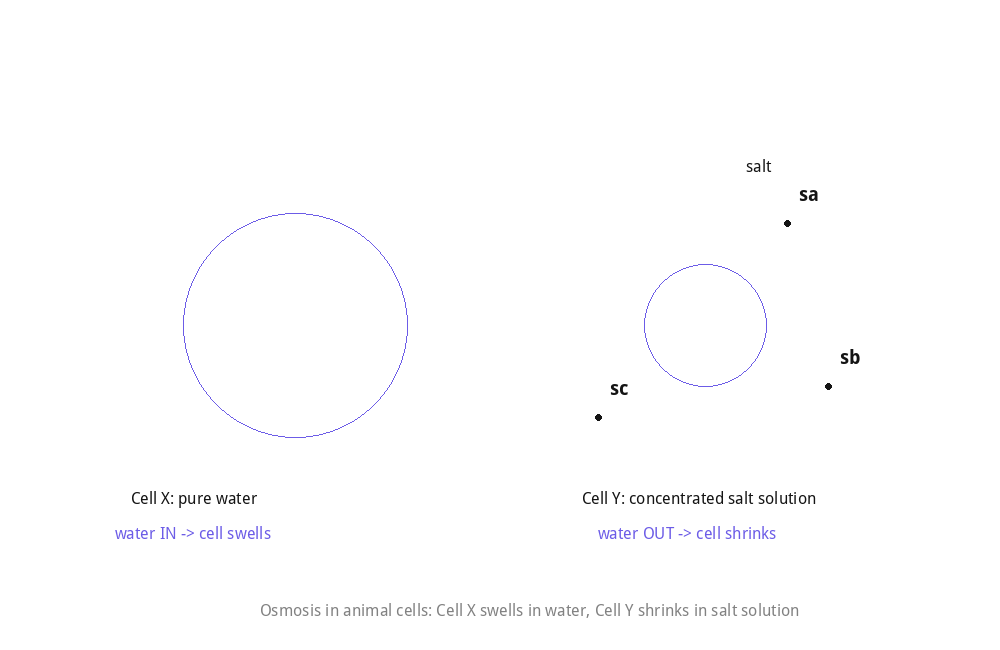
HOTS questions on this chapter often present an everyday example (raisins swelling in water, a plant wilting after over-fertilising) and ask you to explain it using osmosis — practice explaining real-world observations with the correct terminology (hypotonic/hypertonic, direction of water movement) rather than only defining the term.
Very Short Answer Questions (1 mark)
Q1. Which organelle is called the “powerhouse of the cell”?
Ans: Mitochondria.
Q2. Name one organelle found only in plant cells.
Ans: Chloroplast (cell wall and large central vacuole are also acceptable).
Q3. What type of cell lacks a membrane-bound nucleus?
Ans: Prokaryotic cell.
Q4. How many daughter cells are produced by mitosis, and are they genetically identical?
Ans: Two; yes, genetically identical to the parent cell.
Q5. What is the function of the cell wall?
Ans: Provides rigidity and structural support to plant cells.
Short Answer Questions (2–3 marks)
Q6. Differentiate between rough ER and smooth ER.
Ans: Rough ER has ribosomes attached to its surface and is involved in protein synthesis, while smooth ER lacks ribosomes and is involved in lipid synthesis.
Q7. Explain why the plasma membrane is described as “selectively permeable.”
Ans: It allows certain substances (like water, oxygen, and small molecules) to pass through while restricting others, helping the cell maintain a stable internal environment and regulate what enters and exits.
Q8. Compare mitosis and meiosis in terms of the number and type of daughter cells produced.
Ans: Mitosis produces two genetically identical daughter cells with the same chromosome number as the parent, used for growth/repair. Meiosis produces four genetically different daughter cells with half the chromosome number, used to form gametes for sexual reproduction.
Higher-Order Thinking / Application Questions
Q9. A scientist examines a cell under a microscope and finds it has no nucleus, no mitochondria, and no membrane-bound organelles, but has genetic material floating freely. What type of organism does this cell most likely belong to, and why?
Ans: It most likely belongs to a prokaryotic organism, such as a bacterium, since prokaryotic cells lack a membrane-bound nucleus and other membrane-bound organelles, with their DNA lying free in the cytoplasm — unlike eukaryotic cells, which have both.
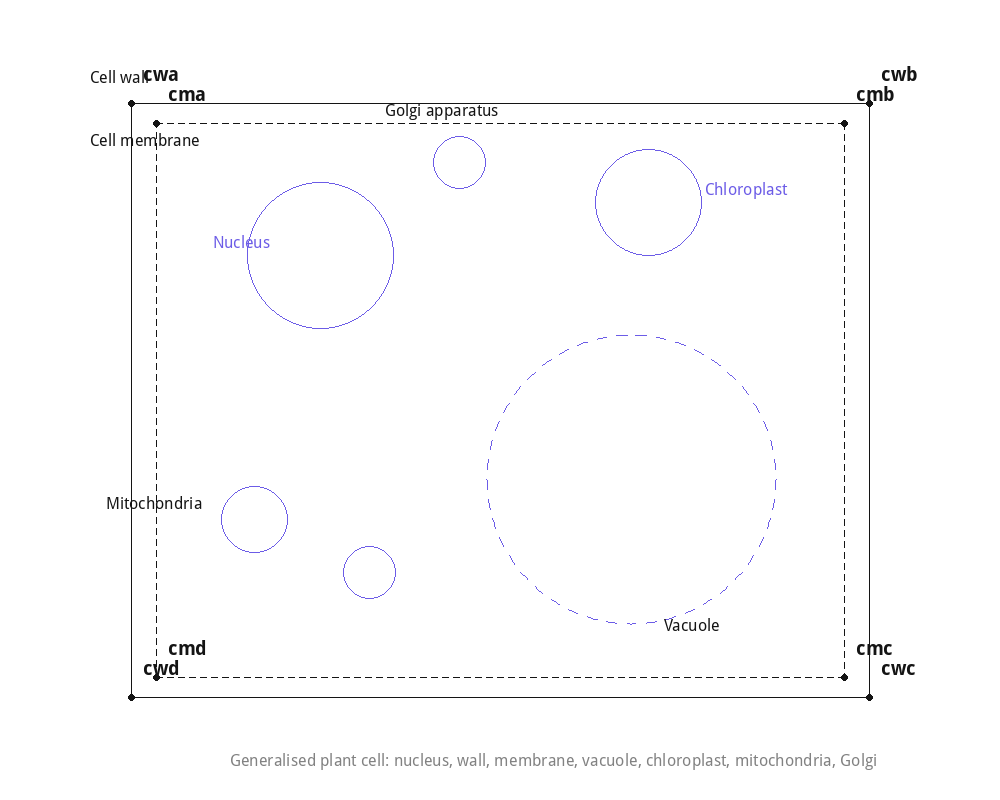
Q10. If a plant cell is placed in pure water, its central vacuole swells and the cell becomes firm (turgid), but it does not burst, unlike a similarly placed animal cell, which might burst. Explain why, using the structures discussed in this chapter.
Ans: The plant cell has a rigid cell wall surrounding its plasma membrane, which resists the swelling pressure from water entering the large central vacuole and prevents the cell from bursting, keeping it firm (turgid) instead. An animal cell lacks a cell wall, so excess water entering through the plasma membrane can cause it to swell uncontrollably and burst.
- Chapter 1: Entering the World of Secondary Science – Extra Questions with Answers
- Chapter 3: Tissues in Action – Extra Questions with Answers
- Chapter 4: Describing Motion Around Us – Extra Questions with Answers
- Chapter 5: Exploring Mixtures and their Separation – Extra Questions with Answers
- Chapter 6: How Forces Affect Motion – Extra Questions with Answers
- Chapter 7: Work, Energy and Simple Machines – Extra Questions with Answers
- Chapter 8: Journey Inside the Atom – Extra Questions with Answers
- Chapter 9: Atomic Foundations of Matter – Extra Questions with Answers
- Chapter 10: Sound Waves: Characteristics and Applications – Extra Questions with Answers
- Chapter 11: Reproduction: How Life Continues – Extra Questions with Answers
- Chapter 12: Patterns in Life: Diversity and Classification – Extra Questions with Answers
- Chapter 13: Earth as a System: Energy, Matter and Life – Extra Questions with Answers
Frequently Asked Questions
How would you distinguish a plant cell from an animal cell under a microscope?
A plant cell has a rigid cell wall, large vacuoles, and chloroplasts, features absent in an animal cell, which instead has a more flexible outer boundary and typically smaller vacuoles.
Why is the cell membrane described as selectively permeable?
The cell membrane allows only certain substances, such as specific nutrients and gases, to pass through while blocking others, regulating what enters and exits the cell to maintain a stable internal environment.
Chapter Quiz — Test Your Understanding
Quick visual: a worked diagram from the full Solutions page, for reference.
Recommended: Buy the Printed NCERT Class 9 Science Book
Contains Amazon affiliate links.
If you’d like a printed copy alongside the PDF, here’s a verified option:
3.8 out of 5 stars (931 ratings) · Rs. 187
Price and availability may change on Amazon. As an Amazon Associate, ncertbooks.org earns from qualifying purchases.


