
Pure substances and mixtures split further into solutions, suspensions, and colloids depending on how they behave, and Chapter 5 explains the techniques, such as crystallisation and distillation, used to pull them apart.
Last Updated: September 23, 2026
Pure Substances vs Mixtures
- Pure substance: fixed composition.
- Mixture: variable proportions of 2+ substances.
Types of Mixtures
- Homogeneous: uniform, e.g. salt water.
- Heterogeneous: visibly distinct parts, e.g. sand + water.
Solution vs Suspension vs Colloid
- Solution: fully dissolved, no settling, no light scattering.
- Suspension: visible particles, settle over time.
- Colloid: intermediate size, doesn’t settle, shows Tyndall effect (scatters light).
Separation Techniques
- Crystallisation — pure solid crystals from solution.
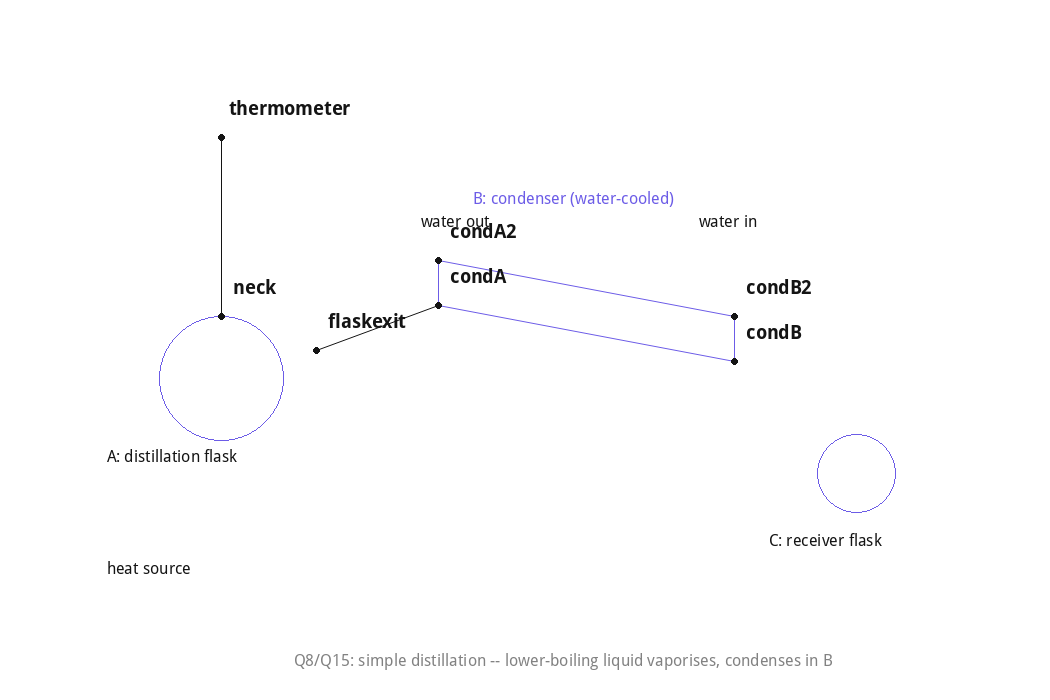
- Distillation — separates liquids by boiling point.
- Paper chromatography — separates by differing solubility/movement.
- Sublimation — separates sublimable solids (camphor, NH4Cl).
- Centrifugation — separates by density using high-speed spin.
- Coagulation — clumps and settles colloidal particles.
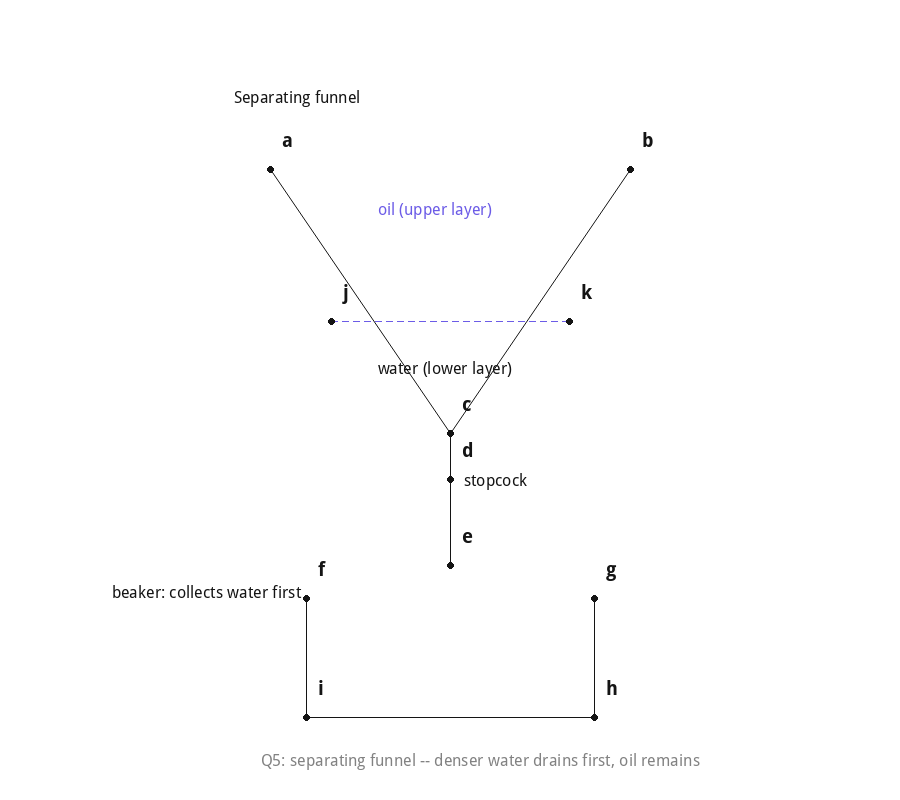
Quick visual: a worked diagram from the full Solutions page, for reference.
One-Line Summary
Mixtures range from homogeneous solutions to heterogeneous suspensions, with colloids in between, and specific techniques — crystallisation, distillation, chromatography, sublimation, centrifugation, and coagulation — are chosen based on the properties of the components to be separated.
- Chapter 1: Entering the World of Secondary Science – Revision Notes
- Chapter 2: Cell: The Building Block of Life – Revision Notes
- Chapter 3: Tissues in Action – Revision Notes
- Chapter 4: Describing Motion Around Us – Revision Notes
- Chapter 6: How Forces Affect Motion – Revision Notes
- Chapter 7: Work, Energy and Simple Machines – Revision Notes
- Chapter 8: Journey Inside the Atom – Revision Notes
- Chapter 9: Atomic Foundations of Matter – Revision Notes
- Chapter 10: Sound Waves: Characteristics and Applications – Revision Notes
- Chapter 11: Reproduction: How Life Continues – Revision Notes
- Chapter 12: Patterns in Life: Diversity and Classification – Revision Notes
- Chapter 13: Earth as a System: Energy, Matter and Life – Revision Notes
Frequently Asked Questions
What is the difference between a mixture and a pure substance?
A pure substance has a fixed composition and definite properties, such as a single element or compound, while a mixture contains two or more substances combined in variable proportions without any fixed chemical composition.
What is the difference between homogeneous and heterogeneous mixtures?
A homogeneous mixture has a uniform composition throughout, such as salt dissolved in water, while a heterogeneous mixture has visibly different components or phases, such as sand mixed with water.
Chapter Quiz — Test Your Understanding
See also: Chapter 1 | Chapter 2 | Chapter 3 | Chapter 4 | Chapter 5
Practice more: Chapter 1 | Chapter 2 | Chapter 3 | Chapter 4 | Chapter 5
Quick revision: Chapter 1 | Chapter 2 | Chapter 3 | Chapter 4
Recommended: Buy the Printed NCERT Class 9 Science Book
Contains Amazon affiliate links.
If you’d like a printed copy alongside the PDF, here’s a verified option:
3.8 out of 5 stars (931 ratings) · Rs. 187
Price and availability may change on Amazon. As an Amazon Associate, ncertbooks.org earns from qualifying purchases.


