
In Chapter 3, the body’s building blocks are sorted into plant and animal tissues, from the meristematic tissue that drives growth to the tendons and ligaments around a joint, and these extra questions test how well those categories are told apart.
Last Updated: September 23, 2026
Very Short Answer Questions (1 mark)
Q1. Which plant tissue is responsible for growth?
Ans: Meristematic tissue.
Q2. Name the animal tissue that transmits electrical signals.
Ans: Nervous tissue.
Q3. What connects muscle to bone?
Ans: Tendon.
Q4. Give an example of a ball-and-socket joint.
Ans: Shoulder joint (or hip joint).
Q5. Which animal tissue type covers body surfaces and lines organs?
Ans: Epithelial tissue.
Short Answer Questions (2–3 marks)
Q6. Differentiate between a tendon and a ligament, and state the tissue type both belong to.
Ans: A tendon connects muscle to bone, while a ligament connects bone to bone. Both are made of connective tissue.
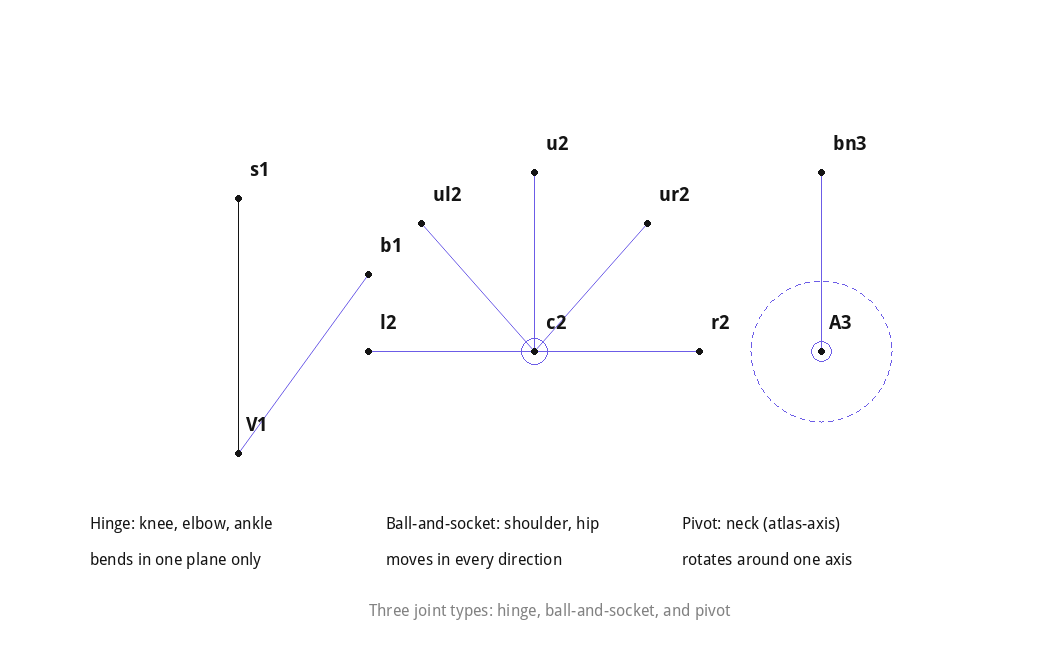
Q7. Explain why a hinge joint (like the elbow) cannot rotate in all directions the way a ball-and-socket joint (like the shoulder) can.
Ans: A hinge joint’s structure only allows back-and-forth movement in a single plane, like a door hinge, while a ball-and-socket joint has a rounded end fitting into a cup-shaped socket, allowing movement in multiple directions and planes.
Q8. Why is a balanced diet with adequate protein, calcium, and vitamin D important for the musculoskeletal system?
Ans: Protein supports muscle repair and growth, calcium is essential for bone strength and density, and vitamin D helps the body absorb calcium effectively — together these keep bones and muscles strong and reduce the risk of weakness or damage.
Higher-Order Thinking / Application Questions
Q9. A gardener notices that cutting off the tip of a plant’s main shoot causes the plant to stop growing taller but start growing bushier from the sides. Explain this observation using the concept of meristematic tissue.
Ans: The shoot tip contains the apical meristem, the meristematic tissue responsible for the plant’s upward growth. Removing it stops further upward growth from that point, but it activates other meristematic regions (lateral/axillary buds) along the sides of the stem, causing the plant to branch out and grow bushier instead.
Q10. An athlete sprains their ankle during a match, damaging the tissue that connects two of the ankle bones together. Identify the tissue type and structure most likely injured, and explain its function.
Ans: The injured structure is most likely a ligament, made of connective tissue, which connects bone to bone. Its function is to stabilise and hold joints together while allowing appropriate movement; a sprain occurs when a ligament is stretched or torn beyond its normal range.
- Chapter 1: Entering the World of Secondary Science – Extra Questions with Answers
- Chapter 2: Cell: The Building Block of Life – Extra Questions with Answers
- Chapter 4: Describing Motion Around Us – Extra Questions with Answers
- Chapter 5: Exploring Mixtures and their Separation – Extra Questions with Answers
- Chapter 6: How Forces Affect Motion – Extra Questions with Answers
- Chapter 7: Work, Energy and Simple Machines – Extra Questions with Answers
- Chapter 8: Journey Inside the Atom – Extra Questions with Answers
- Chapter 9: Atomic Foundations of Matter – Extra Questions with Answers
- Chapter 10: Sound Waves: Characteristics and Applications – Extra Questions with Answers
- Chapter 11: Reproduction: How Life Continues – Extra Questions with Answers
- Chapter 12: Patterns in Life: Diversity and Classification – Extra Questions with Answers
- Chapter 13: Earth as a System: Energy, Matter and Life – Extra Questions with Answers
Frequently Asked Questions
Why is muscle tissue specifically adapted for contraction, unlike most other tissue types?
Muscle tissue contains specialised protein fibres capable of shortening and generating force, a property called contractility, allowing it to produce movement, unlike epithelial or connective tissue.
How does xylem tissue in a plant support both transport and structural functions?
Xylem consists of thick-walled, often lignified cells forming continuous tubes capable of conducting water and minerals upward, while their rigid walls also provide mechanical support to the plant.
Chapter Quiz — Test Your Understanding
Quick visual: a worked diagram from the full Solutions page, for reference.
Recommended: Buy the Printed NCERT Class 9 Science Book
Contains Amazon affiliate links.
If you’d like a printed copy alongside the PDF, here’s a verified option:
3.8 out of 5 stars (931 ratings) · Rs. 187
Price and availability may change on Amazon. As an Amazon Associate, ncertbooks.org earns from qualifying purchases.


