
Inertia, friction, and Newton’s laws of motion make up the core of Chapter 6, and these extra questions probe details such as why action-reaction force pairs act on two different objects rather than one.
Last Updated: September 23, 2026
How to Approach the HOTS Questions in This Chapter
HOTS questions here often ask you to explain an everyday observation (a passenger jerking forward when a bus stops suddenly, a gun recoiling when fired) using a specific law by name — practice identifying which of the three laws explains a given real-world scenario, not just stating the laws themselves.
Very Short Answer Questions (1 mark)
Q1. State Newton’s first law of motion in one line.
Ans: An object remains at rest or in uniform motion unless acted upon by an unbalanced force.
Q2. Write the mathematical form of Newton’s second law.
Ans: F = ma.
Q3. What causes an object to resist a change in its state of motion?
Ans: Inertia.
Q4. Name one way to reduce friction.
Ans: Using a lubricant (or making surfaces smoother, or using ball bearings/rollers).
Q5. Do action-reaction force pairs act on the same object or different objects?
Ans: Different objects.
Short Answer Questions (2–3 marks)
Q6. Explain why a passenger standing in a bus tends to fall backward when the bus suddenly starts moving forward.
Ans: Due to inertia (Newton’s first law), the passenger’s body tends to stay at rest even as the bus begins moving forward, so relative to the accelerating bus, the passenger appears to fall backward until an external force (like holding a rail) acts on them.
Q7. Two objects of different mass are pushed with the same force. Which one accelerates more, and why?
Ans: The object with less mass accelerates more. From F = ma, for a constant force F, acceleration a is inversely proportional to mass m — so a smaller mass results in greater acceleration for the same applied force.
Q8. Why does increasing the surface roughness of tyres improve a vehicle’s grip on the road?
Ans: Rougher surfaces increase the friction between the tyres and the road. This higher friction provides more resistance against slipping, giving the tyres better grip, especially important for acceleration, braking, and turning.
Higher-Order Thinking / Application Questions
Q9. A rocket in deep space, far from any planet’s gravity, fires its engines briefly and then shuts them off. Using Newton’s first law, predict and explain what happens to the rocket after the engines are turned off.
Ans: According to Newton’s first law (law of inertia), once the engines are off and no unbalanced force acts on the rocket (no friction or gravity in deep space), the rocket will continue moving in a straight line at the constant velocity it had when the engines shut off, rather than slowing down or stopping.
Q10. When a bullet is fired from a gun, the gun recoils backward. Explain this using Newton’s third law, and predict how the recoil speed of the gun compares to the bullet’s speed if the gun has much greater mass.
Ans: By Newton’s third law, the force propelling the bullet forward (action) is matched by an equal and opposite force pushing the gun backward (reaction) — this is the recoil. Since the gun has much greater mass than the bullet, and momentum is conserved (equal magnitude of momentum change for both, being m × v), the gun’s recoil velocity is much smaller than the bullet’s velocity, even though the force experienced by both is equal in magnitude.
- Chapter 1: Entering the World of Secondary Science – Extra Questions with Answers
- Chapter 2: Cell: The Building Block of Life – Extra Questions with Answers
- Chapter 3: Tissues in Action – Extra Questions with Answers
- Chapter 4: Describing Motion Around Us – Extra Questions with Answers
- Chapter 5: Exploring Mixtures and their Separation – Extra Questions with Answers
- Chapter 7: Work, Energy and Simple Machines – Extra Questions with Answers
- Chapter 8: Journey Inside the Atom – Extra Questions with Answers
- Chapter 9: Atomic Foundations of Matter – Extra Questions with Answers
- Chapter 10: Sound Waves: Characteristics and Applications – Extra Questions with Answers
- Chapter 11: Reproduction: How Life Continues – Extra Questions with Answers
- Chapter 12: Patterns in Life: Diversity and Classification – Extra Questions with Answers
- Chapter 13: Earth as a System: Energy, Matter and Life – Extra Questions with Answers
Frequently Asked Questions
How does the Second Law of Motion explain why a heavier object requires more force to achieve the same acceleration as a lighter one?
For the same acceleration, a greater mass requires a proportionally greater force, which is why pushing a heavier object to speed up at the same rate as a lighter one takes noticeably more effort.
Why does an object continue moving even after the force pushing it has stopped, such as a ball rolling after being kicked?
Due to inertia, an object in motion continues moving unless acted upon by another force, so a ball keeps rolling until friction and air resistance gradually slow it down and stop it.
Chapter Quiz — Test Your Understanding
See also: Chapter 1 | Chapter 2 | Chapter 3 | Chapter 4 | Chapter 5 | Chapter 6
Practice more: Chapter 1 | Chapter 2 | Chapter 3 | Chapter 4 | Chapter 5
Quick revision: Chapter 1 | Chapter 2 | Chapter 3 | Chapter 4 | Chapter 5
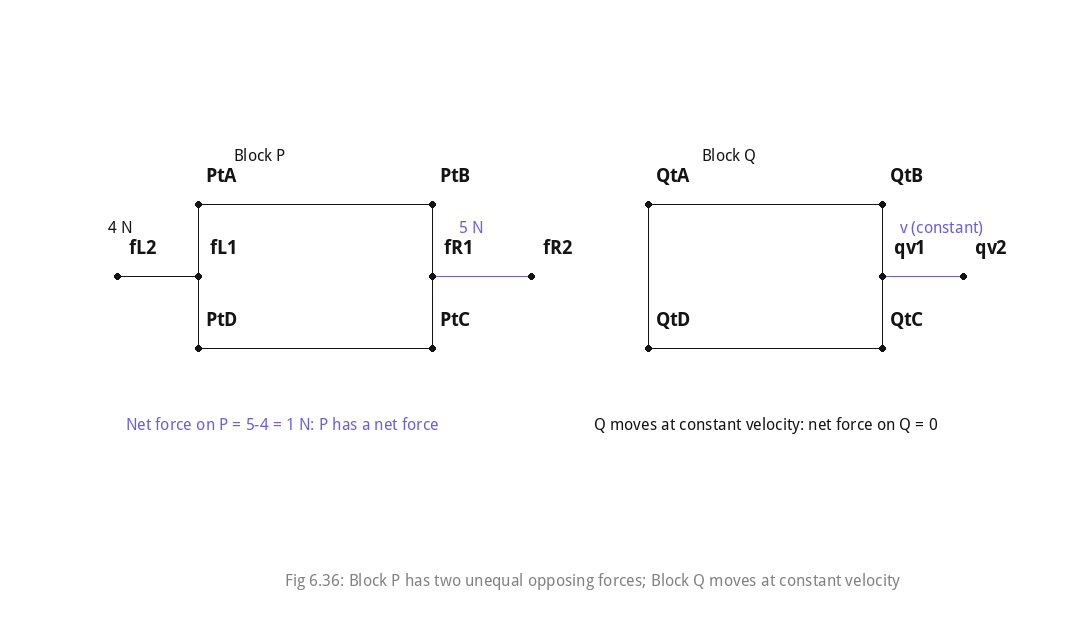
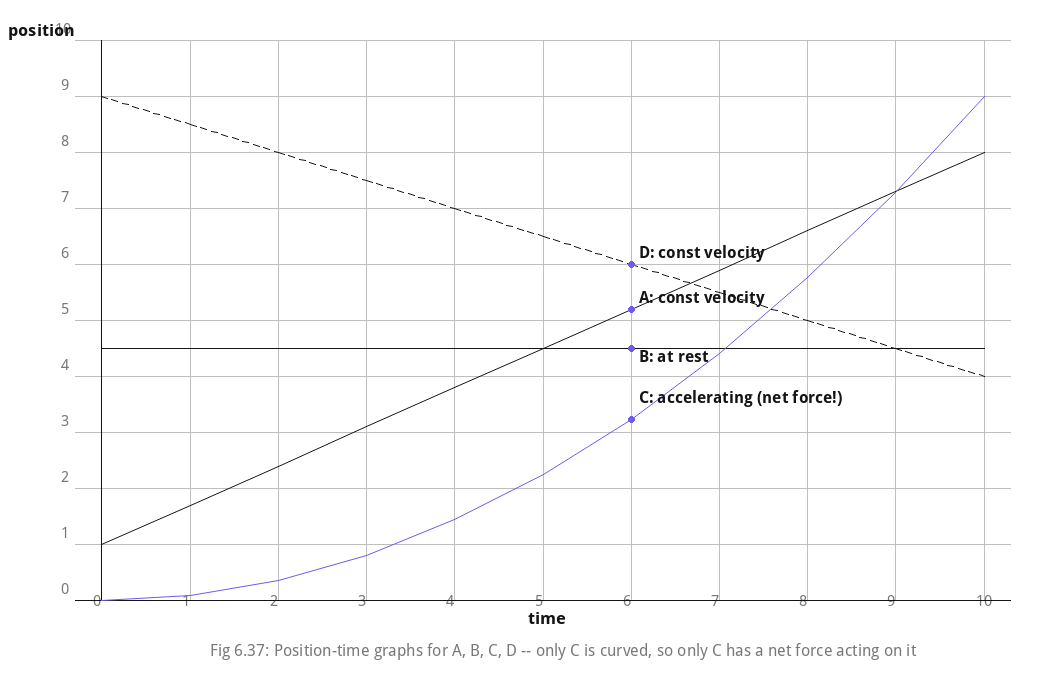
Quick visual: a worked diagram from the full Solutions page, for reference.
Recommended: Buy the Printed NCERT Class 9 Science Book
Contains Amazon affiliate links.
If you’d like a printed copy alongside the PDF, here’s a verified option:
3.8 out of 5 stars (931 ratings) · Rs. 187
Price and availability may change on Amazon. As an Amazon Associate, ncertbooks.org earns from qualifying purchases.


