
Torque plays the same role in rotation that force plays in straight-line motion, and moment of inertia plays the role of mass. These Class 11 Physics Chapter 6 questions cover torque, angular momentum, and the parallel axis theorem for different shapes.
Last Updated: September 23, 2026
Very Short Answer Questions (1 mark)
Q1. Define torque.
Ans: Torque is the moment of force, τ=r×F, causing rotational effect.
Q2. What is the SI unit of moment of inertia?
Ans: kg m².
Q3. Write the formula for angular momentum.
Ans: L=Iω (or L=r×p).
Q4. State the parallel axis theorem.
Ans: I=Icm+Md², where d is the distance between the two parallel axes.
Q5. What is the moment of inertia of a thin rod about an axis through its centre, perpendicular to its length?
Ans: I=(1/12)ML².
Short Answer Questions (2–3 marks)
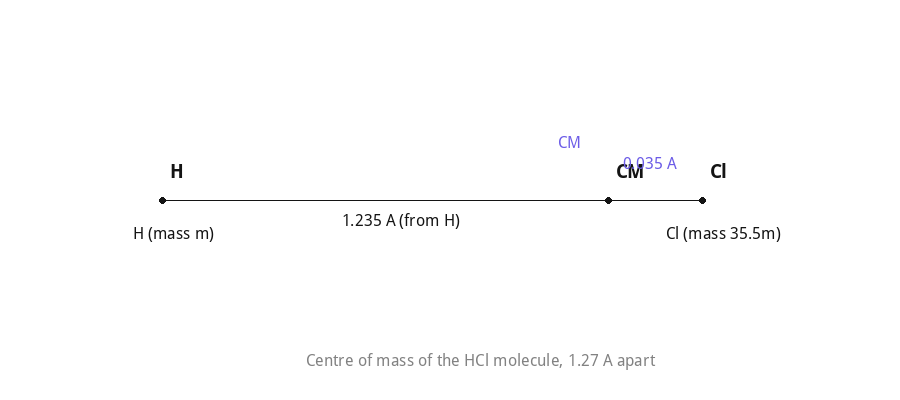
Q6. Two masses, 2 kg and 3 kg, are placed at x=0 and x=5 m. Find the position of the centre of mass.
Ans: Xcm=(2(0)+3(5))/(2+3)=15/5=3 m.
Q7. A force of 10 N is applied at a perpendicular distance of 0.5 m from the axis of rotation. Find the torque produced.
Ans: τ=rF sin90°=0.5(10)(1)=5 Nm.
Q8. A disc of mass 2 kg and radius 0.5 m rotates at 4 rad/s. Find its angular momentum (Idisc=½MR²).
Ans: I=½(2)(0.5²)=0.25 kg m². L=Iω=0.25(4)=1 kg m²/s.
Higher-Order Thinking / Application Questions
Q9. A solid sphere of mass 2 kg and radius 0.1 m rolls without slipping with a linear speed of 4 m/s. Calculate its total kinetic energy, showing both translational and rotational contributions.
Ans: Translational KE=½Mv²=½(2)(16)=16 J. For rolling without slipping, ω=v/R=4/0.1=40 rad/s. I=(2/5)MR²=(2/5)(2)(0.01)=0.008 kg m². Rotational KE=½Iω²=½(0.008)(1600)=6.4 J. Total KE=16+6.4=22.4 J.
Q10. An ice skater spinning with arms outstretched has moment of inertia 4 kg m² and angular speed 2 rad/s. When she pulls her arms in, her moment of inertia reduces to 1 kg m². Find her new angular speed and explain the physical principle behind this change.
Ans: By conservation of angular momentum (no external torque acts as she pulls her arms in): I1ω1=I2ω2; 4(2)=1(ω2); ω2=8 rad/s. Physically, when she pulls her arms inward, her mass redistributes closer to the rotation axis, reducing her moment of inertia. Since angular momentum L=Iω must stay constant in the absence of external torque, a decrease in I is compensated by a proportional increase in ω, causing her to spin faster.
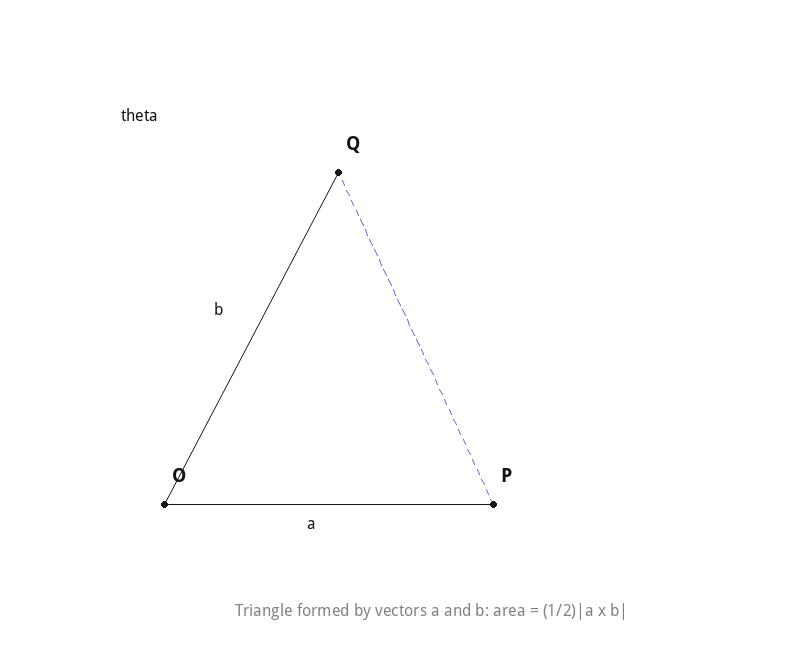
Quick visual: a worked diagram from the full Solutions page, for reference.
- Chapter 1: Units and Measurements - HOTS & Extra Questions with Answers
- Chapter 2: Motion in a Straight Line – Extra Questions with Answers
- Chapter 3: Motion in a Plane – Extra Questions with Answers
- Chapter 4: Laws of Motion – Extra Questions with Answers
- Chapter 5: Work, Energy and Power – Extra Questions with Answers
- Chapter 7: Gravitation – Extra Questions with Answers
- Chapter 8: Mechanical Properties of Solids – Extra Questions with Answers
- Chapter 9: Mechanical Properties of Fluids – Extra Questions with Answers
- Chapter 10: Thermal Properties of Matter – Extra Questions with Answers
- Chapter 11: Thermodynamics – Extra Questions with Answers
- Chapter 12: Kinetic Theory – Extra Questions with Answers
- Chapter 13: Oscillations – Extra Questions with Answers
- Chapter 14: Waves – Extra Questions with Answers
Frequently Asked Questions
How would you find the moment of inertia of a disc of mass 4 kg and radius 0.5 m about its central axis?
Using I = half times M R squared = 0.5 times 4 times 0.25 = 0.5 kg m squared.
Two masses 2 kg and 3 kg are placed at 0 m and 5 m on a rod, where is their center of mass?
Using center of mass = (m1x1+m2x2) over (m1+m2) = (0+15) over 5 = 3 m from the first mass.
Chapter Quiz — Test Your Understanding
Class 11 Physics Chapter 6 – Solutions and Notes
For complete step-by-step answers and a quick summary, check the Class 11 Physics Chapter 6 Solutions and Class 11 Physics Chapter 6 Revision Notes.
See also: Chapter 1 | Chapter 2 | Chapter 3 | Chapter 4 | Chapter 5 | Chapter 6
Practice more: Chapter 1 | Chapter 2 | Chapter 3 | Chapter 4 | Chapter 5
Quick revision: Chapter 1 | Chapter 2 | Chapter 3 | Chapter 4 | Chapter 5
Recommended: Buy the Printed NCERT Class 11 Physics Book Set
Contains Amazon affiliate links.
If you’d like a printed copy alongside the PDF, here’s a verified option:
Rs. 280
Price and availability may change on Amazon. As an Amazon Associate, ncertbooks.org earns from qualifying purchases.


