
Every satellite orbiting Earth, including a geostationary one with its fixed 24-hour period, obeys the same gravitational law that governs falling objects. These Class 11 Physics Chapter 7 questions work through orbital velocity, the variation of g with height, and Kepler’s laws.
Last Updated: September 23, 2026
Very Short Answer Questions (1 mark)
Q1. What is the value of the universal gravitational constant G?
Ans: 6.67×10⁻¹¹ Nm²/kg².
Q2. Write the formula for orbital velocity of a satellite.
Ans: vo=√(GM/r).
Q3. What is a geostationary satellite?
Ans: A satellite orbiting Earth with a period of 24 hours, appearing stationary relative to a point on Earth’s surface.
Q4. How does the value of g vary with height above Earth’s surface?
Ans: g decreases with height above Earth’s surface.
Q5. State Kepler’s second law.
Ans: The radius vector from the Sun to a planet sweeps out equal areas in equal intervals of time.
Short Answer Questions (2–3 marks)
Q6. Two masses of 4 kg and 6 kg are 2 m apart. Find the gravitational force between them (G=6.67×10⁻¹¹ Nm²/kg²).
Ans: F=Gm1m2/r²=6.67×10−11(4)(6)/4=4×10−10 N (approx).
Q7. If Earth’s mass is 6×10²⁴ kg and radius 6.4×10⁶ m, find the acceleration due to gravity at the surface.
Ans: g=GM/R²=6.67×10−11(6×10²⁴)/(6.4×10⁶)² ≈ 9.8 m/s².
Q8. Find the escape velocity from Earth given g=9.8 m/s² and R=6.4×10⁶ m.
Ans: ve=√(2gR)=√(2×9.8×6.4×10⁶)≈11.2 km/s.
Higher-Order Thinking / Application Questions
Q9. A planet orbits the Sun at a distance 4 times that of Earth. Using Kepler’s third law, find the ratio of its orbital period to Earth’s orbital period, and explain the reasoning.
Ans: By Kepler’s third law, T²∝r³. So Tplanet/TEarth = (rplanet/rEarth)3/2 = 43/2 = 8. The planet’s orbital period is 8 times that of Earth. This follows because Kepler’s third law establishes a fixed proportionality between the cube of the orbital radius and the square of the period for all bodies orbiting the same central mass (the Sun).
Q10. Explain why astronauts in an orbiting spacecraft experience weightlessness even though Earth’s gravity is still acting on them, relating this to the concept of free fall.
Ans: Astronauts in orbit are in a state of continuous free fall toward Earth, but because the spacecraft has enough horizontal (tangential) velocity, it keeps ‘missing’ the Earth as it falls, resulting in a circular orbit. Since both the astronaut and the spacecraft are accelerating toward Earth at the same rate (due to gravity alone, with no other supporting force acting on the astronaut relative to the spacecraft), there is no normal force between the astronaut and the spacecraft floor, which is what we perceive as weight. Hence, despite gravity still acting on them, astronauts experience apparent weightlessness because they are in a state of free fall along with their spacecraft.
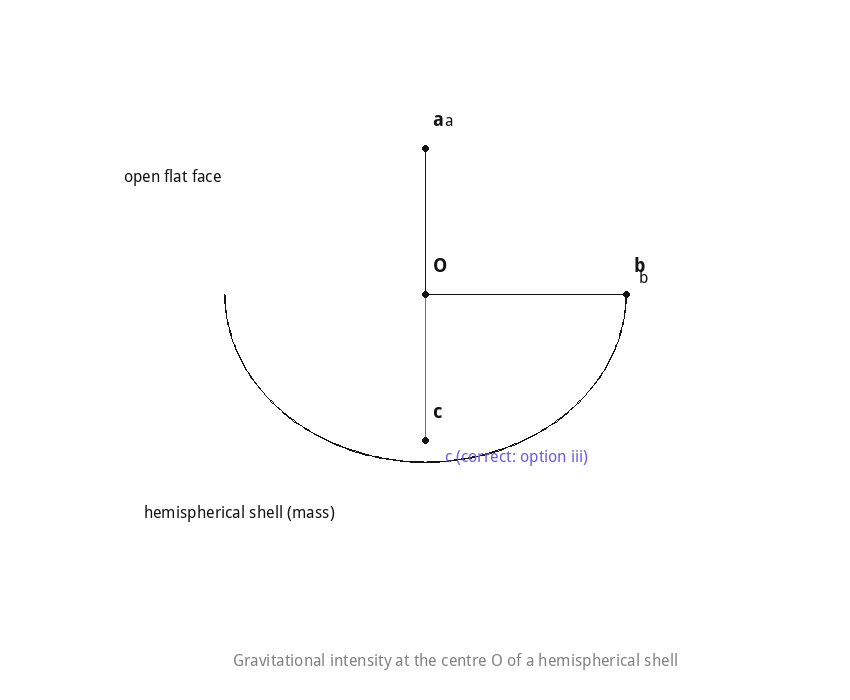
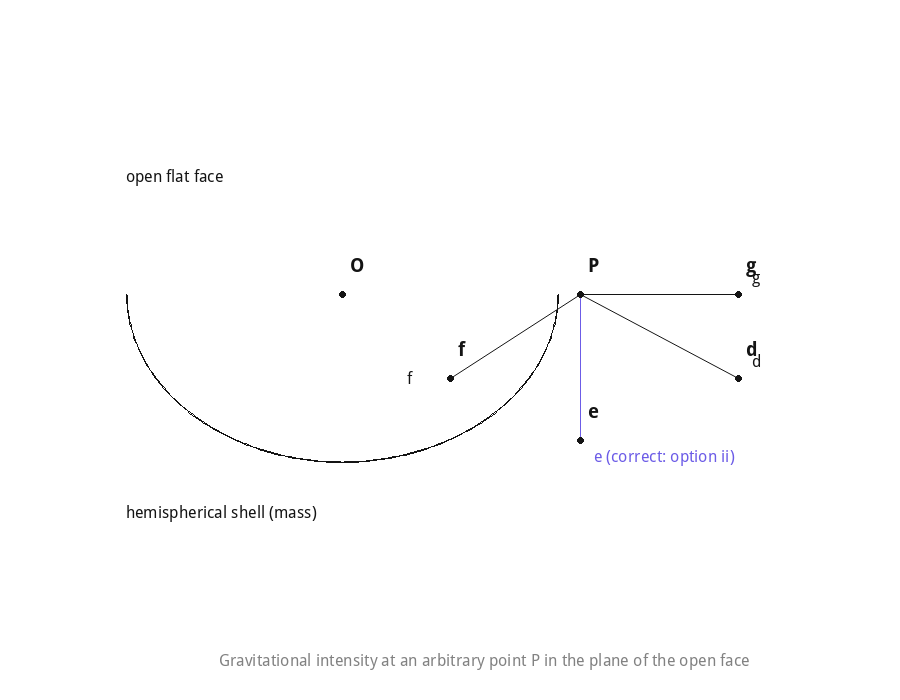
Quick visual: a worked diagram from the full Solutions page, for reference.
- Chapter 1: Units and Measurements - HOTS & Extra Questions with Answers
- Chapter 2: Motion in a Straight Line – Extra Questions with Answers
- Chapter 3: Motion in a Plane – Extra Questions with Answers
- Chapter 4: Laws of Motion – Extra Questions with Answers
- Chapter 5: Work, Energy and Power – Extra Questions with Answers
- Chapter 6: System of Particles and Rotational Motion – Extra Questions with Answers
- Chapter 8: Mechanical Properties of Solids – Extra Questions with Answers
- Chapter 9: Mechanical Properties of Fluids – Extra Questions with Answers
- Chapter 10: Thermal Properties of Matter – Extra Questions with Answers
- Chapter 11: Thermodynamics – Extra Questions with Answers
- Chapter 12: Kinetic Theory – Extra Questions with Answers
- Chapter 13: Oscillations – Extra Questions with Answers
- Chapter 14: Waves – Extra Questions with Answers
Frequently Asked Questions
How would you find the escape velocity from a planet with mass and radius similar to Earth?
Using v = root(2GM over R), the escape velocity for Earth-like values comes out to about 11.2 km per second.
If a satellite orbits at a height where gravitational acceleration is one-fourth of that on the surface, how does its orbital radius compare?
Since g varies as 1 over r squared, one-fourth the surface value means the orbital radius is twice the surface radius.
Chapter Quiz — Test Your Understanding
Class 11 Physics Chapter 7 – Solutions and Notes
For complete step-by-step answers and a quick summary, check the Class 11 Physics Chapter 7 Solutions and Class 11 Physics Chapter 7 Revision Notes.
See also: Chapter 1 | Chapter 2 | Chapter 3 | Chapter 4 | Chapter 5 | Chapter 6 | Chapter 7
Practice more: Chapter 1 | Chapter 2 | Chapter 3 | Chapter 4 | Chapter 5 | Chapter 6
Quick revision: Chapter 1 | Chapter 2 | Chapter 3 | Chapter 4 | Chapter 5 | Chapter 6
Recommended: Buy the Printed NCERT Class 11 Physics Book Set
Contains Amazon affiliate links.
If you’d like a printed copy alongside the PDF, here’s a verified option:
Rs. 280
Price and availability may change on Amazon. As an Amazon Associate, ncertbooks.org earns from qualifying purchases.



Pingback: Class 11 Physics Chapter 8 Mechanical Properties of Solids Extra Questions (2026-27)
Pingback: Class 11 Physics Chapter 8 Mechanical Properties of Solids Revision Notes (2026-27)