
Chapter 4 of Class 11 Physics rests on Newton’s three laws of motion, from inertia through F=ma to action-reaction pairs. It also covers how momentum behaves in isolated systems and how static and kinetic friction resist motion differently.
Last Updated: September 23, 2026
Newton’s Three Laws
- 1st Law: inertia; no motion change without net force.
- 2nd Law: F=dp/dt=ma.
- 3rd Law: action-reaction pairs, equal and opposite, on different bodies.
Momentum
- p=mv; conserved when no external force acts.
Friction
- Static: fs(max)=μsN.
- Kinetic: fk=μkN.
Circular Motion
- F=mv²/r; banked road ideal speed v=√(rg tanθ).
One-Line Summary
Newton’s three laws govern motion and force; momentum is conserved in isolated systems, and friction is a self-adjusting resistive force between contacting surfaces.
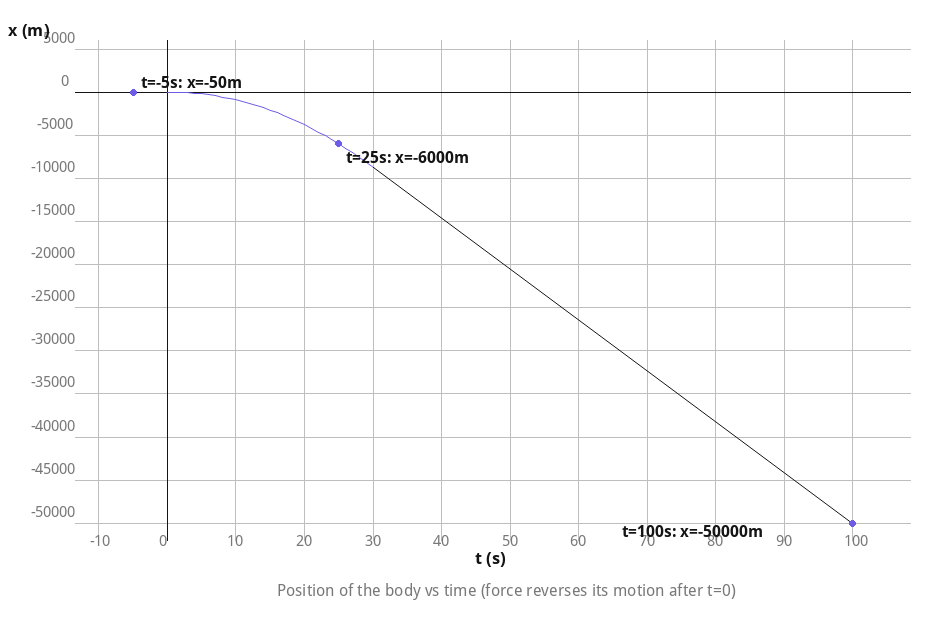
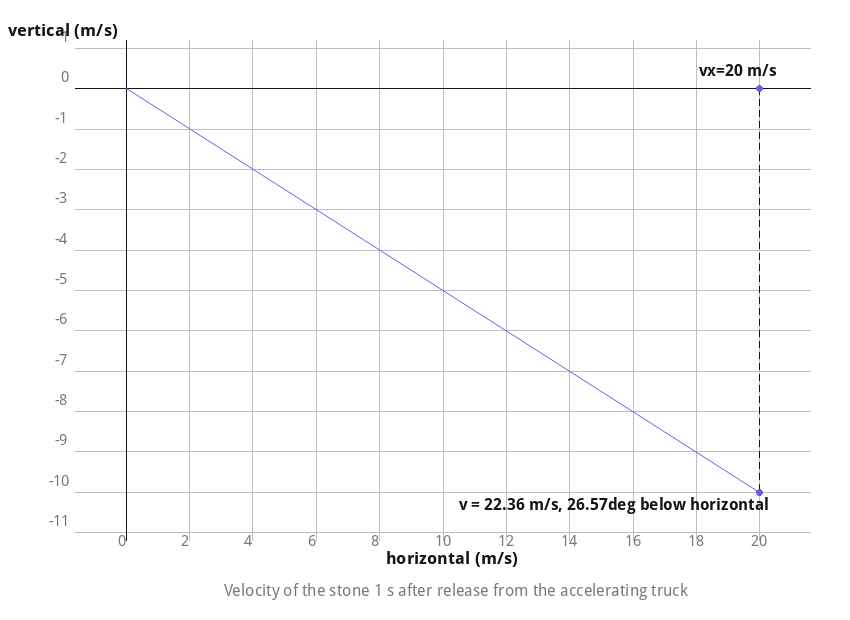
Quick visual: a worked diagram from the full Solutions page, for reference.
- Chapter 1: Units and Measurements - Quick Revision Notes
- Chapter 2: Motion in a Straight Line – Revision Notes
- Chapter 3: Motion in a Plane – Revision Notes
- Chapter 5: Work, Energy and Power – Revision Notes
- Chapter 6: System of Particles and Rotational Motion – Revision Notes
- Chapter 7: Gravitation – Revision Notes
- Chapter 8: Mechanical Properties of Solids – Revision Notes
- Chapter 9: Mechanical Properties of Fluids – Revision Notes
- Chapter 10: Thermal Properties of Matter – Revision Notes
- Chapter 11: Thermodynamics – Revision Notes
- Chapter 12: Kinetic Theory – Revision Notes
- Chapter 13: Oscillations – Revision Notes
- Chapter 14: Waves – Revision Notes
Frequently Asked Questions
How does the First Law of Motion given by Newton define the concept of inertia?
The First Law of Motion states that an object remains at rest or in uniform motion unless acted upon by an external force. This defines inertia as the natural tendency of any body to resist a change in its state of motion.
What is the difference between mass and weight according to the Laws of Motion?
Mass is the measure of inertia of a body and remains constant everywhere, while weight is the force of gravity acting on that mass, so weight varies depending on the local value of gravitational acceleration.
Chapter Quiz — Test Your Understanding
Class 11 Physics Chapter 4 – Solutions and Important Questions
Need full answers or more practice? See the Class 11 Physics Chapter 4 Solutions and Class 11 Physics Chapter 4 Extra Questions.
See also: Chapter 1 | Chapter 2 | Chapter 3 | Chapter 4
Practice more: Chapter 1 | Chapter 2 | Chapter 3 | Chapter 4
Recommended: Buy the Printed NCERT Class 11 Physics Book Set
Contains Amazon affiliate links.
If you’d like a printed copy alongside the PDF, here’s a verified option:
Rs. 280
Price and availability may change on Amazon. As an Amazon Associate, ncertbooks.org earns from qualifying purchases.


