
Chapter 5 of Class 11 Physics tracks how forces transfer energy, from the work-energy theorem to the different forms of potential and kinetic energy. It also distinguishes elastic collisions, where kinetic energy is conserved, from inelastic ones, where only momentum survives.
Last Updated: September 23, 2026
Key Formulas
- Work: W=Fd cosθ.
- KE=½mv²; Gravitational PE=mgh; Spring PE=½kx².
- Work-energy theorem: W=ΔKE.
Conservation of Energy
- KE+PE=constant (no non-conservative forces).
Collisions
- Elastic: momentum + KE conserved.
- Inelastic: only momentum conserved.
Power
- P=W/t=F·v; SI unit watt; 1 HP=746 W.
One-Line Summary
Work, energy, and power describe how forces transfer energy to bodies, with mechanical energy conserved in ideal (frictionless) systems and different collision types conserving momentum with or without kinetic energy.
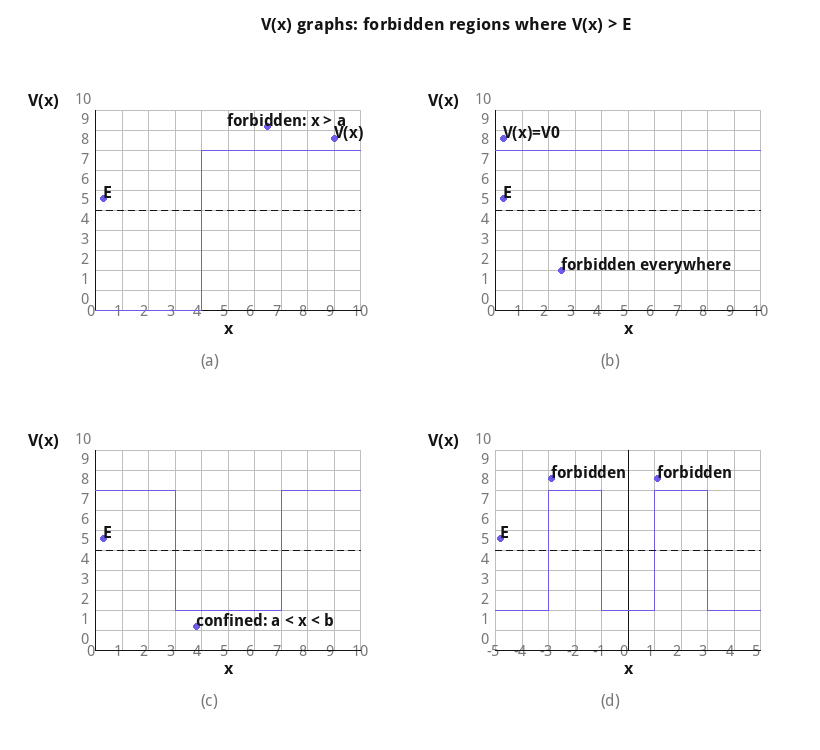
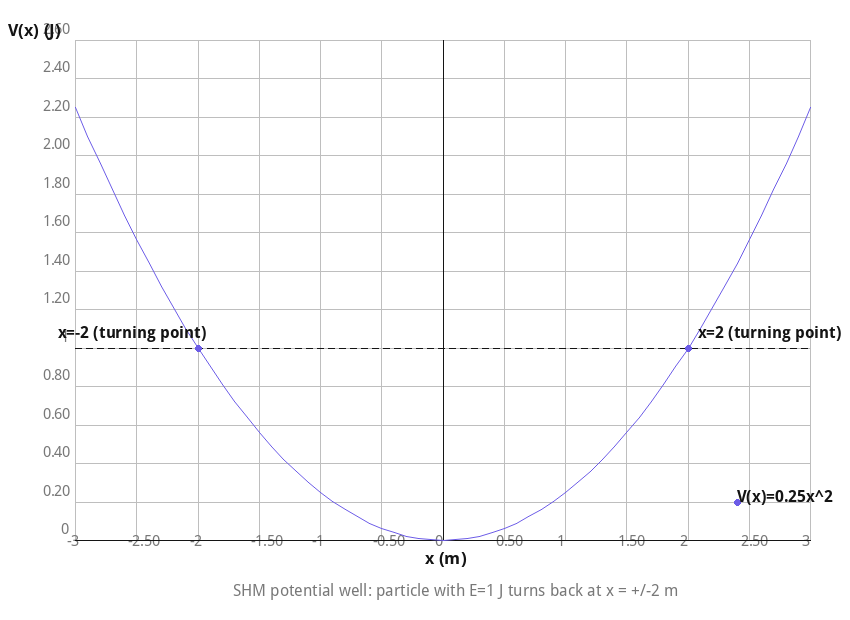
Quick visual: a worked diagram from the full Solutions page, for reference.
- Chapter 1: Units and Measurements - Quick Revision Notes
- Chapter 2: Motion in a Straight Line – Revision Notes
- Chapter 3: Motion in a Plane – Revision Notes
- Chapter 4: Laws of Motion – Revision Notes
- Chapter 6: System of Particles and Rotational Motion – Revision Notes
- Chapter 7: Gravitation – Revision Notes
- Chapter 8: Mechanical Properties of Solids – Revision Notes
- Chapter 9: Mechanical Properties of Fluids – Revision Notes
- Chapter 10: Thermal Properties of Matter – Revision Notes
- Chapter 11: Thermodynamics – Revision Notes
- Chapter 12: Kinetic Theory – Revision Notes
- Chapter 13: Oscillations – Revision Notes
- Chapter 14: Waves – Revision Notes
Frequently Asked Questions
Why is work considered zero if a force does not cause any displacement?
Work is defined as the product of force and displacement in the direction of the force. If there is no displacement, or if the force is perpendicular to the displacement, the work done is zero, even if the force itself is large.
What is the work-energy theorem, and why is it useful?
The work-energy theorem states that the net work done on an object equals the change in its kinetic energy, which allows problems involving forces and motion to be solved using energy methods without calculating acceleration or time directly.
Chapter Quiz — Test Your Understanding
Class 11 Physics Chapter 5 – Solutions and Important Questions
Need full answers or more practice? See the Class 11 Physics Chapter 5 Solutions and Class 11 Physics Chapter 5 Extra Questions.
See also: Chapter 1 | Chapter 2 | Chapter 3 | Chapter 4 | Chapter 5
Practice more: Chapter 1 | Chapter 2 | Chapter 3 | Chapter 4 | Chapter 5
Quick revision: Chapter 1 | Chapter 2 | Chapter 3 | Chapter 4
Recommended: Buy the Printed NCERT Class 11 Physics Book Set
Contains Amazon affiliate links.
If you’d like a printed copy alongside the PDF, here’s a verified option:
Rs. 280
Price and availability may change on Amazon. As an Amazon Associate, ncertbooks.org earns from qualifying purchases.



Pingback: Class 11 Physics Chapter 8 Mechanical Properties of Solids Extra Questions (2026-27)