
Motion in a plane calls for vector tools rather than single numbers, since both direction and magnitude matter. Chapter 3 of Class 11 Physics uses this to derive the projectile motion formulas for time of flight, height, and range, then applies the same vector thinking to uniform circular motion.
Last Updated: September 23, 2026
Key Terms
- Scalar: magnitude only. Vector: magnitude + direction.
- Resolution: Ax=Acosθ, Ay=Asinθ.
Projectile Motion Formulas
- T = 2u sinθ/g
- H = u²sin²θ/2g
- R = u²sin2θ/g (max at θ=45°)
Circular Motion
- Centripetal acceleration ac=v²/r, directed toward centre.
- ω=v/r; T=2π/ω.
One-Line Summary
Motion in a plane uses vector algebra to describe two-dimensional motion, covering projectile motion (parabolic path) and uniform circular motion (constant speed, changing direction, centripetal acceleration).
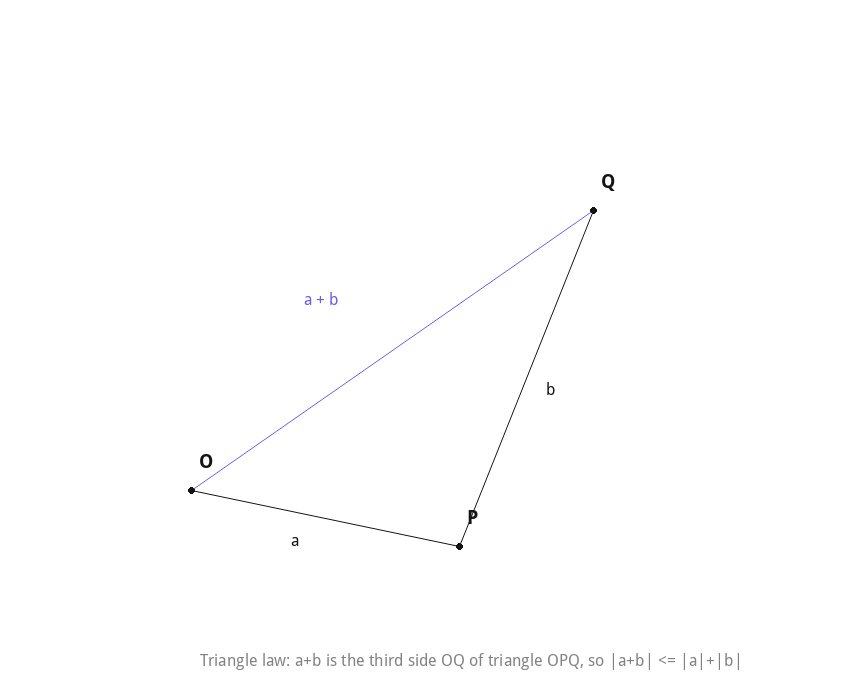
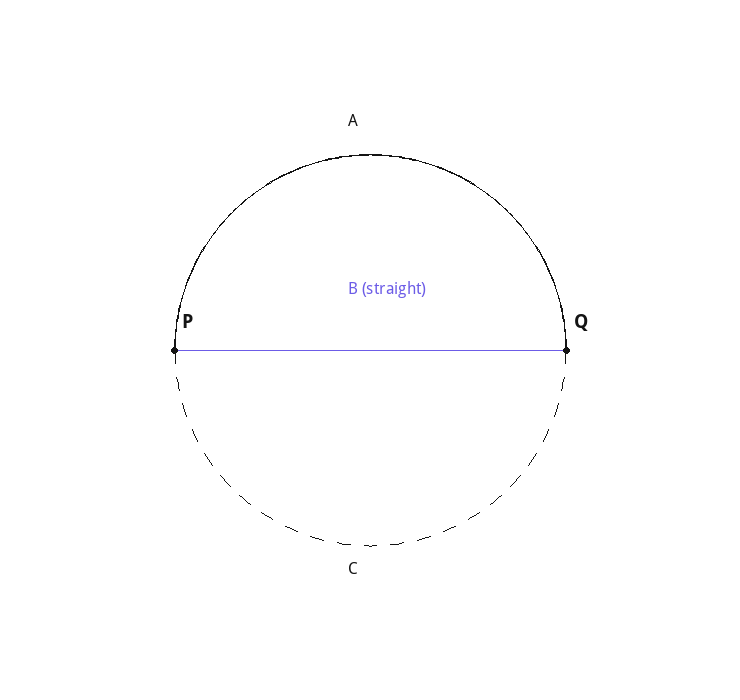
Quick visual: a worked diagram from the full Solutions page, for reference.
- Chapter 1: Units and Measurements - Quick Revision Notes
- Chapter 2: Motion in a Straight Line – Revision Notes
- Chapter 4: Laws of Motion – Revision Notes
- Chapter 5: Work, Energy and Power – Revision Notes
- Chapter 6: System of Particles and Rotational Motion – Revision Notes
- Chapter 7: Gravitation – Revision Notes
- Chapter 8: Mechanical Properties of Solids – Revision Notes
- Chapter 9: Mechanical Properties of Fluids – Revision Notes
- Chapter 10: Thermal Properties of Matter – Revision Notes
- Chapter 11: Thermodynamics – Revision Notes
- Chapter 12: Kinetic Theory – Revision Notes
- Chapter 13: Oscillations – Revision Notes
- Chapter 14: Waves – Revision Notes
Frequently Asked Questions
Why do we need vectors to describe motion in a plane, unlike motion in a straight line?
Motion in a plane involves both magnitude and direction changing in two dimensions, so displacement, velocity and acceleration must be represented as vectors with components along two perpendicular axes, not just single numbers.
What is projectile motion, and why is it treated as two independent motions?
Projectile motion is the motion of an object thrown into the air under gravity alone. It is analysed as independent horizontal (constant velocity) and vertical (uniformly accelerated) motions because gravity only affects the vertical component.
Chapter Quiz — Test Your Understanding
Class 11 Physics Chapter 3 – Solutions and Important Questions
Need full answers or more practice? See the Class 11 Physics Chapter 3 Solutions and Class 11 Physics Chapter 3 Extra Questions.
Recommended: Buy the Printed NCERT Class 11 Physics Book Set
Contains Amazon affiliate links.
If you’d like a printed copy alongside the PDF, here’s a verified option:
Rs. 280
Price and availability may change on Amazon. As an Amazon Associate, ncertbooks.org earns from qualifying purchases.


