
Determinants assigns a single scalar value to a square matrix that reveals whether it can be inverted, and this chapter connects that value to areas of triangles and to solving linear systems by the matrix method.
Last Updated: September 23, 2026
Common Mistakes Students Make in Determinants
- Cofactor sign errors: mixing up the +/− checkerboard pattern when expanding along a row or column.
- Misapplying determinant properties: e.g. not recognising when two identical rows/columns make the determinant zero.
- Area-of-triangle formula errors: forgetting to take the absolute value, or mismanaging the ½ factor.
- Cramer’s rule column mix-ups: substituting into the wrong column when computing the determinant for a specific variable.
Determinant Basics
- 2×2: |A|=ad−bc.
- 3×3: expand via cofactors along any row/column.
- Singular matrix: |A|=0, no inverse exists.
Properties
- |A’|=|A|; swapping rows/cols flips sign; identical rows/cols give |A|=0; |AB|=|A||B|.
Applications
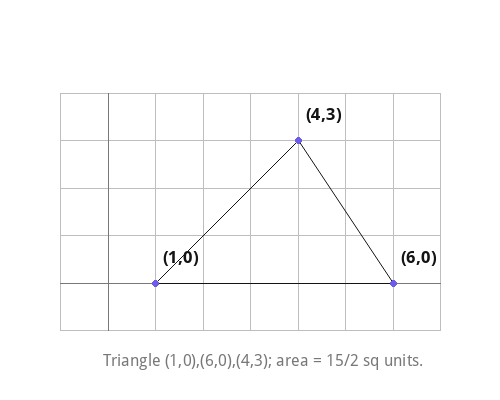
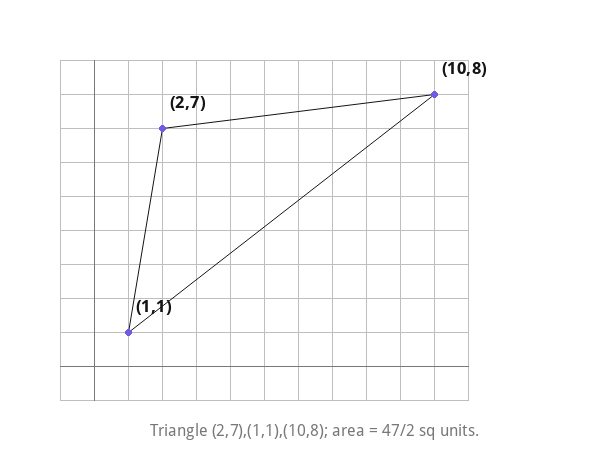
- Area of triangle via determinant formula.
- A⁻¹=adj(A)/|A| (|A|≠0 required).
- Matrix method: AX=B ⇒ X=A⁻¹B.
One-Line Summary
The determinant is a scalar characterizing a square matrix’s invertibility, used to compute inverses, areas, and to solve linear systems via the matrix method.
Quick visual: a worked diagram from the full Solutions page, for reference.
- Chapter 1: Revision Notes - Relations and Functions
- Chapter 2: Inverse Trigonometric Functions – Revision Notes
- Chapter 3: Matrices – Revision Notes
- Chapter 5: Continuity and Differentiability – Revision Notes
- Chapter 6: Applications of Derivatives – Revision Notes
- Chapter 7: Integrals – Revision Notes
- Chapter 8: Applications of Integrals – Revision Notes
- Chapter 9: Differential Equations – Revision Notes
- Chapter 10: Vectors – Revision Notes
- Chapter 11: Three-Dimensional Geometry – Revision Notes
- Chapter 12: Linear Programming – Revision Notes
- Chapter 13: Probability – Revision Notes
Frequently Asked Questions
What does the determinant of a matrix represent?
The determinant is a single number calculated from a square matrix that indicates whether the matrix is invertible (non-zero determinant) or singular (zero determinant), and it also relates to the scaling factor of area or volume under the transformation.
How are determinants used to check whether a system of linear equations has a unique solution?
By Cramers Rule, if the determinant of the coefficient matrix is non-zero, the system has a unique solution, while a zero determinant indicates either no solution or infinitely many solutions.
Chapter Quiz — Test Your Understanding
Class 12 Mathematics Chapter 4 – Solutions and Important Questions
Need full answers or more practice? See the Class 12 Mathematics Chapter 4 Solutions and Class 12 Mathematics Chapter 4 Extra Questions.
See also: Chapter 1 | Chapter 2 | Chapter 3 | Chapter 4
Practice more: Chapter 1 | Chapter 2 | Chapter 3 | Chapter 4
What to Revise First (and Last) in This Chapter
Prioritise the cofactor expansion method and the standard determinant properties (row/column operations) first, since they’re used across nearly every question type. Leave Cramer’s rule and the area-of-triangle application for an earlier, slower revision pass.
Recommended: Buy the Printed NCERT Class 12 Maths Book
Contains Amazon affiliate links.
If you’d like a printed copy alongside the PDF, here’s a verified option:
4.3 out of 5 stars (899 ratings) · Rs. 94
Price and availability may change on Amazon. As an Amazon Associate, ncertbooks.org earns from qualifying purchases.



Pingback: Class 12 Maths Chapter 6 Applications of Derivatives Solutions (2026-27)
Pingback: Class 12 Maths Chapter 8 Applications of Integrals Solutions (2026-27)
Pingback: Class 12 Maths Chapter 4 Determinants Extra Questions (2026-27)