
Applications of Derivatives turns the derivative into a practical tool, using it to find tangents and normals, approximate small changes, and locate a curve’s maxima and minima.
Last Updated: September 23, 2026
Key Concepts
- Rate of change: dy/dx as instantaneous rate.
- Increasing: f'(x)≥0; decreasing: f'(x)≤0.
- Tangent: y−y₀=f'(x₀)(x−x₀); Normal slope=−1/f'(x₀).
Approximation & Extrema
- Δy≈f'(x)Δx (differentials).
- Critical points: f'(x)=0.
- Second derivative test: f”<0 ⇒ local max; f”>0 ⇒ local min.
- Absolute extrema on [a,b]: compare critical points and endpoints.
One-Line Summary
Derivatives model rates of change, define tangents/normals, and identify increasing/decreasing behaviour and local/absolute extrema via first and second derivative tests.
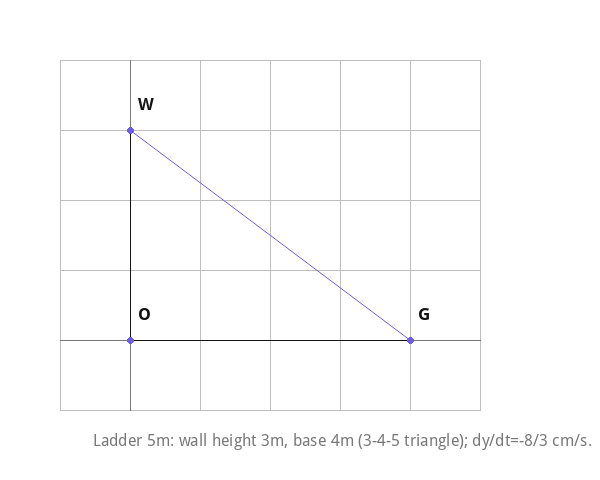
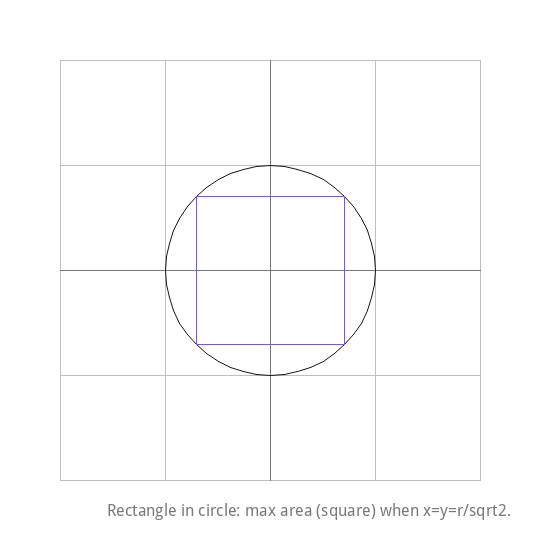
Quick visual: a worked diagram from the full Solutions page, for reference.
- Chapter 1: Revision Notes - Relations and Functions
- Chapter 2: Inverse Trigonometric Functions – Revision Notes
- Chapter 3: Matrices – Revision Notes
- Chapter 4: Determinants – Revision Notes
- Chapter 5: Continuity and Differentiability – Revision Notes
- Chapter 7: Integrals – Revision Notes
- Chapter 8: Applications of Integrals – Revision Notes
- Chapter 9: Differential Equations – Revision Notes
- Chapter 10: Vectors – Revision Notes
- Chapter 11: Three-Dimensional Geometry – Revision Notes
- Chapter 12: Linear Programming – Revision Notes
- Chapter 13: Probability – Revision Notes
Frequently Asked Questions
How are derivatives used to find whether a function is increasing or decreasing?
If the derivative of a function is positive over an interval, the function is increasing there, and if the derivative is negative, the function is decreasing, since the derivative represents the instantaneous rate of change.
How does the second derivative test help identify maxima and minima?
At a point where the first derivative is zero, a negative second derivative indicates a local maximum, a positive second derivative indicates a local minimum, avoiding having to check the sign change of the first derivative manually.
Chapter Quiz — Test Your Understanding
Class 12 Mathematics Chapter 6 – Solutions and Important Questions
Need full answers or more practice? See the Class 12 Mathematics Chapter 6 Solutions and Class 12 Mathematics Chapter 6 Extra Questions.
See also: Chapter 1 | Chapter 2 | Chapter 3 | Chapter 4 | Chapter 5 | Chapter 6
Practice more: Chapter 1 | Chapter 2 | Chapter 3 | Chapter 4 | Chapter 5 | Chapter 6
Quick revision: Chapter 1 | Chapter 2 | Chapter 3 | Chapter 4 | Chapter 5
Recommended: Buy the Printed NCERT Class 12 Maths Book
Contains Amazon affiliate links.
If you’d like a printed copy alongside the PDF, here’s a verified option:
4.3 out of 5 stars (899 ratings) · Rs. 94
Price and availability may change on Amazon. As an Amazon Associate, ncertbooks.org earns from qualifying purchases.



Pingback: Class 12 Maths Chapter 7 Integrals Solutions (2026-27)