
Integrals reverses the process of differentiation, and this chapter collects the standard results along with techniques like substitution, partial fractions, and integration by parts needed to evaluate them.
Last Updated: September 23, 2026
Standard Integrals
- ∫xndx=xn+1/(n+1)+C; ∫1/x dx=log|x|+C; ∫exdx=ex+C.
- ∫sin x dx=−cos x+C; ∫cos x dx=sin x+C.
Techniques
- Substitution, partial fractions, integration by parts (∫u dv=uv−∫v du, ILATE order).
Definite Integrals
- ∫abf(x)dx=F(b)−F(a) (Fundamental Theorem).
- Key property: ∫abf(x)dx=∫abf(a+b−x)dx.
One-Line Summary
Integration reverses differentiation; indefinite integrals carry a constant C, while definite integrals compute exact signed area using the Fundamental Theorem of Calculus and simplifying properties.
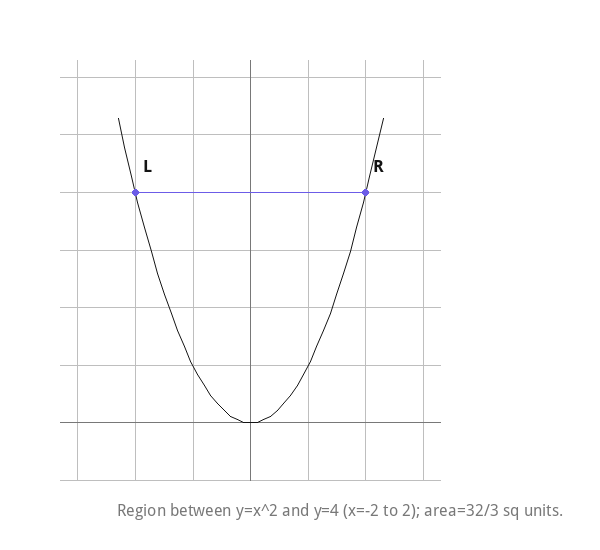
Quick visual: a worked diagram from the full Extra Questions page, for reference.
- Chapter 1: Revision Notes - Relations and Functions
- Chapter 2: Inverse Trigonometric Functions – Revision Notes
- Chapter 3: Matrices – Revision Notes
- Chapter 4: Determinants – Revision Notes
- Chapter 5: Continuity and Differentiability – Revision Notes
- Chapter 6: Applications of Derivatives – Revision Notes
- Chapter 8: Applications of Integrals – Revision Notes
- Chapter 9: Differential Equations – Revision Notes
- Chapter 10: Vectors – Revision Notes
- Chapter 11: Three-Dimensional Geometry – Revision Notes
- Chapter 12: Linear Programming – Revision Notes
- Chapter 13: Probability – Revision Notes
Frequently Asked Questions
What is the relationship between integration and differentiation?
Integration is the reverse process of differentiation; finding the integral of a function means finding another function whose derivative gives back the original function, which is why integration is also called antidifferentiation.
What is the difference between definite and indefinite integrals?
An indefinite integral gives a general family of antiderivative functions with an added constant of integration, while a definite integral is evaluated between two limits and gives a specific numerical value, often representing area under a curve.
Chapter Quiz — Test Your Understanding
Class 12 Mathematics Chapter 7 – Solutions and Important Questions
Need full answers or more practice? See the Class 12 Mathematics Chapter 7 Solutions and Class 12 Mathematics Chapter 7 Extra Questions.
See also: Chapter 1 | Chapter 2 | Chapter 3 | Chapter 4 | Chapter 5 | Chapter 6 | Chapter 7
Practice more: Chapter 1 | Chapter 2 | Chapter 3 | Chapter 4 | Chapter 5 | Chapter 6 | Chapter 7
Quick revision: Chapter 1 | Chapter 2 | Chapter 3 | Chapter 4 | Chapter 5 | Chapter 6
Recommended: Buy the Printed NCERT Class 12 Maths Book
Contains Amazon affiliate links.
If you’d like a printed copy alongside the PDF, here’s a verified option:
4.3 out of 5 stars (899 ratings) · Rs. 94
Price and availability may change on Amazon. As an Amazon Associate, ncertbooks.org earns from qualifying purchases.


