
Chapter 1, Orienting Yourself: The Use of Coordinates, introduces the Cartesian plane — a system for locating any point using an ordered pair of numbers — and the sign patterns that identify which of its four quadrants a point falls in.
Last Updated: September 23, 2026
Key Concepts
The Cartesian plane is formed by a horizontal x-axis and a vertical y-axis, meeting at the origin (0,0), dividing the plane into four quadrants numbered I to IV, going anticlockwise from the top-right. Every point is written as an ordered pair (x, y), where x (the abscissa) is the horizontal distance from the origin and y (the ordinate) is the vertical distance; because order matters, (a, b) is not the same point as (b, a) unless a = b.
Quick Recap
- Quadrant I: (+, +); Quadrant II: (−, +); Quadrant III: (−, −); Quadrant IV: (+, −).
- A point on the x-axis always has y = 0; a point on the y-axis always has x = 0.
- The origin (0,0) is the point where both axes meet.
- Coordinates are always written in the order (x, y) — the abscissa first, then the ordinate.
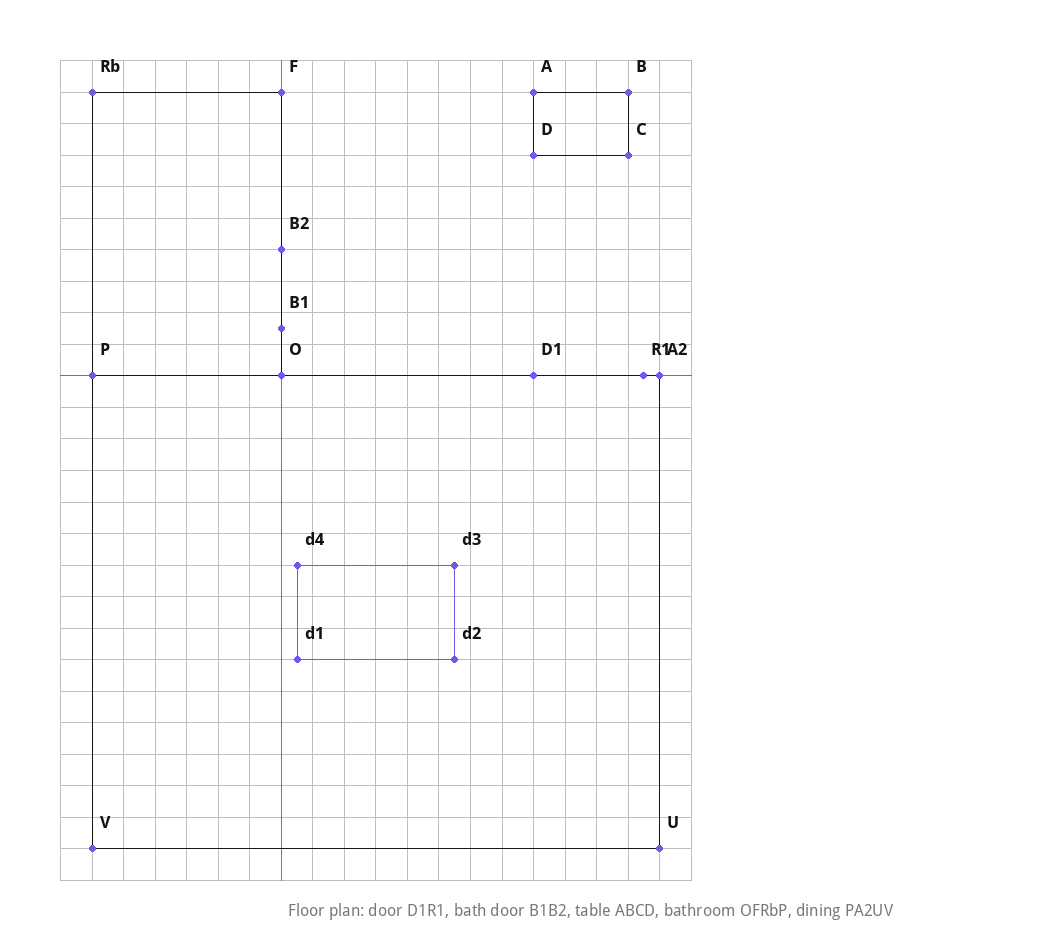
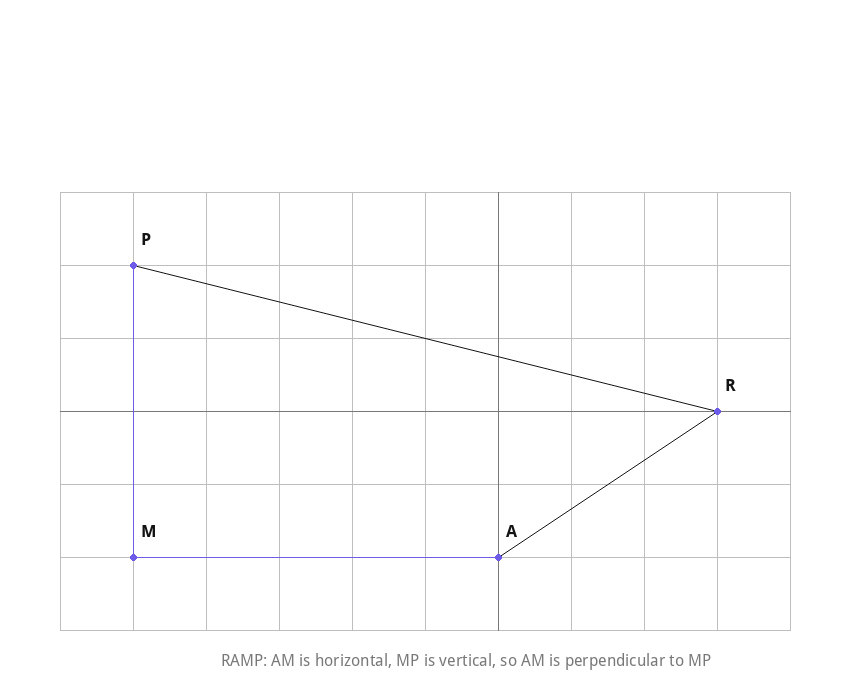
Quick visual: a worked diagram from the full Solutions page, for reference.
Common Mistake to Avoid
Students often write coordinates in the wrong order, such as (y, x) instead of (x, y). Since order matters on the Cartesian plane, swapping the two numbers usually places the point in a completely different location, often even a different quadrant.
- Chapter 2: Introduction to Linear Polynomials – Revision Notes
- Chapter 3: The World of Numbers – Revision Notes
- Chapter 4: Exploring Algebraic Identities – Revision Notes
- Chapter 5: I'm Up and Down, and Round and Round – Revision Notes
- Chapter 6: Measuring Space: Perimeter and Area – Revision Notes
- Chapter 7: The Mathematics of Maybe: Introduction to Probability – Revision Notes
- Chapter 8: Predicting What Comes Next?: Exploring Sequences and Progressions – Revision Notes
Frequently Asked Questions
Q. How can I quickly tell which quadrant a point belongs to just from its coordinates?
Check the signs of the two numbers — both positive means Quadrant I, negative x with positive y means Quadrant II, both negative means Quadrant III, and positive x with negative y means Quadrant IV.
Full walkthrough: Chapter 1 Solutions · Extra Questions.
Recommended: Buy the Printed NCERT Class 9 Maths Book
Contains Amazon affiliate links.
If you’d like a printed copy alongside the PDF, here’s a verified option:
4.0 out of 5 stars (1,313 ratings) · Rs. 106
Price and availability may change on Amazon. As an Amazon Associate, ncertbooks.org earns from qualifying purchases.


