
Every polynomial has a degree that decides its type — linear, quadratic or cubic — and this chapter focuses on the linear case, where the graph is always a straight line crossing the x-axis at its single zero.
Last Updated: September 23, 2026
Polynomials
- Terms based on number of terms: monomial (1), binomial (2), trinomial (3).
- Degree = highest power of variable.
- Linear: degree 1; Quadratic: degree 2; Cubic: degree 3.
Zero of a Polynomial
- Value of x where p(x) = 0.
- Linear polynomial ax+b: unique zero x = −b/a.
Graph
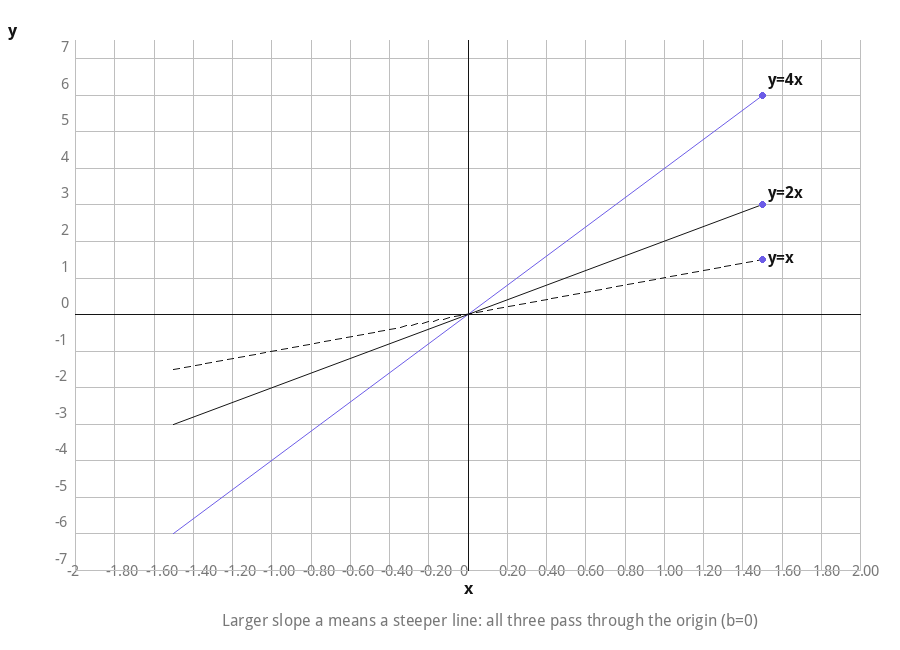
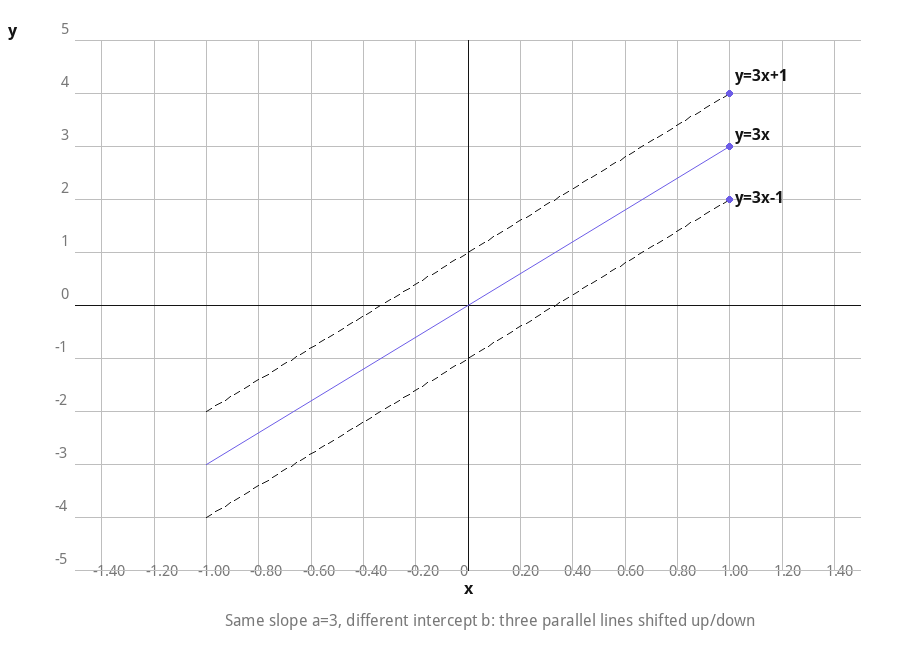
- Linear polynomial y = ax+b → straight line; crosses x-axis at the zero.
One-Line Summary
A linear polynomial (degree 1) always has exactly one zero, found by solving ax+b=0, and its graph is always a straight line crossing the x-axis at that zero.
Quick visual: a worked diagram from the full Solutions page, for reference.
- Chapter 1: Orienting Yourself: The Use of Coordinates – Revision Notes
- Chapter 3: The World of Numbers – Revision Notes
- Chapter 4: Exploring Algebraic Identities – Revision Notes
- Chapter 5: I'm Up and Down, and Round and Round – Revision Notes
- Chapter 6: Measuring Space: Perimeter and Area – Revision Notes
- Chapter 7: The Mathematics of Maybe: Introduction to Probability – Revision Notes
- Chapter 8: Predicting What Comes Next?: Exploring Sequences and Progressions – Revision Notes
Frequently Asked Questions
What is a linear polynomial, and how is it different from other polynomials?
A linear polynomial is a polynomial of degree one, meaning the highest power of the variable is 1, such as ax plus b; unlike quadratic or cubic polynomials, its graph is always a straight line.
How many zeroes can a linear polynomial have, and why?
A linear polynomial has exactly one zero, because setting the polynomial equal to zero and solving for the variable gives a single unique value, corresponding to the one point where the straight-line graph crosses the x-axis.
Class 9 Mathematics Chapter 2 – Solutions and Important Questions
Need full answers or more practice? See the Class 9 Mathematics Chapter 2 Solutions and Class 9 Mathematics Chapter 2 Extra Questions.
Recommended: Buy the Printed NCERT Class 9 Maths Book
Contains Amazon affiliate links.
If you’d like a printed copy alongside the PDF, here’s a verified option:
4.0 out of 5 stars (1,313 ratings) · Rs. 106
Price and availability may change on Amazon. As an Amazon Associate, ncertbooks.org earns from qualifying purchases.


