
Chapter 5 classifies mixtures by how their components behave, forming solutions, suspensions, or colloids, and these extra questions apply that framework to techniques like centrifugation, sublimation, and the Tyndall effect.
Last Updated: September 23, 2026
Very Short Answer Questions (1 mark)
Q1. Give one example of a homogeneous mixture.
Ans: Salt dissolved in water (sugar solution, or any true solution is also acceptable).
Q2. Which separation technique is used to separate cream from milk?
Ans: Centrifugation.
Q3. Name the effect by which colloidal particles scatter light.
Ans: Tyndall effect.
Q4. What technique separates a mixture of camphor and sand?
Ans: Sublimation.
Q5. Do suspension particles settle over time?
Ans: Yes.
Short Answer Questions (2–3 marks)
Q6. Differentiate between a homogeneous and a heterogeneous mixture with an example of each.
Ans: A homogeneous mixture has uniform composition throughout with no visibly distinct parts, e.g. salt water. A heterogeneous mixture has visibly distinct components or regions, e.g. sand mixed with water.
Q7. Explain why crystallisation is often preferred over simple evaporation to obtain a pure solid from its solution.
Ans: Simple evaporation can decompose heat-sensitive substances and doesn’t remove soluble impurities well, while crystallisation uses controlled cooling/evaporation to grow pure crystals, leaving many impurities behind in the remaining solution, giving a purer product.
Q8. How does paper chromatography separate the components of a mixture, such as ink dyes?
Ans: Different dye components have different solubilities and different degrees of attraction to the paper, so as the solvent moves up the paper, each component travels at a different speed, gradually separating into distinct spots or bands.
Higher-Order Thinking / Application Questions
Q9. A student has a mixture of water, common salt, and sand, and needs to recover all three components separately. Suggest a sequence of separation techniques and explain why each step is chosen.
Ans: First, filtration separates the insoluble sand from the salt-water mixture (sand doesn’t dissolve). Then, the filtrate (salt water) undergoes evaporation or crystallisation to recover the dissolved salt as the water evaporates, leaving pure salt crystals behind, while the water itself can be recovered separately if condensed via distillation instead of simple evaporation.
Q10. Two clear liquids look identical, but shining a laser through one shows a visible beam (Tyndall effect), while the other shows no visible beam. Identify which liquid is a colloid and which is a true solution, and explain your reasoning.
Ans: The liquid showing a visible beam (Tyndall effect) is the colloid, since colloidal particles are large enough to scatter light, making the beam’s path visible. The liquid with no visible beam is a true solution, since solution particles are too small to scatter light noticeably, so the beam passes through without becoming visible.
- Chapter 1: Entering the World of Secondary Science – Extra Questions with Answers
- Chapter 2: Cell: The Building Block of Life – Extra Questions with Answers
- Chapter 3: Tissues in Action – Extra Questions with Answers
- Chapter 4: Describing Motion Around Us – Extra Questions with Answers
- Chapter 6: How Forces Affect Motion – Extra Questions with Answers
- Chapter 7: Work, Energy and Simple Machines – Extra Questions with Answers
- Chapter 8: Journey Inside the Atom – Extra Questions with Answers
- Chapter 9: Atomic Foundations of Matter – Extra Questions with Answers
- Chapter 10: Sound Waves: Characteristics and Applications – Extra Questions with Answers
- Chapter 11: Reproduction: How Life Continues – Extra Questions with Answers
- Chapter 12: Patterns in Life: Diversity and Classification – Extra Questions with Answers
- Chapter 13: Earth as a System: Energy, Matter and Life – Extra Questions with Answers
Frequently Asked Questions
How would you separate a mixture of sand and salt dissolved in water?
The mixture is first filtered to separate the insoluble sand from the salt solution, and then the filtered solution is heated to evaporate the water, leaving behind the solid salt.
Why is chromatography a useful technique for separating components of a mixture like ink?
Chromatography separates components based on differing solubility and rate of movement through a medium, allowing different coloured dyes within an ink mixture to spread out and separate visibly.
Chapter Quiz — Test Your Understanding
See also: Chapter 1 | Chapter 2 | Chapter 3 | Chapter 4 | Chapter 5
Practice more: Chapter 1 | Chapter 2 | Chapter 3 | Chapter 4
Quick revision: Chapter 1 | Chapter 2 | Chapter 3 | Chapter 4
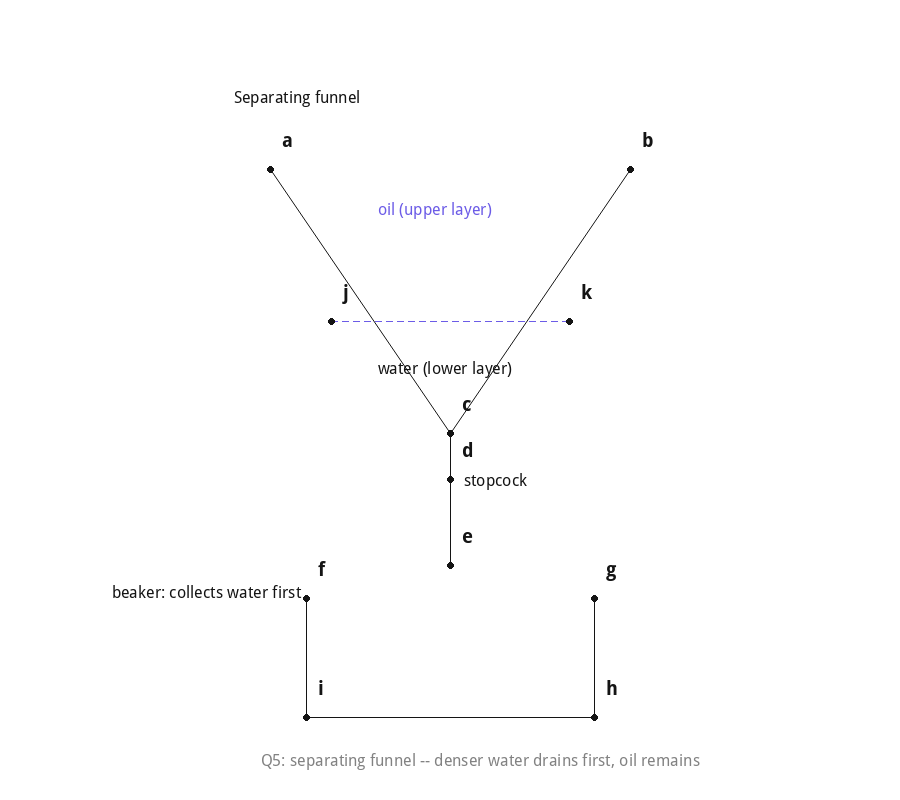
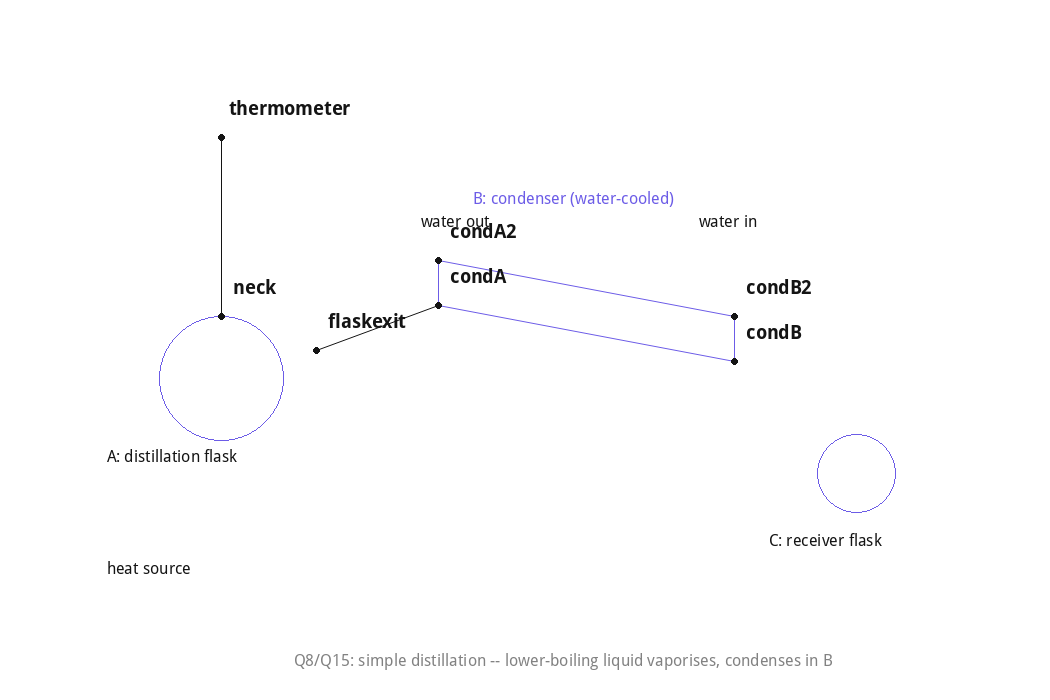
Quick visual: a worked diagram from the full Solutions page, for reference.
Recommended: Buy the Printed NCERT Class 9 Science Book
Contains Amazon affiliate links.
If you’d like a printed copy alongside the PDF, here’s a verified option:
3.8 out of 5 stars (931 ratings) · Rs. 187
Price and availability may change on Amazon. As an Amazon Associate, ncertbooks.org earns from qualifying purchases.


