
Waves in this chapter are split into transverse and longitudinal types, described by the equation y=A sin(kx−ωt) and the relation v=fλ. Superposition then produces standing waves, with their characteristic nodes and antinodes, and beats when two frequencies interfere.
Last Updated: September 23, 2026
Wave Basics
- Transverse vs longitudinal waves.
- y=A sin(kx−ωt); v=fλ=ω/k.
Wave Speed
- On a string: v=√(T/μ).
Superposition
- Standing waves: nodes (zero displacement), antinodes (max displacement); fn=nv/2L.
- Beats: fbeat=|f1−f2|.
One-Line Summary
Waves transport energy through a medium via oscillating particles, with superposition of waves producing phenomena like standing waves and beats.
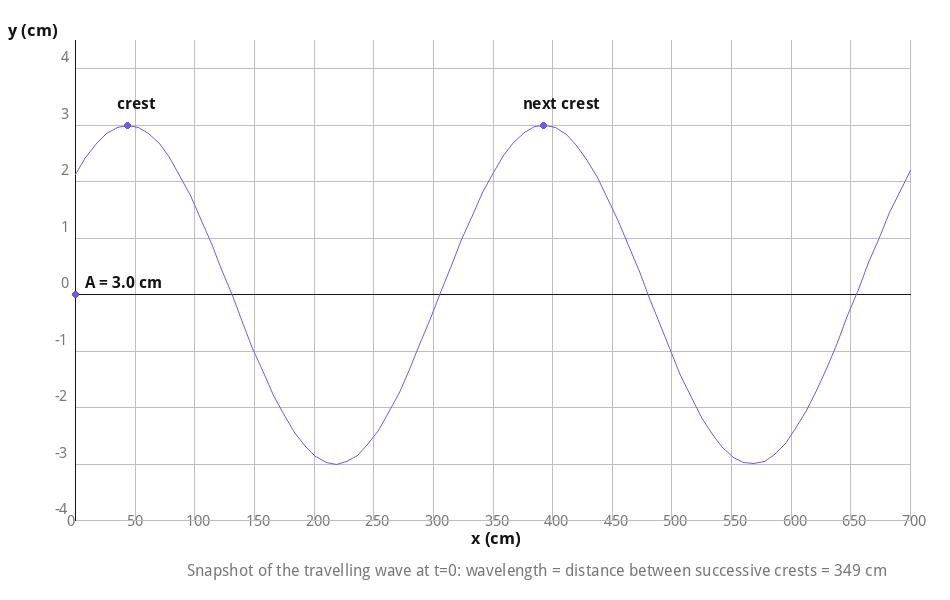
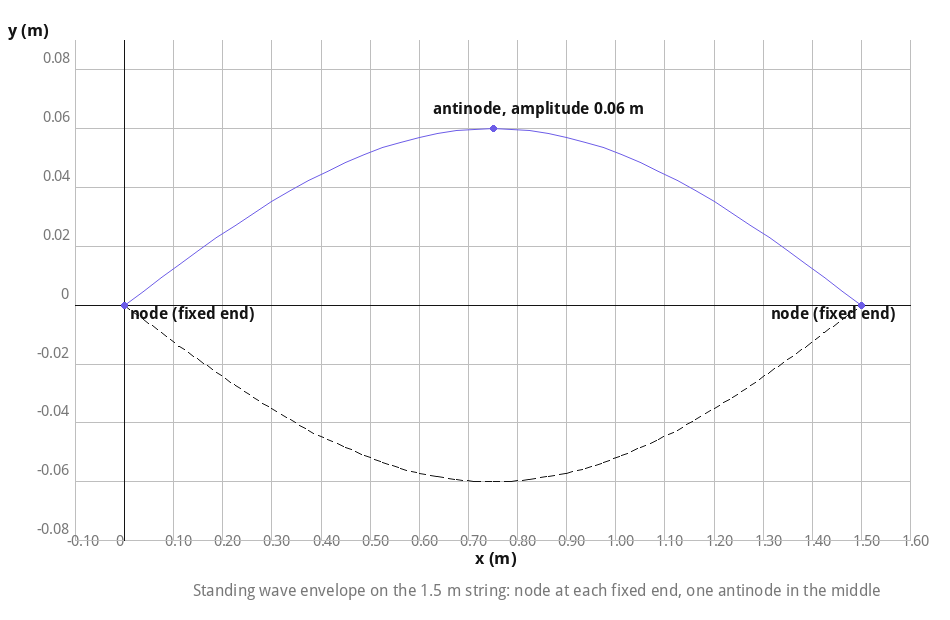
Quick visual: a worked diagram from the full Solutions page, for reference.
- Chapter 1: Units and Measurements - Quick Revision Notes
- Chapter 2: Motion in a Straight Line – Revision Notes
- Chapter 3: Motion in a Plane – Revision Notes
- Chapter 4: Laws of Motion – Revision Notes
- Chapter 5: Work, Energy and Power – Revision Notes
- Chapter 6: System of Particles and Rotational Motion – Revision Notes
- Chapter 7: Gravitation – Revision Notes
- Chapter 8: Mechanical Properties of Solids – Revision Notes
- Chapter 9: Mechanical Properties of Fluids – Revision Notes
- Chapter 10: Thermal Properties of Matter – Revision Notes
- Chapter 11: Thermodynamics – Revision Notes
- Chapter 12: Kinetic Theory – Revision Notes
- Chapter 13: Oscillations – Revision Notes
Frequently Asked Questions
What is the fundamental difference between transverse and longitudinal waves?
In a transverse wave, particles of the medium vibrate perpendicular to the direction of wave propagation, like on a stretched string, while in a longitudinal wave, particles vibrate parallel to the direction of propagation, like sound waves in air.
What is the principle of superposition of waves, and what does it explain?
The principle of superposition states that when two or more waves overlap at a point, the resultant displacement is the sum of the individual displacements, which explains phenomena such as interference and the formation of beats.
Chapter Quiz — Test Your Understanding
Class 11 Physics Chapter 14 – Solutions and Important Questions
Need full answers or more practice? See the Class 11 Physics Chapter 14 Solutions and Class 11 Physics Chapter 14 Extra Questions.
See also: Chapter 1 | Chapter 2 | Chapter 3 | Chapter 4 | Chapter 5 | Chapter 6 | Chapter 7 | Chapter 8 | Chapter 9 | Chapter 10 | Chapter 11 | Chapter 12 | Chapter 13 | Chapter 14
Practice more: Chapter 1 | Chapter 2 | Chapter 3 | Chapter 4 | Chapter 5 | Chapter 6 | Chapter 7 | Chapter 8 | Chapter 9 | Chapter 10 | Chapter 11 | Chapter 12 | Chapter 13 | Chapter 14
Quick revision: Chapter 1 | Chapter 2 | Chapter 3 | Chapter 4 | Chapter 5 | Chapter 6 | Chapter 7 | Chapter 8 | Chapter 9 | Chapter 10 | Chapter 11 | Chapter 12 | Chapter 13
Recommended: Buy the Printed NCERT Class 11 Physics Book Set
Contains Amazon affiliate links.
If you’d like a printed copy alongside the PDF, here’s a verified option:
Rs. 280
Price and availability may change on Amazon. As an Amazon Associate, ncertbooks.org earns from qualifying purchases.


