
Beyond the basic perimeter and area formulas for rectangles and parallelograms, this chapter introduces Heron’s formula for finding a triangle’s area from its sides alone, plus how to handle quadrilaterals by splitting them along a diagonal.
Last Updated: September 23, 2026
Basic Formulas
- Rectangle: P=2(l+b), A=l×b.
- Square: P=4s, A=s².
- Parallelogram: A=base×height.
Heron’s Formula
- s = (a+b+c)/2 (semi-perimeter).
- Area = √[s(s−a)(s−b)(s−c)].
- Use when only side lengths known (no height).
Quadrilateral Area
- Split via diagonal into 2 triangles; sum their areas.
One-Line Summary
Heron’s formula finds a triangle’s area from its three sides alone (via the semi-perimeter), and quadrilateral areas can be found by splitting into two triangles along a diagonal.
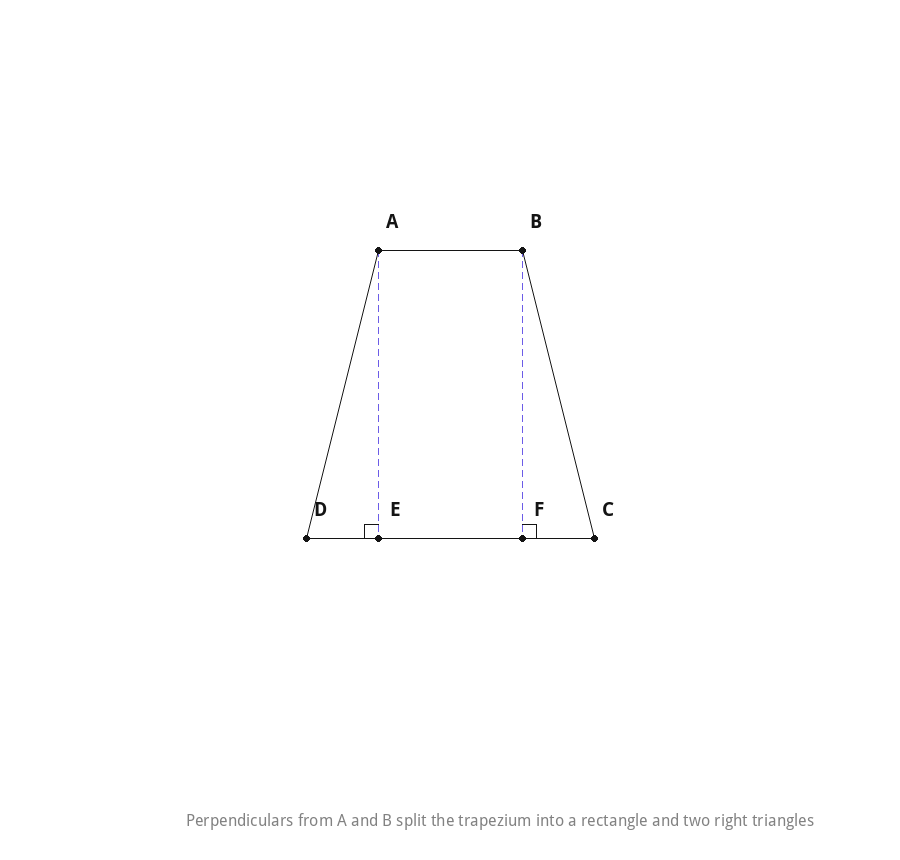
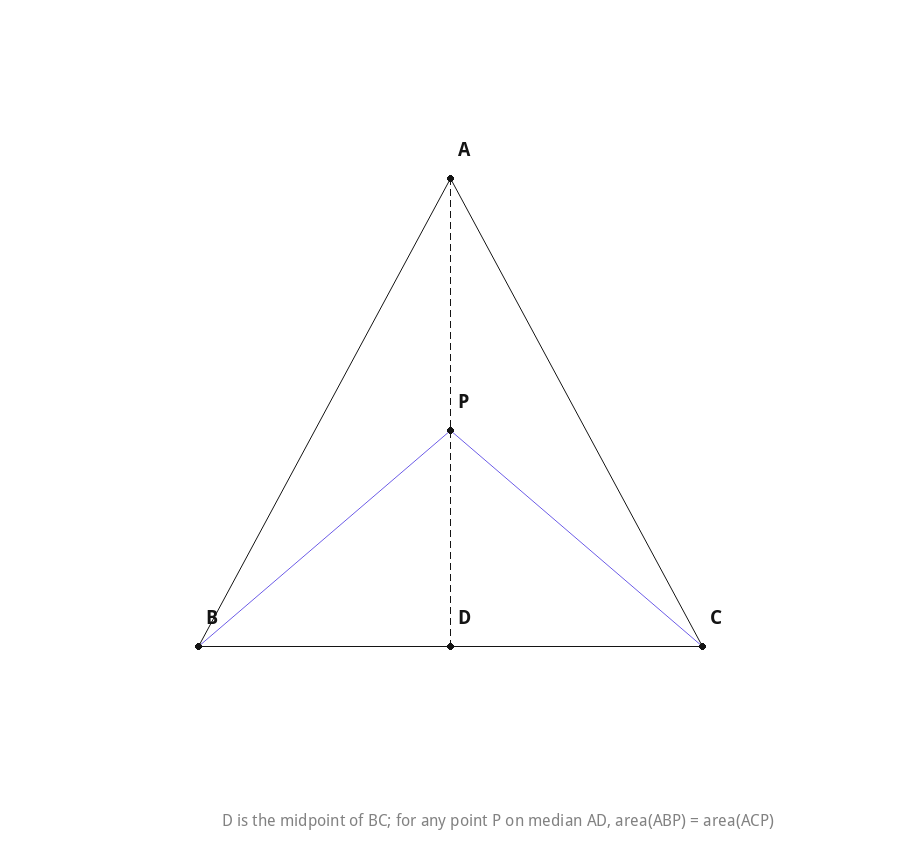
Quick visual: a worked diagram from the full Solutions page, for reference.
- Chapter 1: Orienting Yourself: The Use of Coordinates – Revision Notes
- Chapter 2: Introduction to Linear Polynomials – Revision Notes
- Chapter 3: The World of Numbers – Revision Notes
- Chapter 4: Exploring Algebraic Identities – Revision Notes
- Chapter 5: I'm Up and Down, and Round and Round – Revision Notes
- Chapter 7: The Mathematics of Maybe: Introduction to Probability – Revision Notes
- Chapter 8: Predicting What Comes Next?: Exploring Sequences and Progressions – Revision Notes
Frequently Asked Questions
What is the difference between perimeter and area as covered in this chapter?
Perimeter is the total length of the boundary enclosing a two-dimensional figure, measured in linear units, while area is the amount of surface enclosed within that boundary, measured in square units.
Why are different formulas needed for the area of different shapes like triangles and quadrilaterals?
Different shapes distribute their boundary and interior space differently, so each shape requires a formula derived from its own specific geometric properties, such as base and height for a triangle or length and breadth for a rectangle.
Chapter Quiz — Test Your Understanding
Class 9 Mathematics Chapter 6 – Solutions and Important Questions
Need full answers or more practice? See the Class 9 Mathematics Chapter 6 Solutions and Class 9 Mathematics Chapter 6 Extra Questions.
See also: Chapter 1 | Chapter 2 | Chapter 3 | Chapter 4 | Chapter 5 | Chapter 6
Practice more: Chapter 1 | Chapter 2 | Chapter 3 | Chapter 4 | Chapter 5 | Chapter 6
Quick revision: Chapter 1 | Chapter 2 | Chapter 3 | Chapter 4 | Chapter 5
Recommended: Buy the Printed NCERT Class 9 Maths Book
Contains Amazon affiliate links.
If you’d like a printed copy alongside the PDF, here’s a verified option:
4.0 out of 5 stars (1,313 ratings) · Rs. 106
Price and availability may change on Amazon. As an Amazon Associate, ncertbooks.org earns from qualifying purchases.


