
Rotational motion in Chapter 6 of Class 11 Physics is built around torque, moment of inertia, and angular momentum, the rotational counterparts to force, mass, and linear momentum. It also gives the moment of inertia formulas for common shapes and explains how angular momentum stays constant when no external torque acts.
Last Updated: September 23, 2026
Key Concepts
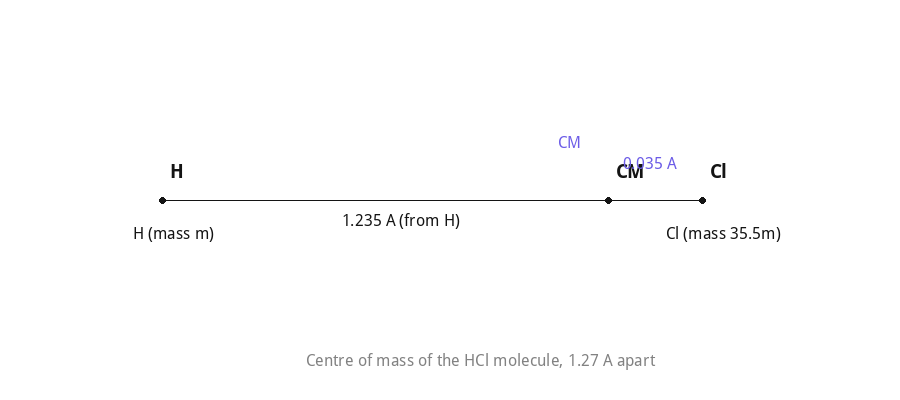
- Centre of mass: Xcm=Σmx/Σm.
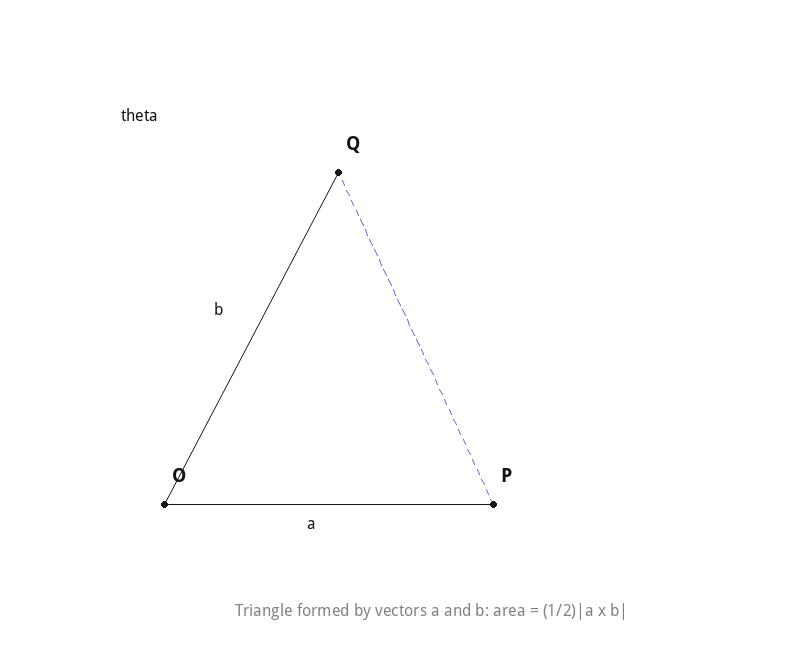
- Torque: τ=r×F.
- Angular momentum: L=Iω; τ=dL/dt.
Moment of Inertia
- Sphere: (2/5)MR²; Cylinder: (1/2)MR²; Rod (centre): (1/12)ML².
- Parallel axis: I=Icm+Md². Perpendicular axis: Iz=Ix+Iy.
Conservation and Rolling
- Angular momentum conserved when net torque=0.
- Rolling KE=½Mv²+½Iω².
One-Line Summary
Rotational motion is described using torque, angular momentum, and moment of inertia, with angular momentum conserved in the absence of external torque, analogous to linear momentum conservation.
Quick visual: a worked diagram from the full Solutions page, for reference.
- Chapter 1: Units and Measurements - Quick Revision Notes
- Chapter 2: Motion in a Straight Line – Revision Notes
- Chapter 3: Motion in a Plane – Revision Notes
- Chapter 4: Laws of Motion – Revision Notes
- Chapter 5: Work, Energy and Power – Revision Notes
- Chapter 7: Gravitation – Revision Notes
- Chapter 8: Mechanical Properties of Solids – Revision Notes
- Chapter 9: Mechanical Properties of Fluids – Revision Notes
- Chapter 10: Thermal Properties of Matter – Revision Notes
- Chapter 11: Thermodynamics – Revision Notes
- Chapter 12: Kinetic Theory – Revision Notes
- Chapter 13: Oscillations – Revision Notes
- Chapter 14: Waves – Revision Notes
Frequently Asked Questions
What is the centre of mass of a system of particles?
The centre of mass is a single point that represents the average position of all the mass in a system, weighted by the mass of each particle. It moves as if the entire mass of the system were concentrated there.
How is torque different from force in rotational motion?
Force causes linear acceleration, while torque, which depends on the force and the perpendicular distance from the axis of rotation, causes angular acceleration, playing the same role in rotational motion that force plays in linear motion.
Chapter Quiz — Test Your Understanding
Class 11 Physics Chapter 6 – Solutions and Important Questions
Need full answers or more practice? See the Class 11 Physics Chapter 6 Solutions and Class 11 Physics Chapter 6 Extra Questions.
See also: Chapter 1 | Chapter 2 | Chapter 3 | Chapter 4 | Chapter 5 | Chapter 6
Practice more: Chapter 1 | Chapter 2 | Chapter 3 | Chapter 4 | Chapter 5 | Chapter 6
Quick revision: Chapter 1 | Chapter 2 | Chapter 3 | Chapter 4 | Chapter 5
Recommended: Buy the Printed NCERT Class 11 Physics Book Set
Contains Amazon affiliate links.
If you’d like a printed copy alongside the PDF, here’s a verified option:
Rs. 280
Price and availability may change on Amazon. As an Amazon Associate, ncertbooks.org earns from qualifying purchases.


