
This chapter opens with the Kelvin and Celsius scales before moving into thermal expansion, where length, area, and volume each expand at their own characteristic rate. From there it covers calorimetry and the three modes of heat transfer that govern how heat moves between bodies.
Last Updated: September 23, 2026
Temperature and Expansion
- K=°C+273.15.
- ΔL=LαΔT; ΔA=AβΔT (β=2α); ΔV=VγΔT (γ=3α).
Heat and Calorimetry
- Q=mcΔT; Q=mL (phase change).
- Calorimetry: heat lost=heat gained.
Heat Transfer
- Conduction, convection, radiation.
- Stefan-Boltzmann: E=σT⁴.
One-Line Summary
Thermal properties of matter cover temperature measurement, thermal expansion, specific/latent heat, and the three modes of heat transfer — conduction, convection, and radiation.
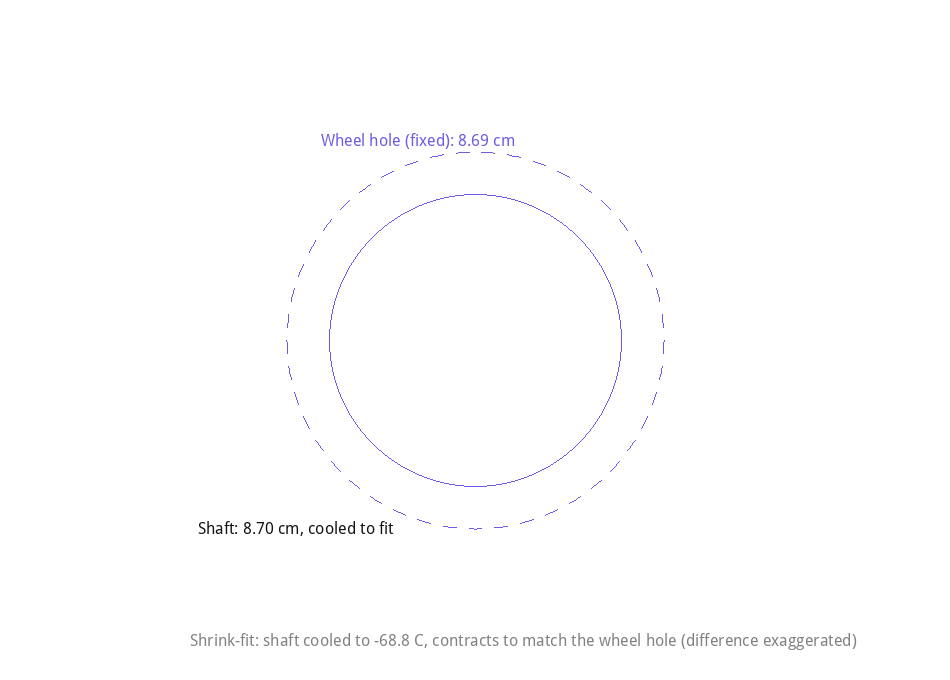
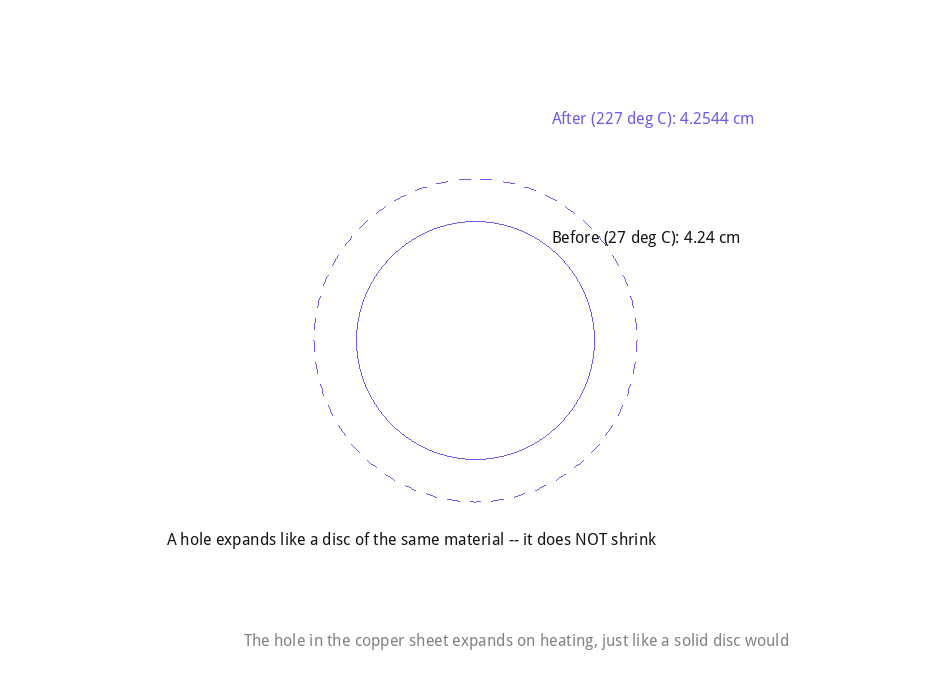
Quick visual: a worked diagram from the full Solutions page, for reference.
- Chapter 1: Units and Measurements - Quick Revision Notes
- Chapter 2: Motion in a Straight Line – Revision Notes
- Chapter 3: Motion in a Plane – Revision Notes
- Chapter 4: Laws of Motion – Revision Notes
- Chapter 5: Work, Energy and Power – Revision Notes
- Chapter 6: System of Particles and Rotational Motion – Revision Notes
- Chapter 7: Gravitation – Revision Notes
- Chapter 8: Mechanical Properties of Solids – Revision Notes
- Chapter 9: Mechanical Properties of Fluids – Revision Notes
- Chapter 11: Thermodynamics – Revision Notes
- Chapter 12: Kinetic Theory – Revision Notes
- Chapter 13: Oscillations – Revision Notes
- Chapter 14: Waves – Revision Notes
Frequently Asked Questions
What is the difference between heat and temperature?
Heat is the total energy transferred between objects due to a temperature difference, while temperature is a measure of the average kinetic energy of the particles in a substance, so heat is a form of energy transfer, not a property a body possesses.
Why does the temperature of a substance remain constant during a change of state, such as ice melting?
During a change of state, the heat supplied is used entirely to break intermolecular bonds and change the phase as latent heat, rather than to increase the kinetic energy of the particles, so the temperature stays constant until the change is complete.
Chapter Quiz — Test Your Understanding
Class 11 Physics Chapter 10 – Solutions and Important Questions
Need full answers or more practice? See the Class 11 Physics Chapter 10 Solutions and Class 11 Physics Chapter 10 Extra Questions.
See also: Chapter 1 | Chapter 2 | Chapter 3 | Chapter 4 | Chapter 5 | Chapter 6 | Chapter 7 | Chapter 8 | Chapter 9 | Chapter 10
Practice more: Chapter 1 | Chapter 2 | Chapter 3 | Chapter 4 | Chapter 5 | Chapter 6 | Chapter 7 | Chapter 8 | Chapter 9 | Chapter 10
Quick revision: Chapter 1 | Chapter 2 | Chapter 3 | Chapter 4 | Chapter 5 | Chapter 6 | Chapter 7 | Chapter 8 | Chapter 9
Recommended: Buy the Printed NCERT Class 11 Physics Book Set
Contains Amazon affiliate links.
If you’d like a printed copy alongside the PDF, here’s a verified option:
Rs. 280
Price and availability may change on Amazon. As an Amazon Associate, ncertbooks.org earns from qualifying purchases.


