
Kinetic theory explains gas pressure and temperature as consequences of molecules in constant, random motion, starting from PV=nRT and the pressure formula derived from molecular collisions. Degrees of freedom and the equipartition of energy then connect this molecular picture to measurable temperature.
Last Updated: September 23, 2026
Ideal Gas
- PV=nRT; R=8.314 J/(mol·K).
- P=(1/3)ρvrms².
Temperature and Energy
- Average KE per molecule=(3/2)kBT.
- Equipartition: each DOF contributes (1/2)kBT.
Degrees of Freedom
- Monatomic: 3; Diatomic (moderate T): 5.
One-Line Summary
Kinetic theory explains macroscopic gas behaviour (pressure, temperature) as a result of the random motion and collisions of gas molecules, linking temperature directly to average molecular kinetic energy.
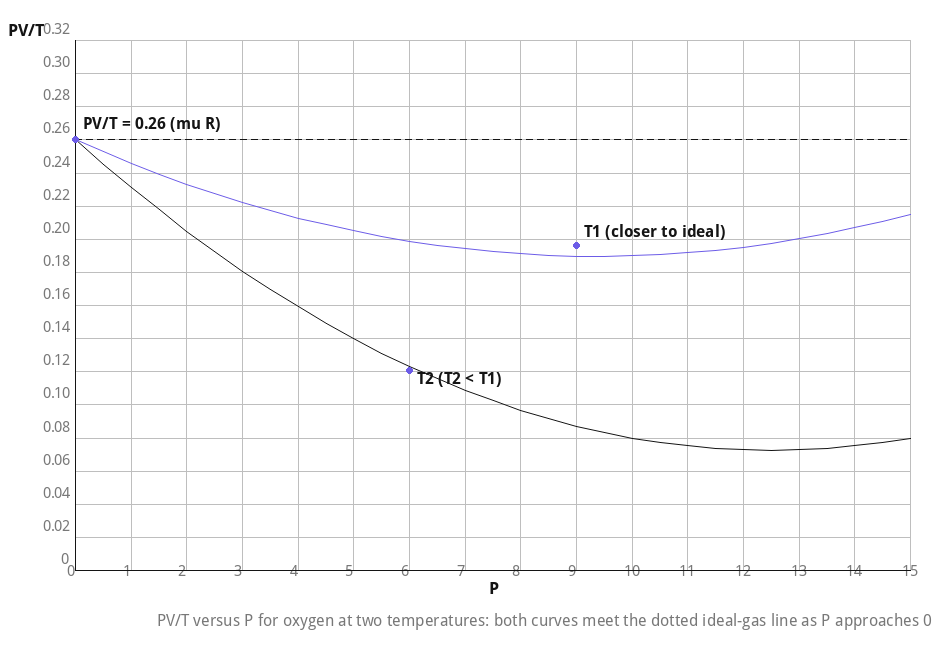
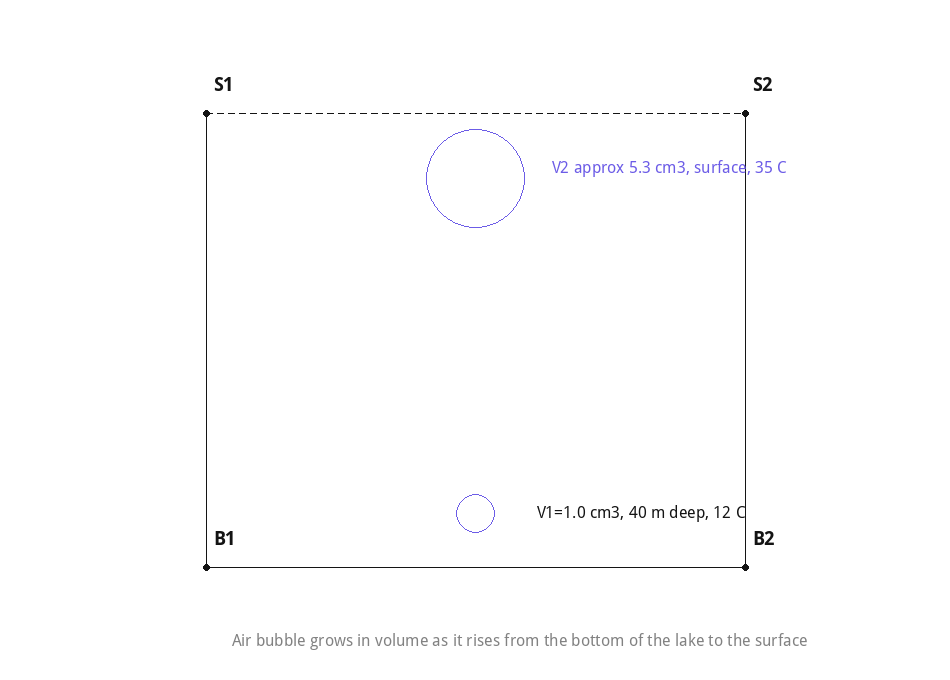
Quick visual: a worked diagram from the full Solutions page, for reference.
- Chapter 1: Units and Measurements - Quick Revision Notes
- Chapter 2: Motion in a Straight Line – Revision Notes
- Chapter 3: Motion in a Plane – Revision Notes
- Chapter 4: Laws of Motion – Revision Notes
- Chapter 5: Work, Energy and Power – Revision Notes
- Chapter 6: System of Particles and Rotational Motion – Revision Notes
- Chapter 7: Gravitation – Revision Notes
- Chapter 8: Mechanical Properties of Solids – Revision Notes
- Chapter 9: Mechanical Properties of Fluids – Revision Notes
- Chapter 10: Thermal Properties of Matter – Revision Notes
- Chapter 11: Thermodynamics – Revision Notes
- Chapter 13: Oscillations – Revision Notes
- Chapter 14: Waves – Revision Notes
Frequently Asked Questions
What are the basic assumptions of the Kinetic Theory of Gases?
The theory assumes gas molecules are point masses in constant random motion, that collisions between them are perfectly elastic, and that there are no intermolecular forces except during collisions.
How does the Kinetic Theory explain gas pressure?
Pressure arises from the continuous collisions of fast-moving gas molecules with the walls of the container. Each collision transfers momentum to the wall, and the cumulative effect of countless collisions per second produces the pressure we measure.
Chapter Quiz — Test Your Understanding
Class 11 Physics Chapter 12 – Solutions and Important Questions
Need full answers or more practice? See the Class 11 Physics Chapter 12 Solutions and Class 11 Physics Chapter 12 Extra Questions.
See also: Chapter 1 | Chapter 2 | Chapter 3 | Chapter 4 | Chapter 5 | Chapter 6 | Chapter 7 | Chapter 8 | Chapter 9 | Chapter 10 | Chapter 11 | Chapter 12
Practice more: Chapter 1 | Chapter 2 | Chapter 3 | Chapter 4 | Chapter 5 | Chapter 6 | Chapter 7 | Chapter 8 | Chapter 9 | Chapter 10 | Chapter 11 | Chapter 12
Quick revision: Chapter 1 | Chapter 2 | Chapter 3 | Chapter 4 | Chapter 5 | Chapter 6 | Chapter 7 | Chapter 8 | Chapter 9 | Chapter 10 | Chapter 11
Recommended: Buy the Printed NCERT Class 11 Physics Book Set
Contains Amazon affiliate links.
If you’d like a printed copy alongside the PDF, here’s a verified option:
Rs. 280
Price and availability may change on Amazon. As an Amazon Associate, ncertbooks.org earns from qualifying purchases.


